

Key Takeaways
A good city scooter should fit your routine, your storage space, and the streets you actually ride. These are the main points to keep in mind before choosing among electric scooter models suitable for city commuting.
- Portability matters when a ride includes stairs, transit, or indoor storage.
- Claimed range is only a starting point; riding conditions affect battery use.
- Motor power, tires, suspension, and brakes shape everyday comfort and control.
- Build quality is especially important for frequent riding over imperfect pavement.
- The best model is the one that matches your route rather than the one with the biggest numbers.
- Why Choose an Electric Scooter for City Commuting?
- Key Factors to Consider When Buying an E-Scooter
- Top Electric Scooter Models for Urban Adventures
- Conclusion
- Frequently Asked Questions
- Are electric scooters practical for city commuting?
- How much range should a commuter scooter have?
- Is a lighter scooter always better?
- Are air-filled tires better than solid tires?
- What should I check before buying a used electric scooter?
- Can an electric scooter be ridden in the rain?
- How can I make a scooter commute safer?
Why Choose an Electric Scooter for City Commuting?
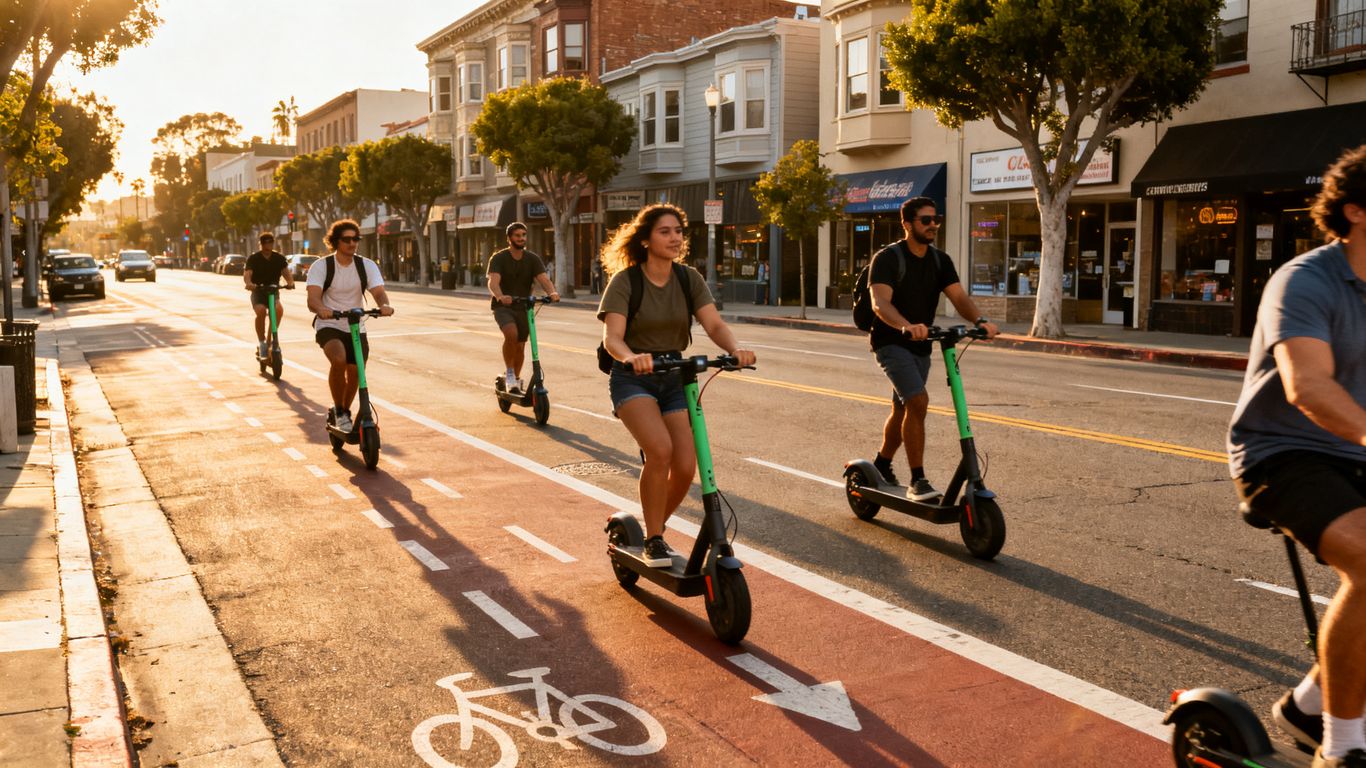
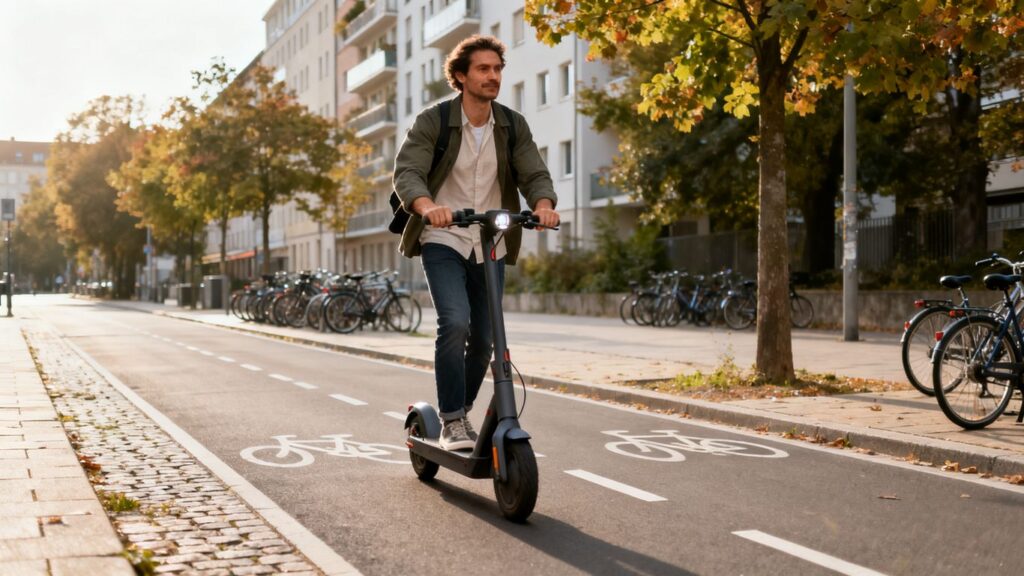
For short urban trips, an electric scooter can be easier to use than a car and less demanding than a bicycle. It takes up little room at the curb, can simplify the last stretch between transit stops and a destination, and avoids the parking search that often turns a quick errand into a longer outing. Riders also tend to appreciate the straightforward controls and relatively small footprint.
A scooter makes the most sense when your route includes ordinary city distances and reasonably suitable riding surfaces. It can be useful for commuting, shopping, visiting friends, or connecting several forms of transportation in one trip. Before buying, check local rules, permitted riding areas, helmet requirements, and any restrictions on carrying or storing an electric scooter in your building or workplace.
The appeal is not just speed. A well-matched scooter can make daily travel feel more flexible, especially when the alternative is waiting in traffic for a journey that is too far to walk but too short to justify driving. For additional comparison points, this tested scooter guide looks at comfort, range, motor performance, build quality, portability, and value across several types of rides.
Key Factors to Consider When Buying an E-Scooter
Choosing a scooter is less about finding one perfect specification and more about balancing several practical details. Think about how far you travel, where the scooter will live between rides, and what kinds of pavement you encounter. The sections below break down the features most likely to affect daily ownership.
Portability and Weight
Weight becomes noticeable long before a ride begins. If you need to lift the scooter onto a train, carry it up stairs, or bring it into an office, a lighter frame and a dependable folding mechanism can matter more than a small increase in motor output. Check the folded dimensions as well as the listed weight, since a compact scooter is easier to place under a desk or inside a closet.
A folding design is useful only when it is simple to operate and stays secure while carrying. Look for a comfortable balance point and enough clearance to avoid catching clothing or bags on the folded parts. If you rarely need to carry the scooter, accepting a little extra weight may be reasonable in exchange for a larger deck, bigger tires, or a more substantial battery.
Range and Battery Life
Range estimates are best treated as comparisons rather than promises. Rider weight, hills, wind, temperature, tire pressure, stop-and-go traffic, and frequent acceleration can all change how much energy a trip uses. A route that seems comfortably within the advertised distance may feel much less comfortable if there is no convenient place to recharge.
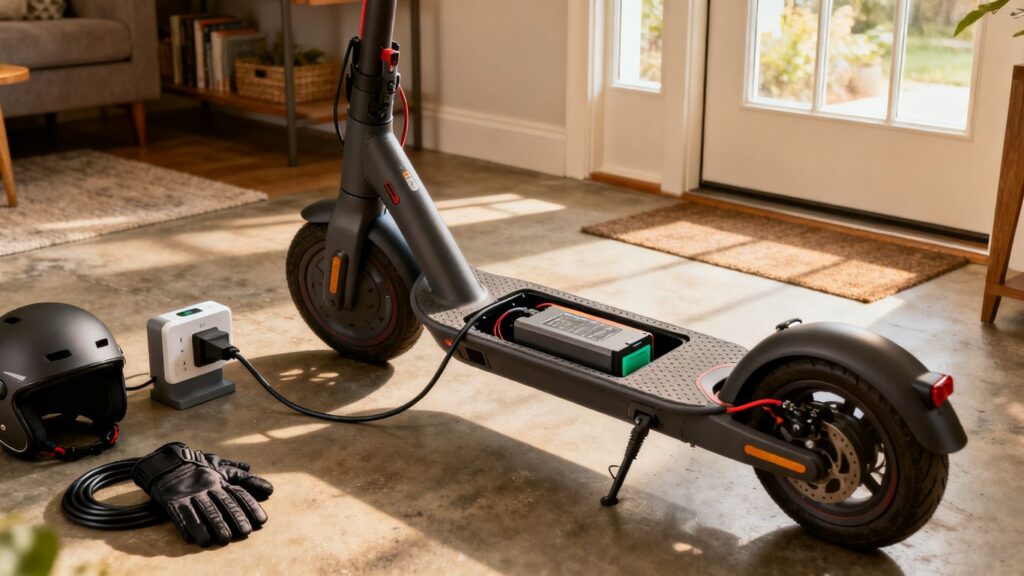
Start with your normal round-trip distance and add room for detours and changing conditions. Charging time also deserves attention: a scooter that reaches a useful charge during your workday may be more practical than one with a larger stated range but a less convenient charging routine. Battery care, storage temperature, and following the manufacturer’s charging instructions can also influence long-term usability.
Motor Power and Speed
Motor power affects acceleration and hill performance, but a higher figure does not automatically make a scooter better for every city rider. Flat routes may not require much output, while inclines, heavier loads, and frequent starts can make extra power more noticeable. Consider the route first, then compare motor specifications within the limits allowed where you ride.
Top speed should be viewed alongside control and local regulations. A moderate speed can be easier to manage around pedestrians, intersections, and crowded paths. Smooth acceleration and predictable throttle response often contribute more to a pleasant commute than a headline number that you rarely use.
Tire Type and Suspension
Tire design changes how a scooter feels over cracks, paving seams, and rough patches. Air-filled tires can provide useful cushioning but may need pressure checks and can be vulnerable to punctures. Solid or puncture-resistant tires reduce some maintenance concerns, though they may transmit more vibration through the deck and handlebars.
Suspension can help on uneven pavement, but it adds weight, cost, and additional parts to inspect. If your route is mostly smooth asphalt, good tires may be enough. If it includes broken pavement or frequent bumps, a scooter with suitable suspension may reduce fatigue during repeated trips.
Braking System
Brakes deserve a close look because city riding involves regular stops. Electronic braking, a mechanical disc brake, a drum brake, or a combination can each feel different at the controls. The useful question is whether the system slows the scooter progressively and predictably in the conditions you expect to encounter.
Before committing to a model, check the position of the brake controls and consider whether replacement parts and service information are readily available. A short inspection routine can help keep the system dependable:
- Test the brake response at low speed before joining traffic.
- Check for unusual noise, rubbing, or a lever that feels loose.
- Inspect visible cables, rotors, or drums for damage.
- Allow extra stopping distance on wet or dirty pavement.
These checks are simple, but they reinforce a broader point: braking performance depends on both hardware and maintenance. Smooth control, appropriate speed, and attention to surface conditions remain part of safe riding regardless of the brake type.
Durability and Build Quality
Daily commuting exposes a scooter to vibration, moisture, curb edges, folding cycles, and the occasional careless set-down. Examine the stem, hinge, deck, handlebars, and fasteners for signs of a thoughtful construction. A firm, quiet frame usually inspires more confidence than one with noticeable play or rattling straight out of the box.
Weather resistance should be read carefully rather than assumed. A water-resistance rating may describe limited exposure, not permission to ride through deep puddles or leave the scooter outdoors. Storage is just as important: keeping the scooter dry, charging it in a suitable location, and inspecting high-wear components can extend its useful life.
A practical buying comparison can be organized around the trade-offs that matter most to a commuter:
| Priority | What to compare | Why it matters | Common trade-off |
|---|---|---|---|
| Easy carrying | Weight and folded size | Helps with stairs and transit | Smaller batteries or decks |
| Longer trips | Battery capacity and charging time | Supports more flexible routes | Added weight and cost |
| Rough pavement | Tire construction and suspension | Can improve comfort and control | More maintenance or bulk |
| Frequent stops | Brake type and lever feel | Supports predictable slowing | Different service needs |
The table is a useful starting framework, not a substitute for checking the actual route. A commuter who carries the scooter every day may reasonably prioritize weight, while another rider may prefer a larger battery because charging is difficult at work. Matching the trade-off to your routine is the decision that matters most.
Top Electric Scooter Models for Urban Adventures
Model categories can make a crowded market easier to navigate, but the labels should not replace a close look at specifications and fit. “Best overall” usually means balanced rather than universally superior, while a budget pick may involve compromises in comfort or range. Treat the following choices as ways to think about your priorities when comparing electric scooter models suitable for city commuting.
Best Overall: Segway Ninebot MAX G2
The Segway Ninebot MAX G2 is a strong all-round choice for everyday urban commuting. Its front and rear suspension help smooth uneven city roads, while its 10-inch tubeless tires, useful commuting range, and stable handling make it suitable for work trips, errands, and regular leisure rides. It is heavier than many basic commuter scooters, so riders who regularly carry their scooter upstairs may prefer a lighter alternative.
Best Budget-Friendly: NIU KQi 100P
For the budget category, I recommend the NIU KQi 100P. NIU lists a 300W rated motor, 600W maximum output, 18-mile or roughly 29 km claimed range, 17.4 mph top speed, front suspension, 9.5-inch pneumatic tires, and a 120 kg rider limit. Tom’s Guide specifically describes it as one of the cheapest electric scooters it would recommend and considers it a good starter scooter.
The main limitation is important for your article. Tom’s Guide found that its practical range can be closer to 10 miles under real riding conditions and that performance on hills is relatively modest. That fits your existing warning that a budget scooter involves compromises.
Best for Long Range: Segway MAX G3
For this category, I would use the newer Segway MAX G3 rather than repeating the MAX G2.
Segway specifies a 597Wh battery and up to 50 miles of range under low-speed test conditions. More useful for buyers, Segway states approximately 40 miles in Drive mode at 15 mph, 34 miles at 20 mph, and 25 miles at the maximum 28 mph speed on the U.S. version. An optional 468Wh external battery can extend certain range figures much further.
It also has dual hydraulic suspension, 11-inch tubeless self-sealing tires, a 2,000W maximum motor output, and a weight of about 54.2 lb or 24.6 kg. That weight reinforces the point already made in your draft: long-range capability often reduces portability.
My final placement for your article is:
- Best Overall: Segway Ninebot MAX G2
- Best Budget-Friendly: NIU KQi 100P
- Best for Long Range: Segway MAX G3
These choices also work well editorially because each model has a clear reason for appearing. The MAX G2 is the balanced commuter, the KQi 100P covers affordability, and the MAX G3 gives you a meaningful step up in range and capability.
A short comparison video can be helpful when you want to see folding mechanisms, deck proportions, riding position, and control layouts in motion. Still, use video as a supplement to written specifications and your own route planning; camera angles rarely communicate weight or real carrying effort perfectly.
Conclusion
The best electric scooter for getting around town is the one that fits your distance, pavement, storage space, carrying needs, and local rules. Compare the practical details before the flashy specifications, leave room in your range planning, and choose a balanced setup you will feel comfortable using regularly.
Frequently Asked Questions
Are electric scooters practical for city commuting?
They can be practical for short and medium urban trips, particularly when parking is difficult or a journey connects with public transportation. Suitability depends on local rules, road conditions, weather, storage, and whether the route is comfortable to ride.
How much range should a commuter scooter have?
Choose a stated range that comfortably exceeds your usual round trip, with extra room for hills, cold weather, wind, detours, and battery aging. Real-world distance is often lower than an ideal laboratory estimate.
Is a lighter scooter always better?
Not necessarily. A lighter model is easier to carry, but a heavier scooter may offer a larger battery, wider deck, bigger tires, or more substantial construction. The right weight depends on how often you need to lift it.
Are air-filled tires better than solid tires?
Air-filled tires can provide a softer ride but require pressure checks and may puncture. Solid tires usually need less puncture-related attention but can feel firmer over rough pavement. Route conditions and maintenance preferences should guide the choice.
What should I check before buying a used electric scooter?
Inspect the frame, folding mechanism, tires, brakes, charger, display, throttle, and battery behavior. Ask about age, storage, repairs, and charging history, and test the scooter at low speed in a safe area before purchasing.
Can an electric scooter be ridden in the rain?
That depends on the model’s documented water-resistance guidance and local conditions. Avoid deep water, dry the scooter after exposure, and never assume a rating makes it safe to leave outdoors or submerge.
How can I make a scooter commute safer?
Wear appropriate protective equipment, use lights and reflective elements when visibility is poor, ride at a controlled speed, stay alert at intersections, and follow local traffic rules. Inspect the brakes and tires regularly before riding.