
Key Takeaways
Registering an electric scooter in Delhi starts with confirming whether the vehicle is legally subject to registration and gathering the right paperwork. A careful document check can prevent delays at the transport office.
- Confirm your scooter’s registration category before beginning the application.
- Keep identity, address, insurance, and vehicle documents together.
- Check the vehicle details carefully before submitting the application.
- Pay the applicable charges and retain every receipt.
- Do not ride on public roads until the required compliance steps are complete.
- Why Register Your Electric Scooter in Delhi?
- Eligibility Criteria for Electric Scooter Registration
- Documents Required for Registration
- The Registration Process Step-by-Step
- Important Considerations and Tips
- Questions About Electric Scooter Registration
- Conclusion
- Frequently Asked Questions
- Does every electric scooter need registration?
- What is the first step in registering an electric scooter?
- Which identity document should I carry?
- Is address proof required?
- Will the scooter need a physical inspection?
- How long does registration take?
- What should I do after receiving the registration details?
Why Register Your Electric Scooter in Delhi?
Registration connects the scooter to its owner and creates an official record for road use. It also supports routine matters such as insurance, ownership transfer, and future resale. Before you begin, check whether your particular model falls within a category that requires registration, since not every electric two-wheeler is treated identically.
For a buyer researching the rules, a guide to electric scooter registration rules can provide useful background on the distinction between registered and registration-exempt vehicles. The exact requirement depends on the scooter’s specifications and the applicable transport rules, so do not rely only on a sales description or informal advice.
Registration is also a practical ownership safeguard. If the scooter is lost, sold, or involved in a traffic matter, an accurate official record makes it easier to establish ownership. Just Picked provides buying advice and product information that can help readers assess ownership requirements before choosing a vehicle.
Eligibility Criteria for Electric Scooter Registration
Eligibility generally begins with the vehicle itself: its technical specifications, identity details, and intended use must fit the registration framework. The dealer’s invoice, manufacturer information, and vehicle identification details should agree with one another. If those details conflict, resolve the issue before submitting an application.
Electric scooters that meet the applicable exemption conditions may follow a different path, while scooters outside those conditions generally require registration. A useful low-speed scooter guide explains why the phrase “without registration” should not be treated as a universal shortcut. Verify the current rule for your model rather than assuming that every electric scooter qualifies for the same treatment.
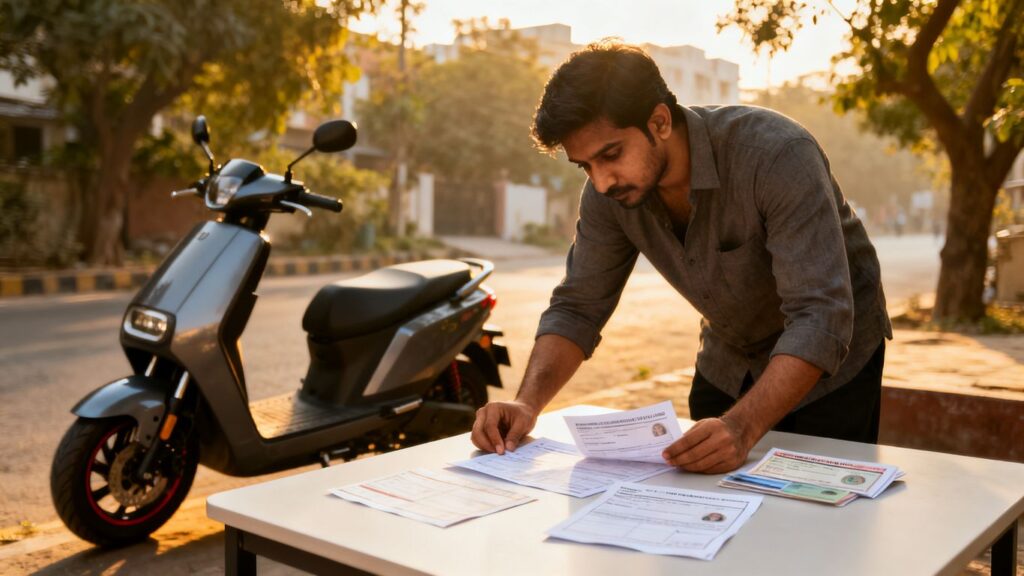
Delhi residents should also make sure the applicant’s address and identity information are consistent across the documents. If the vehicle is purchased through a dealer, ask which steps the dealer will handle and which will remain your responsibility. Just Picked’s reviews and news coverage can help buyers compare practical ownership questions alongside features and pricing.
Documents Required for Registration
The precise document list can vary with the vehicle, applicant, and application route, so confirm it with the Delhi Transport Department or the authorised dealer. Carry originals where requested and keep clear copies or digital backups. A simple folder, arranged in the order of the application, makes verification less stressful.
Proof of Identity
A government-issued identity document is commonly used to establish who is applying for registration. Make sure the name matches the purchase invoice and other vehicle records. If there is a spelling difference, ask the relevant authority or dealer how it should be corrected before filing.
Proof of Address
Address proof helps establish the applicant’s connection with the registration jurisdiction. Use a current document that clearly shows the applicant’s name and address, and check that it is readable. If you recently moved, confirm whether an additional document or updated address record is needed.
Vehicle Specific Documents
The vehicle file normally includes documents such as the sales invoice, insurance evidence, and manufacturer or dealer paperwork containing the scooter’s identification details. Depending on the case, additional forms or certificates may be requested. Use this quick preparation list before visiting the office:
- Match the chassis or vehicle identification details across all papers.
- Check that the insurance document names the correct vehicle.
- Keep the purchase invoice and dealer records together.
- Carry photographs or forms if the authority specifically requests them.
After this check, compare the file against the latest official instructions rather than assuming that an older checklist is still complete. A detailed number plate and RTO guide can also help explain why accurate vehicle records matter during registration.
The Registration Process Step-by-Step
The process usually involves submitting the application, presenting the vehicle and documents for verification where required, paying the applicable charges, and receiving registration details. The order and method can change, especially when a dealer submits paperwork on the buyer’s behalf. Keep a record of each stage so you know what remains outstanding.
A transport-office visit is easier when you have already checked names, addresses, and vehicle identification numbers. The following stages describe the practical flow without replacing the current instructions issued by the relevant authority.
Visiting the Delhi Transport Department (DTMD)
Start by confirming the correct office, working hours, appointment requirements, and whether the dealer has already initiated the application. Take the scooter if physical inspection is required, along with the complete document file. Arrive with enough time for verification, since missing paperwork may mean making another visit.
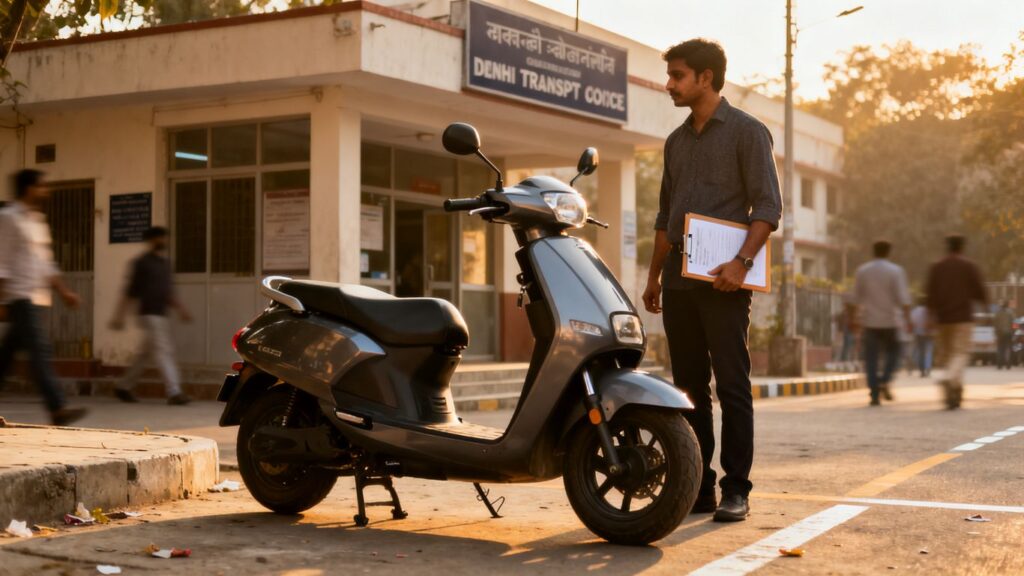
Before leaving, ask for a receipt or application reference whenever one is issued. That reference can help you track the file and explain its status if the process takes longer than expected. The electric vehicle registration process offers another general perspective on the paperwork sequence, including the importance of linking the vehicle details to the owner.
Application Submission and Verification
Submit the completed application and supporting documents through the instructed channel. Officials or an authorised dealer may check the applicant’s details, invoice, insurance, and vehicle identification information. Read the submitted information carefully, because small errors can delay approval or require a correction later.
If an inspection or biometric verification is required, follow the instructions given at that stage. Do not assume that payment alone completes registration; wait for confirmation that the application has passed the necessary checks. Keep copies of the submitted forms and note any request for additional information.
Fee Payment and Number Plate Allotment
Once the application is accepted for payment, use the authorised payment method and save the receipt. The amount can depend on the applicable charges, exemptions, or local rules, so confirm the figure instead of relying on an old online estimate. The broad stages can be kept in view as follows:
| Stage | What to check | Record to keep |
|---|---|---|
| Application | Names and vehicle details are accurate | Submitted form or reference |
| Verification | Required checks are complete | Acknowledgment or inspection note |
| Payment | Correct authorised charge is paid | Official receipt |
| Allotment | Registration and plate details are recorded | Approval or allotment document |
After payment, wait for the registration details and number plate instructions provided by the authority or dealer. Check the registration number and vehicle particulars as soon as they are issued. If anything is wrong, report it promptly rather than fitting a plate or using paperwork containing incorrect information.
Important Considerations and Tips
Treat registration as part of the purchase process, not as an administrative task to postpone indefinitely. Ask the dealer for a written explanation of which forms and submissions are included in the purchase and which are not. This is particularly useful when comparing the total ownership cost of different scooters; Just Picked also shares deals and buying information that can help readers evaluate the full purchase rather than only the sticker price.
Keep every document in a secure place after registration. Store a backup of the invoice, insurance, application receipt, and registration record, while carrying only what is required for ordinary travel. If you sell or move the scooter later, these records will make the next ownership or address-related step more orderly.
Rules and fees can change, and online articles may become outdated. Confirm the current position with the Delhi Transport Department, especially if your scooter has unusual specifications or if an exemption is being claimed. When researching two-wheeler registration requirements, pay attention to the date and jurisdiction of the information before applying it to your own vehicle.
Questions About Electric Scooter Registration
Many questions about electric scooter registration come from uncertainty over vehicle category, paperwork, and timing. The safest answer is usually to match the scooter’s official specifications with the current transport instructions. A dealer can help with submission, but the owner should still review the information being filed.
Some applications are completed largely through a dealer, while others require the owner to visit an office or complete a particular verification step. Keep the application reference and payment receipt until the registration record and number plate process are complete. That paper trail is useful if a correction or status check becomes necessary.
Do not treat a low-speed or electric label as automatic proof that registration is unnecessary. The governing conditions matter, and a model’s marketing description may not contain every detail needed for a legal decision. When in doubt, verify the position before riding on public roads.
Conclusion
Learning how to register a new electric scooter in Delhi is mainly a matter of confirming the vehicle category, preparing matching documents, and following the current transport-office process carefully. Check every detail before submission, retain your receipts, and confirm the final registration information before regular use.
Frequently Asked Questions
Does every electric scooter need registration?
No. The requirement depends on the scooter’s technical classification and the rules that apply to it. Confirm the position for the specific model before riding it on public roads.
What is the first step in registering an electric scooter?
First, check whether the vehicle is subject to registration and identify the correct application route. Then confirm the current document list with the transport authority or authorised dealer.
Which identity document should I carry?
Carry a valid government-issued identity document that matches the name on the invoice and other application papers. If the details differ, resolve the mismatch before submission.
Is address proof required?
Address proof is commonly used to establish the applicant’s jurisdiction and identity details. Use a current, readable document and check whether any additional proof is requested for your circumstances.
Will the scooter need a physical inspection?
Some applications may require a vehicle inspection or another verification step. The authority or dealer should tell you whether the scooter must be presented and when that will happen.
How long does registration take?
Timing varies with the application route, document accuracy, verification requirements, and workload at the relevant office. A complete file and a saved application reference can make follow-up easier.
What should I do after receiving the registration details?
Check the registration number, owner name, and vehicle particulars for errors. Keep the registration record, insurance, invoice, and payment receipt safely, and follow the instructions for obtaining and fitting the number plate.