
Key Takeaways
Electric scooter incentives can reduce the upfront price, but the exact benefit depends on the scheme, vehicle, state, and purchase date.
- Central and state incentives are separate, and their rules can change.
- FAME II was an earlier national scheme; newer purchases may fall under a different programme.
- Eligibility usually depends on the buyer, vehicle specifications, and an approved sales process.
- Central benefits may be reflected in the purchase price, while state benefits can follow a separate process.
- Check the latest policy and paperwork before paying a booking amount.
- Why the Buzz About Electric Scooters in India?
- Understanding Government Subsidies for E-Scooters
- Who is Eligible for These Subsidies?
- How to Claim Your Electric Scooter Subsidy
- Beyond Subsidies: Other Benefits of E-Scooters
- The Future of Electric Mobility in India
- Conclusion
- Frequently Asked Questions
- Is there a government subsidy for electric scooter purchases in India?
- Is FAME II still the current electric scooter subsidy scheme?
- How is an electric scooter subsidy calculated?
- Is the subsidy deducted from the scooter price?
- Can every electric scooter qualify for an incentive?
- What documents are usually needed to claim the benefit?
- Can a subsidy claim be transferred to another buyer?
Why the Buzz About Electric Scooters in India?
Electric scooters have moved from a niche choice to a practical option for many urban commuters. Lower routine running costs, quiet operation, and easier use in crowded streets have made them more visible in daily traffic. For buyers comparing models, the question is no longer only whether an electric scooter is interesting, but whether the total cost makes sense for their commute.
The purchase price still gives many people pause. That is where the phrase Government subsidies for electric scooter purchase in India becomes relevant, although a subsidy should not be treated as a permanent discount or a guaranteed amount. Central schemes, state policies, vehicle requirements, and budget limits can all affect the final benefit. Just Picked covers news, reviews, buying advice, and deals to help readers compare those details rather than focus on one headline figure.
A sensible comparison starts with the full ownership picture. Battery size, charging access, warranty terms, service availability, insurance, registration costs, and the ex-showroom price may matter as much as the incentive itself. A scooter that qualifies for a larger benefit is not automatically the better purchase if it does not suit the rider’s route or daily charging routine.
Understanding Government Subsidies for E-Scooters
Government support for electric vehicles has changed over time, so older articles can easily create confusion. National programmes have used demand incentives to encourage electric mobility, while state governments may add their own assistance or fee waivers. Before relying on a quoted amount, confirm which programme is active on the date of purchase and whether the chosen vehicle is covered.
The FAME India Scheme Explained
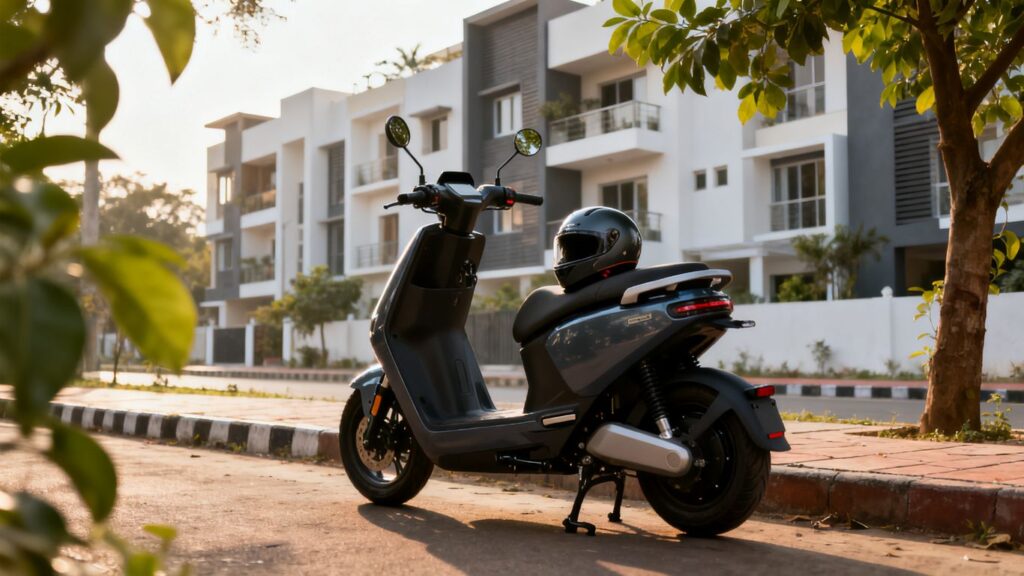
FAME stands for Faster Adoption and Manufacturing of (Hybrid and) Electric Vehicles. FAME II was implemented for three years from April 1, 2019, with a stated budget allocation of ₹10,000 crore, and it became a major reference point in discussions about electric vehicle incentives. The FAME-II incentive overview provides background on that earlier national framework and the way it supported electric mobility.
FAME II should be understood as a past scheme rather than a promise that every current purchase will receive the same treatment. Later support has been presented through other programmes, including PM E-DRIVE, which has its own eligibility conditions, battery-related calculations, price limits, and operational guidelines. The PM E-DRIVE initiative is useful for checking the broader structure of that programme instead of carrying an old FAME figure into a new purchase.
The timing matters especially in 2026. One published update described the PM E-Drive support for electric two-wheelers as running until July 31, 2026, while the broader programme continues for other vehicle categories on a different schedule. Since that date has passed, buyers should verify any replacement or extension through current official information and the dealer’s valid documentation.
How Much Can You Save? Subsidy Amounts
There is no single amount that applies to every electric scooter in India. A national incentive may be calculated using battery capacity and limited by a cap linked to the vehicle’s ex-factory price, while a state incentive may use an entirely different method. The latest 2026 subsidy updates illustrate why the headline amount needs to be checked against the relevant purchase period.
A simple comparison can make the moving parts easier to separate:
| Possible support | What it may affect | What the buyer should verify |
|---|---|---|
| Central demand incentive | Vehicle purchase price | Active scheme, approved model, battery and price limits |
| State purchase incentive | Final cost or later reimbursement | State policy, registration location, and claim route |
| Registration or road-tax relief | On-road purchase cost | Whether the waiver is active and applied by the authority |
| Dealer price adjustment | Amount paid at delivery | Invoice treatment and whether the benefit is already included |
The table is a starting point, not a quotation. Ask for a written price breakdown showing the ex-showroom price, incentive, taxes, registration, insurance, and any other charges. Central benefits may be deducted from the vehicle price at purchase, whereas a state benefit can require a separate claim or later credit depending on local rules; the EV subsidy process guide explains this distinction in practical terms.
Who is Eligible for These Subsidies?
Eligibility is usually shared between the buyer and the vehicle. A purchaser may satisfy the identity and registration requirements but still lose the benefit if the model, battery, price, or seller does not meet the scheme rules. The safest approach is to confirm both sides before making a non-refundable payment.
The state where the vehicle is registered can also matter. Local incentives may be available only to residents, may apply only to vehicles registered in that state, or may change without much notice. Ask the dealer which rulebook is being used and cross-check it with the relevant government portal or notification.
Eligibility Criteria for Buyers
Buyer conditions vary by programme, but common checks include identity details, address or residence, the registration state, and whether the purchaser has already claimed a benefit for another electric two-wheeler. Aadhaar-linked rules may apply to some central claims, and claims are generally tied to the original buyer rather than freely transferable.
Before signing, work through these practical checks:
- Confirm that the buyer’s name and identity details match the booking and registration records.
- Ask whether a previous electric two-wheeler claim affects eligibility.
- Check whether the scooter must be registered in a particular state or during a defined period.
- Request confirmation that the incentive is available for the exact variant, not merely the model family.
These checks can prevent a common misunderstanding: being eligible in principle does not mean the benefit will be paid for every vehicle or every invoice. Keep copies of the quotation and the dealer’s written confirmation, then compare the final invoice with what was promised.
Manufacturer and Dealer Requirements
The manufacturer and dealer must also follow the applicable scheme process. A vehicle may need to appear on an approved list, meet technical requirements, and be sold through a registered or authorised channel. The dealer’s records, invoice, registration details, and identity verification may all be part of the claim trail.
For that reason, do not rely only on a salesperson’s verbal assurance. Ask which scheme is being applied, whether the benefit is already reflected in the invoice, and who handles any state-level submission. If the answer is unclear, pause the purchase and check the current policy before treating the quoted amount as a saving.
How to Claim Your Electric Scooter Subsidy
The process is often less complicated when the buyer separates the central incentive from any state-level benefit. In some cases, the dealer processes the central adjustment as part of the sale; in others, a state authority may require a separate application after registration. The exact route depends on the active programme and local instructions.
The Application Process Step-by-Step
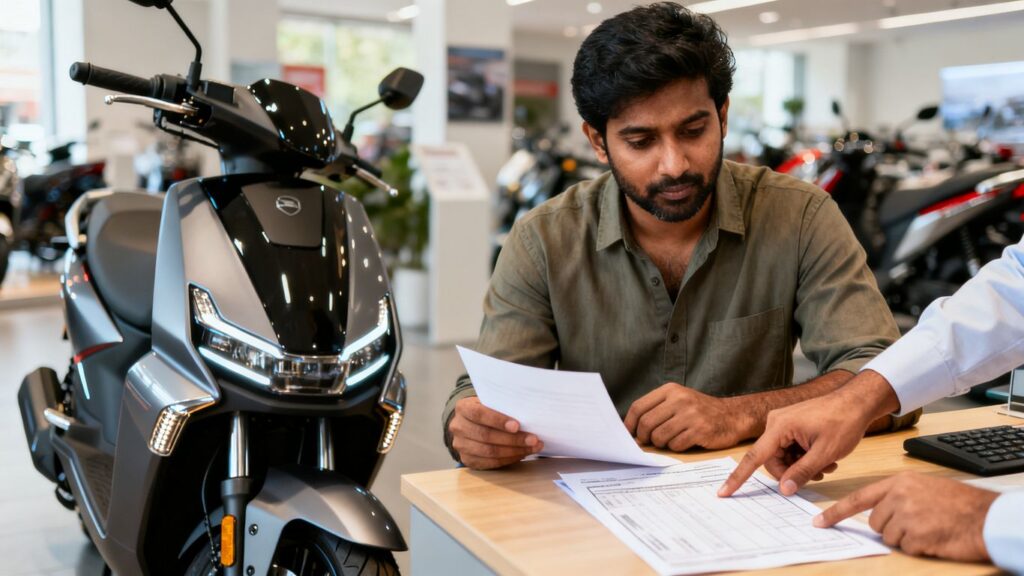
Start by asking for an itemised quotation before paying. It should show the price before the incentive, the amount being adjusted, and all on-road charges. This gives you something concrete to compare when the final invoice is issued.
A practical sequence looks like this:
- Check the active central and state policies for the purchase date and registration location.
- Confirm the exact scooter variant, seller, battery details, and approval status.
- Submit identity and registration information through the dealer or the required state process.
- Review the final invoice and retain the acknowledgement, application reference, or payment record.
- Follow up through the stated channel if a separate state reimbursement is still pending.
The important point is to identify who owns each step. A central price adjustment may be completed at the dealership, while a state claim may depend on a government portal, a registration record, or a later bank transfer. The central EV subsidy buying guide offers another general explanation of how such incentives can lower the upfront cost, but current official rules should take priority.
Documents You’ll Need
The paperwork depends on the scheme, but buyers commonly need identity proof, address details, bank information for a reimbursement where applicable, the purchase invoice, and vehicle registration records. Dealers may also request a consent form or other documents needed to submit the claim.
Keep the documents consistent. A mismatch between the buyer’s name, Aadhaar details, bank account, invoice, and registration record can delay a claim or create questions about who is entitled to it. Save digital copies as well as the originals, and do not hand over sensitive documents without understanding why they are required.
The electric mobility information guide can help readers locate the wider programme context, while the dealer should provide the transaction-specific checklist. If a promised benefit is missing from the invoice, resolve that issue before delivery rather than assuming it will be corrected later.
Beyond Subsidies: Other Benefits of E-Scooters
A subsidy is only one part of the ownership calculation. Electric scooters can have fewer routine powertrain service requirements than petrol scooters, and home charging may be convenient for riders with a predictable daily route. Those benefits depend on electricity rates, riding patterns, battery condition, and access to reliable service.
The everyday experience can also be different. Electric drive systems are quiet, acceleration is generally straightforward, and stop-and-go traffic may feel less tiring without frequent gear changes. At the same time, charging time, parking access, weather, passenger use, and long-distance travel should be considered honestly before buying.
Environmental benefits are another reason people make the switch, but they are not a substitute for practical planning. A buyer should compare battery warranty coverage, replacement terms, software or service support where relevant, and the cost of insurance. Just Picked’s buying advice is intended for this kind of broader comparison, where a deal is assessed alongside the product’s fit for the person buying it.
The Future of Electric Mobility in India
Electric mobility is likely to develop through a mix of policy support, improving products, charging expansion, and consumer experience. Subsidies can encourage early adoption, but long-term demand will depend on dependable vehicles and a charging routine that works outside ideal conditions. As programmes change, buyers will need current information rather than recycled launch-era figures.
The policy conversation is also widening beyond purchase discounts. Battery standards, charging infrastructure, manufacturing, recycling, and public transport can all shape how quickly electric vehicles become ordinary choices. A buyer may therefore see more variation in incentives across states and more attention to how vehicles are used, registered, and supported after purchase.
For shoppers, the best habit is to compare the net price with the total ownership cost and then verify the policy date. Just Picked continues to publish product news, reviews, buying advice, and deals, giving readers a place to follow those changes without treating one subsidy announcement as a permanent market rule.
Conclusion
Government support can make an electric scooter more affordable, but the right purchase depends on current eligibility, accurate paperwork, the complete on-road price, and practical ownership needs. Check the scheme date, confirm the exact vehicle and dealer, and keep every document so the advertised benefit matches the final transaction.
Frequently Asked Questions
Is there a government subsidy for electric scooter purchases in India?
There may be central or state support, depending on the active programme, purchase date, vehicle, and registration location. Confirm the current rules before buying because schemes and amounts can change.
Is FAME II still the current electric scooter subsidy scheme?
FAME II was an earlier national incentive programme. A current purchase may fall under a later programme or a state policy, so buyers should not assume that FAME II rules or amounts still apply.
How is an electric scooter subsidy calculated?
The calculation may use battery capacity, the vehicle’s ex-factory price, a per-vehicle cap, or a state-specific formula. The applicable programme determines which calculation matters.
Is the subsidy deducted from the scooter price?
A central benefit may be adjusted in the purchase invoice, while a state benefit may use a separate application and later reimbursement. The dealer should explain the treatment in writing.
Can every electric scooter qualify for an incentive?
No. Eligibility can depend on the model, variant, technical specifications, price, approval status, seller, and registration conditions. Always verify the exact vehicle rather than relying on a brand-wide statement.
What documents are usually needed to claim the benefit?
Common documents include identity proof, address details, purchase and registration records, and bank information if a reimbursement is involved. The exact checklist is set by the applicable scheme or state authority.
Can a subsidy claim be transferred to another buyer?
Usually, the claim is linked to the original purchaser and vehicle records. Do not assume it can be transferred; check the relevant policy and ensure the invoice and registration use the correct buyer’s details.