
Key Takeaways
A handbag keeps its shape when you match its storage method to its material, construction, and use. Small habits—cleaning, gentle stuffing, and giving each bag enough space—make a noticeable difference over time.
- Empty and clean every handbag before storing it.
- Use soft, acid-free support rather than tight or bulky fillers.
- Keep bags away from humidity, heat, sunlight, and strong odors.
- Store structured bags upright without placing heavy items on them.
- Inspect stored handbags regularly and correct problems early.
- Choose the right storage method for each handbag
- Prepare handbags before putting them away
- Stuff handbags without distorting them
- Create a handbag-friendly storage environment
- Arrange handbags to prevent pressure and creasing
- Maintain handbag shape during long-term storage
- Conclusion
- Frequently Asked Questions
- Should handbags be stored upright or flat?
- Is it safe to store handbags in plastic containers?
- What is the best material for stuffing a handbag?
- How full should a handbag be when stored?
- How often should stored handbags be checked?
- Can sunlight damage a handbag in storage?
- What should you do if a handbag has developed a crease?
Choose the right storage method for each handbag
The best answer to how to store handbags so they keep their shape depends on the bag itself. A firm leather tote, a soft suede hobo, and a beaded evening clutch do not respond well to exactly the same treatment. Start by looking at the material, the internal support, and how much pressure the bag can tolerate. When you buy storage accessories, use the same practical approach as when making other purchases: define what you need first, then compare options in this buying decisions guide.
Consider the bag’s material and construction
Leather, suede, canvas, nylon, and woven fabrics each have different care needs. A lined bag with firm panels can usually stand upright, while an unstructured design may need gentle internal support to keep it from folding into a permanent crease. Check seams, lining, and reinforcement points before choosing a shelf, bin, or hanging method.
Identify structured, soft, and slouchy silhouettes
Structured handbags generally benefit from upright storage, provided they are not squeezed between other pieces. Soft and slouchy bags often need light stuffing that fills empty areas without forcing the sides outward. For a clutch or narrow shoulder bag, a flat shelf may be safer than a deep stack where pressure can build unnoticed.
Account for hardware, embellishments, and delicate details
Chains, buckles, studs, embroidery, and sequins can scratch nearby bags or catch on fabric. Wrap especially delicate hardware loosely in clean tissue, and keep embellished pieces from rubbing against one another. Avoid placing a sharp clasp directly against leather or suede, even if both items are inside the same dust bag.
Match the storage method to how often you use the bag
Your everyday bags should remain visible and easy to reach, since repeatedly pulling them from a crowded stack creates needless friction. Reserve deeper storage for seasonal or occasional pieces, but do not bury them so completely that you forget to inspect them. A clear arrangement helps you choose thoughtfully instead of buying a replacement for something already in your collection.
Prepare handbags before putting them away
Storage cannot repair dirt, moisture, or a crushed lining, so preparation comes first. Give each bag a quick inspection under good light and deal with small problems before they become harder to remove. This is also a useful time to separate pieces you use often from those going into long-term storage.
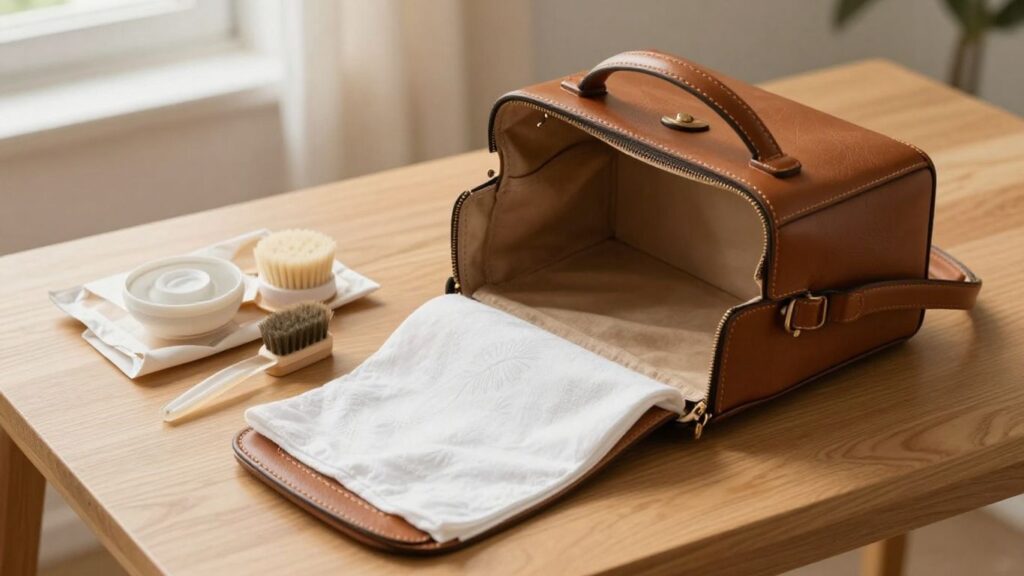
Empty every pocket and compartment
Remove receipts, cosmetics, coins, pens, chargers, and anything else left inside. Turn out smaller pockets carefully and check beneath flaps or removable pouches. Even a tiny forgotten item can leave an indentation, leak, or stain while the bag sits undisturbed.
Clean and condition the material appropriately
Use a cleaning method made for the bag’s material, and test it on a hidden area when you are unsure. Wipe away surface dust gently rather than scrubbing aggressively. Leather may need a suitable conditioner, while suede usually calls for a dry brush and a product specifically intended for suede.
Let bags dry completely before storage
If you have cleaned a bag with any damp product, give it plenty of time to dry naturally. Keep it away from radiators, hair dryers, and strong direct heat, which can affect finishes and cause materials to dry unevenly. A bag should feel completely dry inside and out before you close it into a storage space.
Remove items that can stain, stretch, or damage the lining
Pens, makeup, food wrappers, and dark fabrics deserve special attention because they can transfer color or residue. Heavy objects can also pull on the base and distort a soft silhouette. Before putting a bag away, remove removable straps if they press against the body, then store those straps loosely beside it.
Stuff handbags without distorting them
Stuffing gives a handbag something to rest against, but more is not better. The goal is to support the original shape, not to make the bag rigid or stretched. Add material gradually and stop when the sides look naturally filled rather than pushed outward.
Use acid-free tissue paper for gentle support
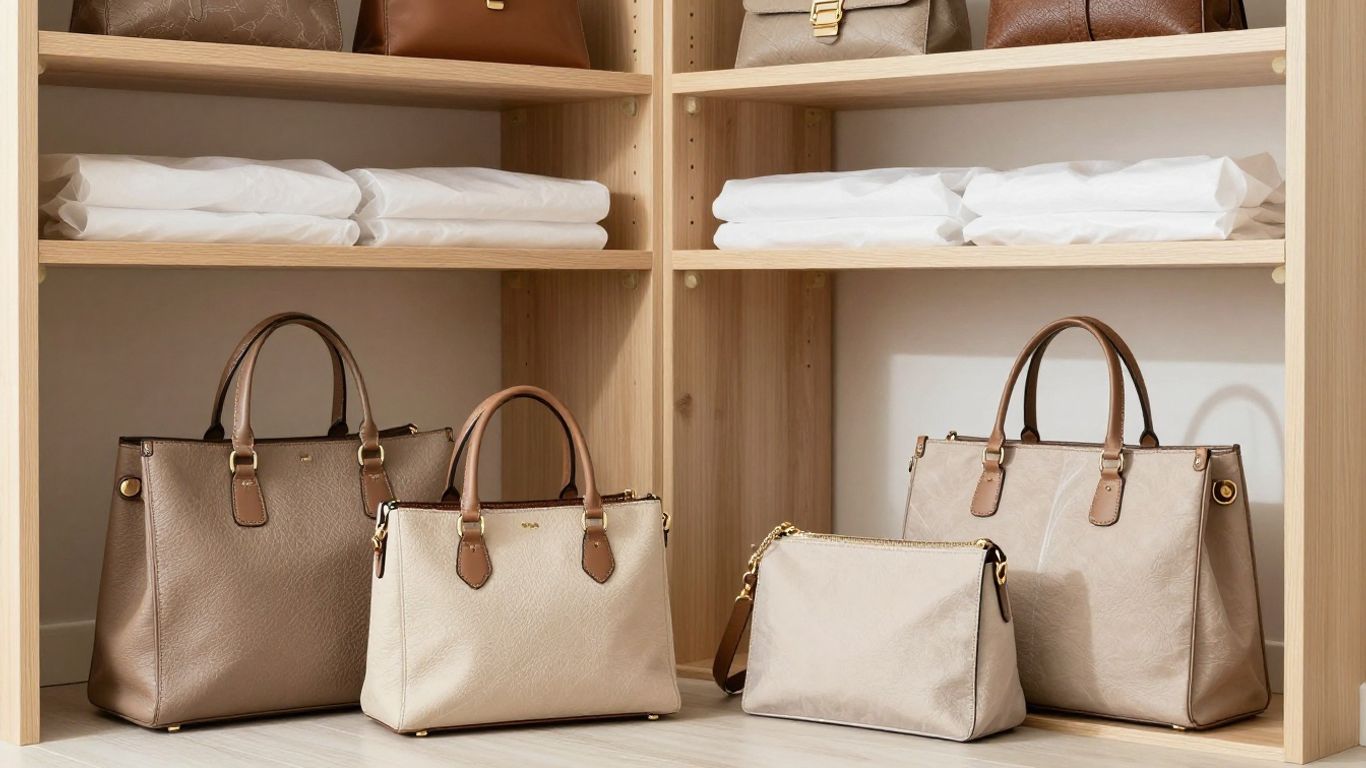
Crumpled acid-free tissue can form soft cushions for the base, corners, and side panels. Make loose bundles instead of dense balls so the support remains flexible. Clean, unprinted white fabric can also work for some bags, but avoid anything dyed, damp, or likely to transfer ink.
Shape corners, sides, and handles carefully
Begin with the corners and base, then add support to the sides. Handles should rest in their natural curve rather than being folded sharply under the bag. If a long strap must remain attached, coil it loosely and place a soft layer between it and the exterior.
Avoid overstuffing soft and structured bags
Overfilling can stretch leather, strain seams, and create rounded bulges that were never part of the design. A good test is to close the bag without force and see whether the panels still look relaxed. These simple stuffing techniques also align with broader handbag shape guidance, especially the warning against fillers that create pressure points.
Replace stuffing when it loses its form
Paper collapses and fabric fillers can flatten after months of use. When that happens, the bag may begin to sag even though it is technically still stuffed. Refresh the support whenever it no longer fills the base and side panels evenly, particularly before a long storage period.
Create a handbag-friendly storage environment
The room around your handbags matters as much as the shelf they sit on. Aim for a stable, clean, reasonably dry space with no persistent heat or sunlight. You do not need a complicated display system; you need conditions that avoid gradual damage.
Control humidity, heat, and direct sunlight
Keep handbags away from damp basements, steamy bathrooms, and hot attic spaces. Sunlight can fade exposed materials, while fluctuating moisture may encourage odors or surface problems. Choose a shaded closet or cabinet with some air circulation, and avoid pushing bags tightly against an exterior wall that feels damp.
Use breathable dust bags instead of plastic
A breathable cotton or fabric dust bag helps limit dust while allowing air to move around the handbag. Plastic can trap moisture, especially when a bag is put away before it is fully dry. Leave enough room around the dust bag so it is not compressed against other items.
Select shelves, bins, or cubbies with enough space
The storage unit should let you remove one bag without dragging several others forward. Before buying organizers, consider shelf depth, bag height, handle clearance, and the weight of the collection. Promo Deals brings offers and price drops together, so it can be a convenient place to look when you need storage pieces that fit those practical requirements.
Keep leather and suede away from moisture and strong odors
Do not store leather or suede beside cleaning chemicals, scented products, or damp textiles. Odors can linger, and moisture may affect the finish before you notice visible damage. If the closet has a musty smell, solve that environmental problem before adding valuable handbags.
Arrange handbags to prevent pressure and creasing
A neat arrangement is not only about appearance; it controls where weight and friction land. Give each handbag a stable resting position and avoid making one piece carry the weight of several others. You can find more visual organization ideas in these handbag storage ideas, then adapt them to your collection and available space.
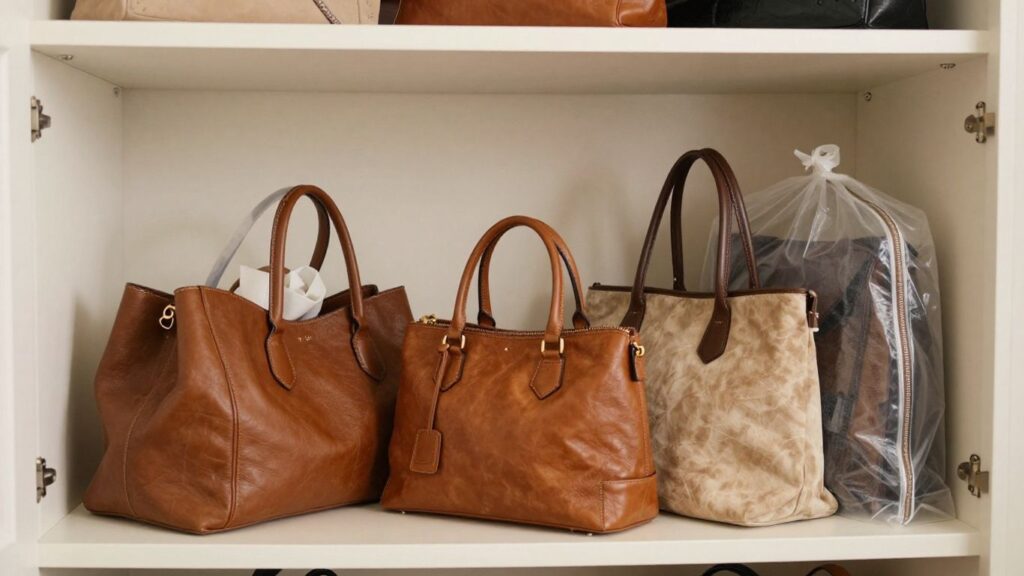
Store structured bags upright when appropriate
Place a structured bag on its base when the base is firm and the interior is supported. Shelf dividers can help prevent leaning, but they should not press tightly against the sides. If a bag tends to tip, use a neighboring divider or a soft support rather than forcing it into a narrow slot.
Avoid stacking heavy bags on top of delicate ones
A heavy tote can flatten a soft crossbody or leave pressure marks on textured leather. If stacking is unavoidable, put the lightest and most delicate pieces on top, with protective layers between them. Better still, stack only bags that have similar strength and stable, flat shapes.
Support handles and straps to prevent permanent bends
Handles should not hang from a narrow hook for months unless the design is made for that kind of weight. Long straps can be coiled loosely, while short handles can rest over tissue or a soft divider. Check that buckles and chains are not pressed into the bag’s exterior.
Leave room for airflow and easy access
Crowding encourages rubbing and makes inspections easy to skip. Leave a little space on each side, especially around suede, woven materials, and bags with raised decoration. A collection that is easy to reach is more likely to be rotated and cared for properly.
Maintain handbag shape during long-term storage
Long-term storage is a process rather than a single decision made on day one. Conditions change, stuffing settles, and bags can shift when you remove another item nearby. A short inspection every few months can catch issues while they are still manageable.
Rotate bags and inspect them periodically
Open dust bags, look for dust or marks, and check whether the handbag is leaning or collapsing. Rotate pieces that receive uneven exposure to light or pressure. If you notice a new odor, move the bag to a cleaner, drier location before storing it again.
Refresh stuffing after extended storage
Take out old tissue or fabric and reshape the bag with fresh, loose support. This gives you a chance to inspect the lining and base rather than assuming the original packing is still doing its job. Let the handbag rest upright for a while before returning it to its usual place.
Address creases, sagging, and hardware tarnish early
Do not force a deep crease flat or apply an unfamiliar product to remove tarnish. Gentle reshaping, suitable cleaning tools, and professional advice may be safer for valuable materials. The earlier you notice a change, the more choices you have for correcting it without adding damage.
Pack handbags securely for moving or travel
For a move, support the bag’s interior, wrap hardware separately, and place it in a breathable cover. Keep it upright when the design allows, and prevent sliding with soft, clean layers rather than tight compression. Mark the box by contents without placing adhesive directly on the dust bag or handbag.
If you want a visual reminder of the full process, this related search can help you review practical storage demonstrations.
Conclusion
When you choose storage according to each handbag’s material and silhouette, prepare it carefully, and inspect it from time to time, keeping its shape becomes much easier. Gentle support, breathable protection, and enough space will do more for your collection than an elaborate organizer used incorrectly.
Frequently Asked Questions
Should handbags be stored upright or flat?
Structured handbags are often best stored upright on their bases, while soft or delicate pieces may be safer lying flat with gentle support. Choose the position that prevents leaning, pressure, and sharp folds.
Is it safe to store handbags in plastic containers?
Plastic containers can trap moisture, so they are not ideal for long-term storage unless conditions are carefully controlled. A breathable dust bag and a clean, dry shelf are usually better for everyday home storage.
What is the best material for stuffing a handbag?
Acid-free tissue paper is a flexible choice because you can shape it into loose cushions. Clean, unprinted white fabric may also work, as long as it does not shed color, add weight, or force the bag outward.
How full should a handbag be when stored?
Fill the empty areas enough to support the bag’s natural shape, but do not stretch the panels or make the closure difficult to use. The sides should look supported rather than swollen.
How often should stored handbags be checked?
Inspect them every few months, or more often in a humid or changing environment. Check for dust, odors, moisture, leaning, flattened stuffing, and hardware rubbing.
Can sunlight damage a handbag in storage?
Yes, prolonged direct sunlight can fade colors and affect some finishes. Store handbags in a shaded area, preferably inside a breathable dust bag that does not press against the surface.
What should you do if a handbag has developed a crease?
Add gentle support and allow the bag to rest in its natural shape. Avoid strong heat, aggressive pulling, or an unfamiliar cleaner; valuable or delicate pieces may need professional care.