
Key Takeaways
Spinner wheels are convenient on smooth floors, while two-wheel luggage often handles rough ground and curbs with more confidence. The right choice depends on your route, packing habits, and how much weight you expect to move.
- Four-wheel spinners turn easily and can roll beside you.
- Two-wheel bags usually have recessed wheels and a simpler structure.
- Larger wheels tend to cope better with cracks and uneven surfaces.
- Wheel housings can reduce interior capacity and affect packing shape.
- Your usual terrain matters more than a simple wheel-count rule.
- How spinner and two-wheel systems are built
- How each luggage type moves in real travel conditions
- Comparing maneuverability and user effort
- Durability, protection, and maintenance
- How the wheel system affects packing and storage
- Choosing between spinner wheels and two-wheel luggage
- Conclusion
- Frequently Asked Questions
How spinner and two-wheel systems are built
The difference between these bags begins beneath the case. A spinner normally has four corner-mounted wheels that rotate, while a two-wheel bag uses a pair of fixed wheels and a telescoping handle. Those choices affect the case’s base, usable interior, balance, and behavior when you change direction.
Wheel placement and housing design
Spinner wheels sit at the case corners, often in separate housings that extend below or beside the main shell. That placement gives the bag a broad rolling stance, but the housings can take up room and remain exposed to knocks. Two-wheel luggage generally places its wheels at the rear base, leaving the front of the case flatter and easier to protect.
Swivel movement versus fixed-direction rolling
A spinner wheel rotates around its own vertical mount, so you can push the case forward, sideways, or diagonally. Two-wheel luggage rolls along a fixed axis and normally follows behind you at an angle. The spinner feels more immediate in a queue or narrow turn; the two-wheeler asks you to guide the handle and body together.
Frame, axle, and bearing construction
Each wheel system depends on more than the visible wheel. Axles carry the load, mounts hold the wheel in alignment, and bearings or bushings reduce friction. A spinner has more moving mounts, while a two-wheel design has fewer wheel assemblies but places more force through the rear wheels and handle when you pull it.
How wheel size affects stability and control
Wheel diameter changes how readily a bag crosses a seam, crack, or threshold. Larger wheels usually roll over small obstacles more smoothly, while small wheels can feel quick on a polished floor but catch more easily outdoors. The case’s width, load distribution, and handle length matter too, so wheel size should not be judged alone.
How each luggage type moves in real travel conditions
The same suitcase can feel effortless in one terminal and awkward on the next street. Smooth flooring rewards low rolling resistance and easy swiveling; broken pavement rewards clearance, wheel size, and a protected mounting point. Surface quality changes everything once you leave the airport concourse.
Pushing, pulling, and changing direction
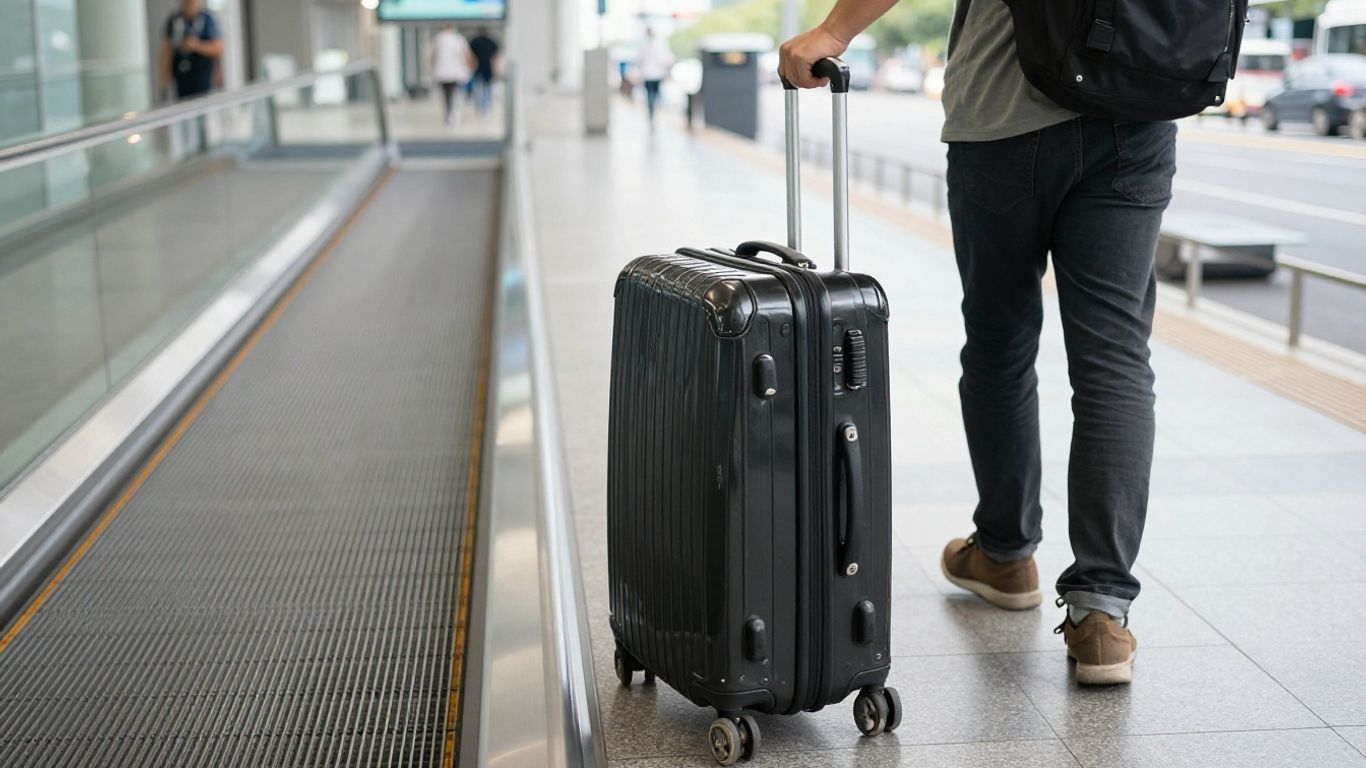
You can push a spinner beside you with little turning radius, or pull it behind you on two wheels when that feels more stable. A two-wheel bag naturally tracks in one direction, which can make a long straight walk feel predictable. Switching direction takes more deliberate movement, especially when the case is heavily packed.
Navigating airports, stations, and narrow aisles
Four wheels are useful when you need to keep a case close while moving through check-in lines, elevators, and train aisles. You can rotate the bag in place instead of swinging its rear around. A two-wheeler takes a little more floor space when turning, but its single-file position behind you can work well in a crowded passage.
Handling curbs, thresholds, and uneven pavement
Neither design should be dragged carelessly over a curb. With two wheels, you can tilt the case back and lift the front over a threshold, keeping the wheels aligned with the direction of travel. A spinner may need to be tipped onto two wheels, because a sideways approach can twist its smaller corner wheels or housings.
Managing slopes, crowds, and tight spaces
On a slope, a spinner can roll away if you release the handle, so keep one hand on it and use the brake if available. In dense crowds, a two-wheel bag held close behind your legs may occupy less lateral space. In a tight hotel room, however, a spinner’s ability to pivot can save repeated lifting and repositioning.
Comparing maneuverability and user effort
Maneuverability is not the same as comfort in every situation. A spinner can reduce the need to pull at an angle, while a two-wheel bag can keep its motion stable over a long route. Your height, walking pace, grip, and packed weight all change the result.

When four-wheel spinners are easiest to control
A spinner is at its best on level, finished surfaces where you can roll it upright beside you. The four contact points make short turns simple, and you can change direction without swinging the full case. This is particularly convenient when you are carrying another item or waiting in a compact boarding area.
Why two-wheel bags can track better over distance
Two wheels follow a clear line when the bag is tilted and pulled. That fixed path can feel calmer on a long sidewalk, especially when the surface has shallow grooves or scattered joints. You also tend to keep the case behind your body, leaving your walking side more open.
Wrist, shoulder, and arm positioning
A spinner lets you keep your elbow closer to your body while guiding the case beside you. With a two-wheeler, you usually extend the handle behind you and allow the case to trail at an angle. If your wrist bends sharply or your shoulder keeps twisting, adjust the handle height or reduce the load before blaming the wheel format.
How packed weight changes handling
Weight magnifies every design difference. A heavy spinner may be easy to turn but harder to stop, while a heavy two-wheel bag can pull backward on your arm and wrist. Use the system that lets you keep the load close, maintain a natural posture, and control the case without repeated lifting.
A quick comparison can help you match the wheel system to the route rather than to a trend:
| Travel condition | Spinner tendency | Two-wheel tendency |
|---|---|---|
| Smooth terminal floor | Easy sideways movement | Stable, direct rolling |
| Narrow aisle | Pivots neatly | Tracks in a single line |
| Cracked pavement | More vulnerable at corner housings | Tilts over obstacles more naturally |
| Long straight walk | Comfortable beside you | Predictable when pulled |
The table is a starting point, not a verdict. A well-built case with larger wheels may outperform a poorly balanced case of either type.
Durability, protection, and maintenance
Wheel durability is shaped by impact, load, exposure, and maintenance. Spinner assemblies have more moving parts and may project farther from the case, while two-wheel designs often shelter their wheels within the rear base. Neither is maintenance-free, particularly if you regularly use sidewalks, station platforms, or rough hotel entrances.
Exposure of spinner wheels to impacts
Corner-mounted spinner wheels can meet furniture, door frames, and curbs before the case does. A sideways impact may stress the swivel mount or housing, even when the wheel still turns afterward. When you lift the bag, avoid using a wheel assembly as a grip, and do not force a jammed wheel across an obstacle.
Why recessed wheels can protect two-wheel luggage
Two-wheel cases commonly recess the wheels into the lower rear corners. That placement can shield them from some side impacts and leaves less hardware protruding from the case. The tradeoff is that you must tilt the luggage to roll it, which transfers force into the handle and rear frame.
Common wheel, axle, and housing failures
Typical problems include a wheel that wobbles, a loose axle, a cracked housing, or debris that prevents smooth rotation. A telescoping handle can also develop play, making a two-wheel bag feel unstable even when its wheels are sound. Early signs are worth addressing because dragging a misaligned wheel increases wear.
Cleaning, tightening, and replacing wheels
After a trip, remove hair, grit, and thread from the wheel area with a dry brush or cloth. Check exposed screws and listen for grinding or clicking as you rotate each wheel. If a wheel is replaceable, record its diameter and mounting pattern before ordering a part; otherwise, a repair shop may need to match the assembly.
How the wheel system affects packing and storage
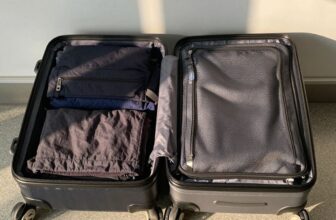
Wheel hardware changes the shape you pack into, not just the way you move the case. Spinner housings can rise into the interior corners, while a two-wheel case may offer a flatter base but a deeper rear section. Check both interior dimensions and exterior dimensions before deciding that one format holds more.
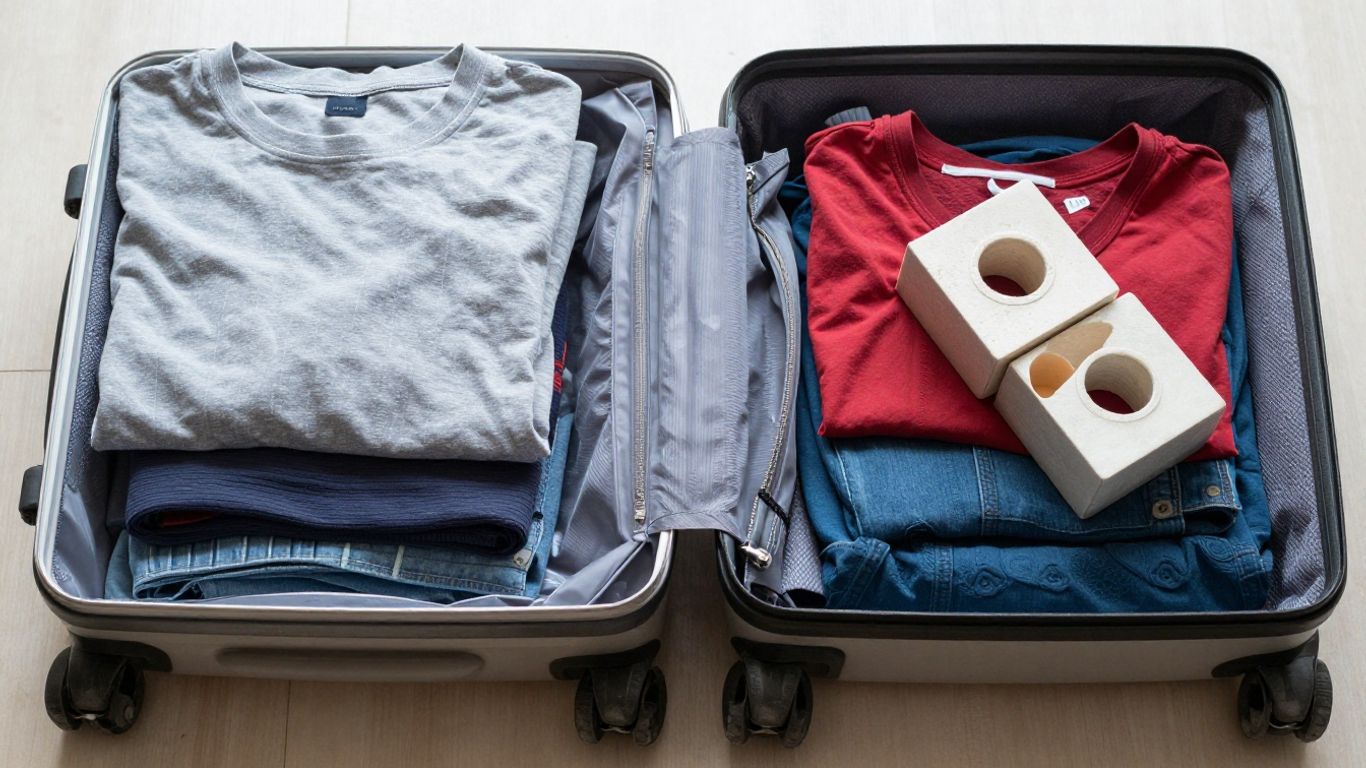
Interior capacity lost to wheel housings
The internal bulges above spinner wheels can make corners less useful for shoes, folded clothing, or packing cubes. Two-wheel luggage may give you a cleaner front compartment, though its wheel wells still occupy part of the lower rear area. Compare the actual packing layout rather than relying only on a stated volume.
Base shape and packing stability
A flatter base can help folded items sit evenly, while a raised wheel housing may create gaps that need soft clothing to fill. Pack heavy items low and near the wheel line, then use smaller pieces to stabilize the edges. This reduces shifting and makes either wheel system easier to control.
External dimensions and overhead-bin fit
Airline limits are based on the case’s outside measurements, so protruding wheels and handles count. A spinner may lose a little vertical or lateral clearance to its wheel housings. Measure the complete packed case, including wheels, before assuming it will fit a particular overhead bin.
Rolling luggage when fully expanded
Expansion panels add depth and can move the center of gravity away from the wheels. On a spinner, that may make upright rolling less steady; on a two-wheeler, it can increase the pull on the handle. If you expand the bag, keep heavy items low and test the balance before leaving home.
Choosing between spinner wheels and two-wheel luggage
The best choice follows your usual journey, not the number of wheels that looks most modern. Think about the ratio of smooth floors to rough streets, how often you use public transport, and whether you normally pack light or close to the limit. A practical buying guide can also help you compare needs, features, budget, and long-term value before you shop.
Best uses for smooth indoor surfaces
Choose a spinner when most of your route involves airports, office floors, hotel lobbies, or elevators. Its sideways movement reduces turning effort and keeps the bag close while you queue. If a deal is your priority, Promo Deals brings offers and price drops together from across the internet, making it easier to compare the final cost of suitable models.
Better options for rough streets and mixed terrain
A two-wheel bag is often the more natural fit for cracked sidewalks, curbs, cobblestones, and routes that include stairs. Recessed wheels and a fixed rolling direction can make those transitions less awkward. Even then, look for substantial wheel diameter, a firm handle, and a case you can lift comfortably.
Factors for frequent flyers and commuters
Frequent flyers should consider how much time they spend in terminals versus outside them. Commuters may value a narrow profile, easy lifting, and predictable tracking more than the ability to roll sideways. Reviews can help, but inspect return terms and warranty coverage as carefully as the wheel design.
Matching the system to trip length and load
For short trips with a modest load, either system may work well. Longer trips place more stress on wheels, axles, handles, and your body, so balance and repairability become more important. Promo Deals is useful when you want to gather discounts and promotional offers in one place, but compare construction and dimensions before choosing the lowest price.
When a hybrid or alternative design makes sense
A hybrid bag can suit you if you want a stable two-wheel pull with some extra maneuverability, but check how its additional hardware affects weight and capacity. For stairs, rough trails, or very light packing, a duffel, backpack, or soft carry bag may be simpler than either wheeled format. You can also browse a spinner and upright luggage comparison for another practical view of the tradeoffs.
For a visual explanation of how the two systems behave, this overview may help you connect the design differences with everyday movement.
Conclusion
Spinner wheels are convenient when your route is mostly smooth and crowded, while two-wheel luggage often feels more controlled across uneven ground and longer straight walks. Compare wheel protection, case balance, usable capacity, and your real travel surfaces before buying. The right bag is the one you can move, pack, and maintain without unnecessary effort.
Frequently Asked Questions
Are spinner wheels better than two-wheel luggage?
Neither is universally better. Spinners are usually easier to turn on smooth indoor surfaces, while two-wheel bags can be steadier over rough ground and curbs.
Do spinner wheels break more easily?
They can be more exposed because their corner housings and swivel mounts may project from the case. Careful handling and avoiding rough impacts can reduce the risk.
Is two-wheel luggage easier on your back?
It depends on the load, handle height, and your posture. A two-wheel bag may track predictably, but pulling a heavy case at an awkward angle can still strain your wrist or shoulder.
Which luggage type is best for cobblestones?
A two-wheel case with larger, well-protected wheels is often easier to guide over cobblestones. You should still reduce the load and lift the case over severe gaps.
Do spinner wheels reduce packing space?
Their internal housings can take up some corner and base space. The difference varies by case, so compare the actual interior layout and not only the listed capacity.
Can you pull a spinner like a two-wheel bag?
Yes. Many spinners can be tilted onto two wheels and pulled behind you, though their smaller swivel wheels may not be ideal for prolonged rough-surface use.
How should you maintain luggage wheels?
Remove hair and grit, inspect axles and screws, and check for wobbling or grinding after trips. Replace damaged parts early when a compatible wheel or housing is available.