
Key Takeaways
Resetting a TSA combination lock is usually straightforward when you know the current code and identify the lock’s reset mechanism.
- Confirm the lock type before changing anything.
- Open the lock with the current or factory combination.
- Reset it only while the lock is open.
- Test the new code several times before packing.
- Seek manufacturer or luggage-specialist help if the combination is forgotten.
- Identify your TSA lock type and reset mechanism
- Open the lock using the current combination
- Reset the combination while the lock is open
- Reset common TSA lock designs
- Troubleshoot a lock that will not reset
- Handle a forgotten combination safely
- Prevent future TSA lock problems
- Conclusion
- Frequently Asked Questions
- What is the usual factory combination for a TSA lock?
- Can I reset a TSA lock while it is closed?
- Does the TSA keyhole come with a key?
- What should I do if the new code does not work?
- Can I use a pen to press a recessed reset button?
- How can I remember my new combination?
- Should I replace a TSA lock that sticks occasionally?
Identify your TSA lock type and reset mechanism
Before touching the dials, look closely at how the lock is built into your suitcase. A small shackle, zipper slots, sliding bar, reset button, or recessed pinhole can change the exact reset procedure. If you are learning how to reset a TSA combination lock, the safest starting point is identification rather than guesswork.
Locate the lock’s reset button, lever, or pinhole
Inspect the sides, underside, and face of the lock for a movable switch or tiny opening. Some designs use a button that must be held down with a narrow tool, while others use a lever that stays in a reset position as you turn the dials. Do not press several parts at once; first determine which control actually changes the combination.
Check for a built-in zipper lock or cable lock
A built-in zipper lock normally accepts two zipper pulls, while a cable design may loop through a bag compartment, case ring, or separate fastening point. The release may be a slider rather than a button, so check what physically moves when the correct code is set. The relevant TSA lock instructions can help you compare the lock’s shape with common center-slider and end-slider designs.
Understand the role of the TSA keyhole
The keyhole marked for TSA access is not normally a keyhole for suitcase owners. TSA-approved locks are designed so authorized security personnel can open them with an appropriate tool during inspection. Your everyday access comes from the combination, so do not try to buy or improvise a master key.
Review the suitcase manufacturer’s instructions
Lock mechanisms vary even when they look similar from a distance. Read the manual or the support page for your suitcase before applying pressure, especially if the lock is integrated into the case frame. Model-specific instructions may show whether the reset control must be pressed, slid, rotated, or held in place.
Open the lock using the current combination
You generally need the lock open before you can change its combination. Start with the current code, or the factory setting if you have never changed it, and work slowly enough to see each number line up. A rushed turn can leave one dial between numbers and make a working lock appear defective.
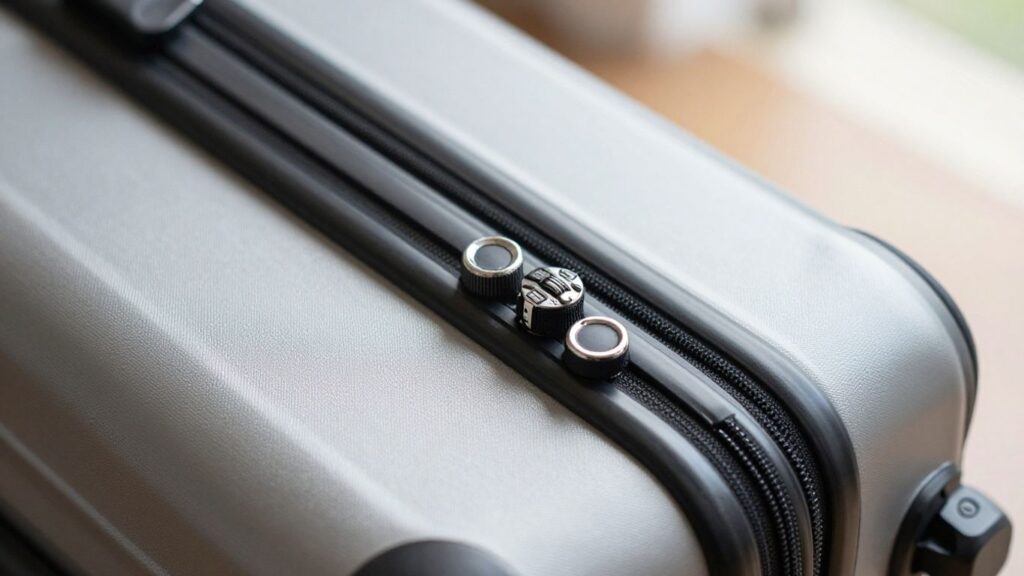
Set the dials to the factory combination
Many new combination locks arrive set to 000, although your suitcase instructions take priority. Turn each wheel separately until the expected starting code appears beside the lock’s indicator. If the suitcase has already been used, try the current personal combination rather than assuming the factory setting remains active.
Align each number precisely with the indicator
Look for a small mark, notch, or line on the lock body and center every digit against it. Keep the suitcase steady while you make the final adjustment; even a partial number can prevent the release from moving. Once the wheels are aligned, pause briefly before testing the release.
Pull the shackle or release the zipper tabs
With the code aligned, pull the shackle upward or move the release slider in the direction shown by the lock. For zipper luggage, guide both pulls out without twisting them. If they release, leave the lock open and keep the dials on the current combination while you prepare to reset it.
What to do if the lock does not open
Recheck the indicator and rotate each dial one number at a time in both directions only if the instructions permit it. Make sure the zipper pulls are not pulling sideways against the lock and that the shackle is not under tension. For a systematic overview of recovery options, you can review this TSA combination recovery guide, but avoid forcing the mechanism.
Reset the combination while the lock is open
Once the lock has opened, keep it open throughout the reset. Most mechanisms require the current code first, followed by a button, lever, or rotating shackle position that tells the lock to accept new digits. Write down your intended code before starting so you do not lose track while holding a control.
Move the reset switch or press the reset button
Use the reset control exactly as shown in the manufacturer’s instructions. You may need to press a recessed button with a pen tip, slide a lever, or turn the shackle to a marked reset position. Hold the control only as long as the mechanism requires; forcing it beyond its natural stop can damage the lock.
Choose a combination that is easy to remember
Pick numbers you can recall without using an obvious sequence that someone traveling with you could guess. Avoid relying on a date printed on your luggage tag or a code written beside the suitcase. A private memory cue is more useful than a complicated number you will immediately forget.
Return the reset mechanism to its original position
After setting the new digits, release the button or slide the lever back to its normal position. If the shackle was rotated for resetting, return it fully and press it down as directed. The combination is not reliably saved until the reset mechanism has returned to its operating position.
Test the new combination before closing your suitcase
Keep the case open and test the new code several times. Scramble the dials, realign them, and operate the release without pulling hard on the zipper tabs. Then try the old code once; it should no longer work if the reset completed properly.
Reset common TSA lock designs
The same basic idea appears across several TSA lock styles, but the hand movement differs. Identify the release and reset control before turning the wheels. The table below gives you a practical comparison, not a substitute for the instructions supplied with your suitcase.
Shackle-style locks with a rotating reset position
Open the lock with the current combination, then rotate the shackle to the marked reset position if your design has one. Hold or press it there while choosing the new digits, and return it fully before testing. The shackle should move smoothly rather than requiring twisting force.
Zipper locks with a sliding reset lever
For a zipper lock, the reset lever may sit beside the dials or underneath the release bar. Open the lock first, slide the lever into its reset position, and change the numbers while it is held there. Return the lever before inserting the zipper pulls again.
Locks with recessed reset buttons
A recessed button is commonly pressed with a narrow, blunt tool that fits the opening. Use light, straight pressure and keep the button held only while adjusting the dials. If the button does not depress easily, stop and check the lock’s instructions rather than widening the opening.
Suitcase locks integrated into the case frame
Frame-mounted locks may combine a release slider, latch, and dials in one housing. Keep the case panels properly aligned while you reset it, because pressure from a closed or overfilled suitcase can affect the latch. Afterward, test the lock with the case empty or only lightly packed.
| Lock design | Reset control to look for | Final check |
|---|---|---|
| Shackle style | Rotating shackle or small switch | Shackle returns fully |
| Zipper style | Sliding lever or recessed button | Pulls release and reinsert |
| Recessed button | Small press point | Button springs back |
| Integrated frame | Slider, latch, or internal control | Case closes evenly |
This comparison helps you choose the right motion without treating every TSA lock as identical. If your lock combines features from two rows, follow the manufacturer’s sequence and test it while the suitcase remains open.
Troubleshoot a lock that will not reset
A lock that opens but will not save a new code is often responding to alignment, tension, or an incomplete reset position. Work through the simple causes first and keep the suitcase open while you test. Small adjustments are safer than repeated force.
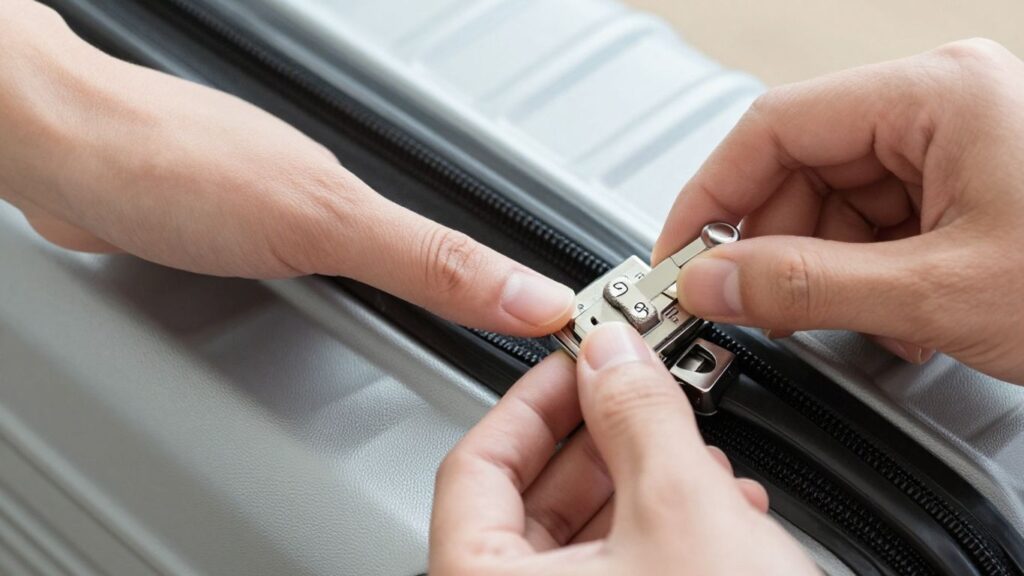
Check for misaligned dials and partial number settings
Center every digit on the indicator rather than relying on the numbers’ general position. Turn the wheels individually and confirm that none is caught between clicks. If the lock uses three wheels, one incorrectly aligned wheel is enough to block the reset control.
Release pressure from the shackle or zipper pulls
A packed suitcase can pull against the shackle or zipper tabs and prevent the release from moving. Lay the case flat, ease the zipper pulls toward the lock, and remove tension before trying again. Do not yank the shackle while rotating the dials.
Clean debris from the lock mechanism
Dust, lint, and small fabric threads can collect around zipper slots and moving buttons. Brush the exterior gently with a dry, soft brush and remove visible fibers without pushing them deeper inside. Avoid pouring household oils or cleaners into the lock unless the manufacturer specifically recommends one.
Avoid forcing the dials, button, or reset lever
If a control stops, treat that resistance as information. Check the current code, the lock’s orientation, and whether a shackle or slider must be moved first. Gentle troubleshooting protects the mechanism and leaves you more options if you later need professional help.
If the mechanism still will not reset after these checks, stop experimenting and document the lock’s brand and model. That information will make a repair or support conversation much more efficient.
Handle a forgotten combination safely
A forgotten code is different from a lock that merely needs resetting. Most combination locks require the current combination before accepting a new one, so ordinary reset steps may not help when you are locked out. Protect the suitcase and its contents by choosing documented recovery or professional assistance over improvised entry.
Try the manufacturer’s default combination
If the suitcase is new or has never been changed, check its manual for the factory combination. Many locks use 000 when first supplied, but you should not assume that setting applies to every model. Try it only when the instructions or original packaging support that possibility.
Use documented recovery instructions for your lock model
Search the manufacturer’s official support material using the suitcase model and lock type. The Samsonite TSA lock instructions, for example, explain that the reset procedure depends on the lock fitted to the suitcase and that forgotten combinations may require an authorized repair center. Model-specific guidance is safer than a generic trick.
Contact the suitcase manufacturer or a luggage specialist
Have the model name, proof of purchase if available, and a clear description of the lock ready. A manufacturer or reputable luggage specialist may be able to explain the approved recovery route or arrange service. Do not send sensitive personal information through an unverified repair listing.
Know when replacement is safer than forced entry
If the lock is damaged, jammed, or attached to a valuable suitcase, replacement or professional opening may cost less than repairing a broken shell or zipper. Forced entry can also damage contents and remove the lock’s useful security function. Once access is restored, fit a compatible replacement and test it before traveling.
Prevent future TSA lock problems
A few habits make combination locks much less troublesome. Save the code somewhere private, test the lock when the suitcase is empty, and avoid packing in a way that strains the closure. If you are comparing replacement luggage or accessories, Promo Deals organizes offers and price drops from across the internet in one place, which can make research easier.
Record the combination in a secure location
Store the code in a password manager or another private place you can reach while traveling. Do not write it on the suitcase tag or leave it in an unlocked note beside your passport. If someone else needs access to the bag, share the code directly rather than labeling the case.
Test the lock before every trip
Open and close the lock several times before packing for the airport. Confirm that the release works with the new code and that scrambling the wheels actually locks the case. This quick check can reveal a failing button or stiff slider while you still have time to replace it.
Keep the suitcase zipper pulls properly aligned
Insert the zipper pulls evenly and avoid overfilling the case near the lock. If one pull is twisted or angled, the release may feel stuck even when the combination is correct. Reposition the pulls rather than applying extra force to the slider.
Replace a damaged or unreliable lock before traveling
A cracked housing, loose dial, or reset control that intermittently sticks is a warning sign. When comparing a replacement, consider fit, release style, and support rather than choosing only by price; this practical product comparison guide offers a useful way to evaluate needs before buying. Promo Deals also gathers discounts and promotional offers, so you can check available price drops without searching every store separately.
Conclusion
Resetting a TSA lock is mostly a matter of using the correct combination, identifying the reset control, and testing the result before you close the suitcase. Take your time, avoid force, and use manufacturer support when the code is forgotten or the mechanism is damaged. A short check before each trip can prevent a small lock problem from becoming a travel-day setback.
Frequently Asked Questions
What is the usual factory combination for a TSA lock?
Many new locks use 000, but the factory setting can vary. Check the suitcase instructions or original packaging before relying on it.
Can I reset a TSA lock while it is closed?
Usually not. Most designs require the lock to be open and set to the current combination before the reset control will work.
Does the TSA keyhole come with a key?
No. The keyhole is intended for authorized security personnel and is not the normal way for an owner to open the suitcase.
What should I do if the new code does not work?
Keep the suitcase open, realign each dial carefully, and repeat the reset sequence from the instructions. If it still fails, stop forcing the mechanism and contact the manufacturer or a luggage specialist.
Can I use a pen to press a recessed reset button?
Some locks are designed for a narrow tool such as a pen tip, but not all are. Use only light pressure and confirm the instructions for your specific model first.
How can I remember my new combination?
Choose a private number pattern that is meaningful to you without being obvious to others, then store it securely in a password manager or private note.
Should I replace a TSA lock that sticks occasionally?
Yes, especially before a trip. An unreliable lock can become completely stuck under pressure, so replacement or professional service is safer than waiting for it to fail while traveling.