

Key Takeaways
A2 cow ghee combines the culinary qualities of clarified butter with a milk-source distinction that deserves careful explanation. Its nutrition, potential benefits, and everyday usefulness are best considered alongside portion size and the limits of current research.
- A2 refers to the beta-casein type in the milk used before clarification.
- Ghee is mostly fat and contains very little milk protein after clarification.
- It can provide fat-soluble vitamins and concentrated cooking energy, though amounts vary.
- Research on A2 dairy and ghee is promising in some areas but remains limited.
- Small portions work well in cooking, baking, and traditional wellness routines.
What is A2 Cow Ghee?
A2 cow ghee is clarified butter made from milk associated with cows that produce the A2 form of beta-casein. Clarification removes most of the water and milk solids, leaving a golden, shelf-stable fat with a nutty aroma. The phrase “A2” describes the source milk, not a special protein that remains in substantial amounts in the finished ghee. For a broader introduction to its preparation and uses, this A2 ghee guide offers useful background.
The A2 Protein Difference
The central distinction is the type of beta-casein found in the original milk. A2 milk contains A2 beta-casein, while some other milk contains a different form commonly called A1 beta-casein. Because ghee is clarified, most of either protein is removed, so claims about A2 ghee should not be treated as identical to claims about drinking A2 milk.
Some people report that A2 dairy feels easier to tolerate, but individual responses vary and research has not established that A2 ghee prevents digestive symptoms for everyone. The most practical way to assess it is to consider the whole product: its ingredients, preparation, serving size, and your own response. The milk source matters, but it is not the whole story.
Nutritional Powerhouse: What Makes A2 Ghee Stand Out?
A2 ghee is energy-dense, so even a small spoonful can make a meal richer and more satisfying. Its main nutritional feature is fat, rather than protein or carbohydrate. The exact profile depends on the milk, the animals’ diet, and the preparation method, which is why a nutrition label is more useful than broad superfood language.
The fat also helps carry flavor and can make certain foods more enjoyable. That does not make unlimited use advisable; ghee still contributes calories and saturated fat. Used thoughtfully, it can be one ingredient in a varied eating pattern rather than a substitute for vegetables, legumes, whole grains, or other sources of essential nutrients.
Vitamins and Minerals in A2 Ghee
Ghee may contain fat-soluble vitamins such as A, E, and K, with amounts varying by source and processing. It is not a meaningful source of most minerals, and it should not be relied on as a stand-alone vitamin supplement. Since labels and testing practices differ, shoppers should check the package rather than assume that every jar has the same nutrient concentration.
A simple comparison helps keep expectations realistic:
| Component | What it contributes | Practical note |
|---|---|---|
| Fat | Concentrated energy and richness | Portion size matters |
| Vitamin A | Supports normal vision and immune function | Amount varies by product |
| Vitamin E | Acts as an antioxidant nutrient | Not present at supplement-level doses |
| Vitamin K | Involved in normal blood clotting and bone processes | Content can be modest and variable |
That profile explains why ghee can be nutritionally useful in small amounts, but it also shows why “more” is not automatically better. People taking medication that affects blood clotting or managing a medical condition should ask a clinician about meaningful dietary changes.
Healthy Fats: The Role of CLA and Omega-3s
Ghee contains a mix of fatty acids, including saturated fat and smaller amounts of other fats. Depending on the source, it may contain conjugated linoleic acid, or CLA, and omega-3 fatty acids, but these are not present in uniform amounts. The presence of a fatty acid does not by itself prove that a serving will produce a particular health outcome.
Research on dairy fat is developing, and reviews such as this research on ghee and dairy fats place traditional use alongside modern evidence. For everyday decisions, the sensible approach is to use ghee for flavor and cooking performance while keeping the overall balance of fats in mind.
Scientific Backing: Research on A2 Ghee Benefits
The phrase “Benefits of A2 Cow Ghee: Nutrition, Research, and Daily Uses” brings together several questions that should be separated. Studies of A2 milk do not automatically prove the same effects for ghee, and studies of ghee do not necessarily isolate the A2 source. Evidence is also affected by serving size, study design, and the health of the people being studied.
That does not make the topic uninteresting. It simply calls for measured language: possible benefits can guide food choices, while persistent symptoms or health concerns need professional advice rather than a dietary promise.
Digestibility and Gut Health
Ghee contains very little milk protein after clarification, which may make it suitable for some people who avoid liquid dairy proteins. However, it is not automatically appropriate for anyone with a milk allergy, and it does not guarantee relief from bloating, pain, or other digestive symptoms. A2 milk research may be relevant background, but it should not be presented as direct proof of an A2 ghee effect.
The amount consumed can matter as much as the label. A large serving of any concentrated fat may feel heavy, particularly when added to an already rich meal. Start with a modest amount, notice how your body responds, and discuss recurring discomfort with a qualified healthcare professional.
Heart Health and Cholesterol Levels
Ghee can fit into a heart-conscious diet, but it is still a source of saturated fat. Its effect on blood cholesterol depends on the broader diet, genetics, health status, and what foods it replaces. Replacing some saturated fat with unsaturated fats, such as those found in nuts, seeds, fish, and many plant oils, is often a more useful question than asking whether one fat is simply “good” or “bad.”
A2 labeling does not remove the need for moderation. Anyone monitoring LDL cholesterol or following a clinician-directed eating plan should treat ghee as part of the total fat intake and follow individualized guidance.
Anti-inflammatory Properties
Ghee is sometimes described as anti-inflammatory because it contains compounds that have drawn scientific interest, including certain fatty acids. Yet laboratory findings and general reviews are not the same as proof that eating A2 ghee will reduce inflammation in a particular person. More targeted human research is needed, especially research that separates the effects of ghee from the effects of the rest of the diet.
Traditional use can provide cultural context without replacing clinical evidence. A useful rule is to enjoy ghee as food, avoid therapeutic promises, and look for well-designed studies before accepting a strong health claim.
Incorporating A2 Ghee into Your Daily Life
Ghee is easy to use because it melts quickly, handles ordinary stovetop cooking, and adds a rounded flavor. It can be introduced gradually, especially if your usual meals contain little added fat. A practical daily intake guide can help readers think about serving size without treating one number as right for every adult or child.
The best use is usually the one that makes a balanced meal appealing and manageable. Keep the jar sealed, use a clean spoon, and follow the storage guidance on the label. If you have a dairy allergy, lipid disorder, or another condition affected by dietary fat, check with a healthcare professional before making it a daily habit.
Buy from Flipkart
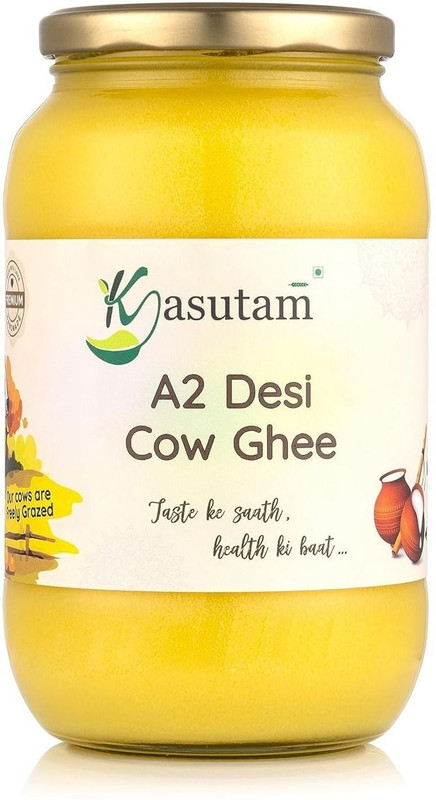
Kasutam A2 Desi Cow Bilona Ghee, Made By Traditional Bilona Method 100% Pure Glass Bottle(500 ml)
Rs. 880 in stock
Highlights
- A2 Desi Cow Desi Ghee
Specifications
| In The Box | |
| Pack of | 1 |
| General | |
| Brand | Kasutam |
| Model Name | A2 Desi Cow Bilona Ghee, Made By Traditional Bilona Method 100% Pure |
| Container Type | Glass Bottle |
| Quantity | 500 ml |
| Maximum Shelf Life | 365 Days |
| Source Type | Goat Milk |
| Organic | Yes |
| Ingredients | Pure Desi A2 Cow Ghee |
| Other Features | The organic A2 Desi Cow milk is boiled on low flame in earthen pots over a Traditional Chulha which gives a pure golden colour and nice aroma to it. After this, the pure A2 milk is left for cooling down. Then after cooling down, a teaspoon of curd is added to this milk. This Milk is for overnight fermentation. |
| Net Quantity | 500 ml |
| Nutrient Content | preservative free, Natural, gluten free, low cholesterol, additives free |
| FSSAI Number | 12221999000177 |
| Flavor | A2 Desi Cow Desi Ghee |
| Additional Features | |
| Key Features | process of making Desi Ghee is the foremost method of preparing Ghee. |
| Legal Disclaimer | |
| Flipkart endeavours to ensure that the sellers provide accurate information on the platform. It is pertinent to note that, actual product packaging and materials may contain more and different information, which may include nutritional information/allergen declaration/special instruction for intended use/warning/directions, health & nutritional claims, etc. We recommend that consumers always read the label carefully before using or consuming any products. Please do not solely rely on the information provided on this website. For additional information, please get in touch with the manufacturer. | |
Kasutam A2 Pure Desi Cow Ghee is produced by extracting milk from a high-quality breed of desi cow which is also well-known for producing the high-quality nutritious A2 desi milk. As compared to regular milk, A2 milk encompasses solely A2 proteins which is healthier and safer than A1 protein. It...
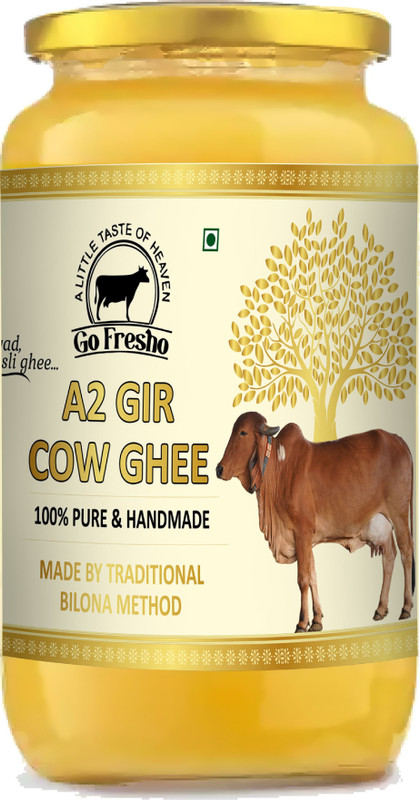
Go Fresho A2 Gir Cow ghee | Gir Cow Ghee | Pure desi ghee|Curd-Churned | Bilona Ghee Ghee Glass Bottle(1000 g)
Rs. 702 in stock
Highlights
- "Bilona A2 Ghee
- Pure Desi Ghee
- Bilona A2 Ghee
- Organic Cow Ghee
- Handmade A2 Ghee
- Glass Bottle Ghee
Specifications
| In The Box | |
| Sales Package | 1 |
| Pack of | 1 |
| General | |
| Brand | Go Fresho |
| Model Name | A2 Gir Cow ghee | Gir Cow Ghee | Pure desi ghee|Curd-Churned | Bilona Ghee |
| Container Type | Glass Bottle |
| Quantity | 1000 g |
| Maximum Shelf Life | 12 Months |
| Source Type | Cow Milk |
| Organic | No |
| Added Preservatives | No |
| Dietary Preference | No Cholesterol |
| Ingredients | ready to eat |
| Other Features | grass fed |
| Net Quantity | 1000 g |
| Moisture Content | 0.07 % |
| Allergens Included | No |
| Nutrient Content | Healthy Fats, Vitamins: A, D, E, K, Omega Fatty Acids (3 & 6), Gluten-Free and Lactose-Free, No Added Preservatives |
| Caloric Value | 127 kcal |
| Texture | grainy |
| Additives | NO |
| Trans Fat per Serving | 4.15 g |
| Storage Condition | NORMAL TEMPERTURE |
| Certification | fassi, iso |
| FSSAI Number | 12221017000232 |
| Manufactured By | MAA SHIV GANGA DAIRY |
| Fortified | No |
| Smoking Point | 485 K |
| Usage Instructions | READY TO EAT |
| Flavor | a2 gir cow ghee |
| Type | Ghee |
| Dimensions | |
| Width | 11 cm |
| Depth | 24 cm |
| Height | 11 cm |
| Weight | 1000 g |
| Other Dimensions | ready to use |
| Additional Features | |
| Key Features | Pure A2 Cow Ghee: Sourced from grass-fed indigenous A2 cows., Traditional Method: Made using the Bilona process to preserve nutrients and taste., Rich Flavor and Aroma: Enhances the taste of traditional dishes., Healthy and Nutritious: Supports digestion, boosts immunity, and provides energy., Premium Packaging: Comes in a glass bottle for freshness and sustainability. |
| Legal Disclaimer | |
| Flipkart endeavours to ensure that the sellers provide accurate information on the platform. It is pertinent to note that, actual product packaging and materials may contain more and different information, which may include nutritional information/allergen declaration/special instruction for intended use/warning/directions, health & nutritional claims, etc. We recommend that consumers always read the label carefully before using or consuming any products. Please do not solely rely on the information provided on this website. For additional information, please get in touch with the manufacturer. | |
Go fresho A2 Gir Cow Ghee: Premium 1000ML, Bilona method, pure organic ghee in glass jars. Versatile uses include cooking, baby care, and puja ceremonies. Renowned for its healthful properties, it's lactose-free and offered in 1 kg packs. This authentic ghee, derived from indigenous A2 cows,...
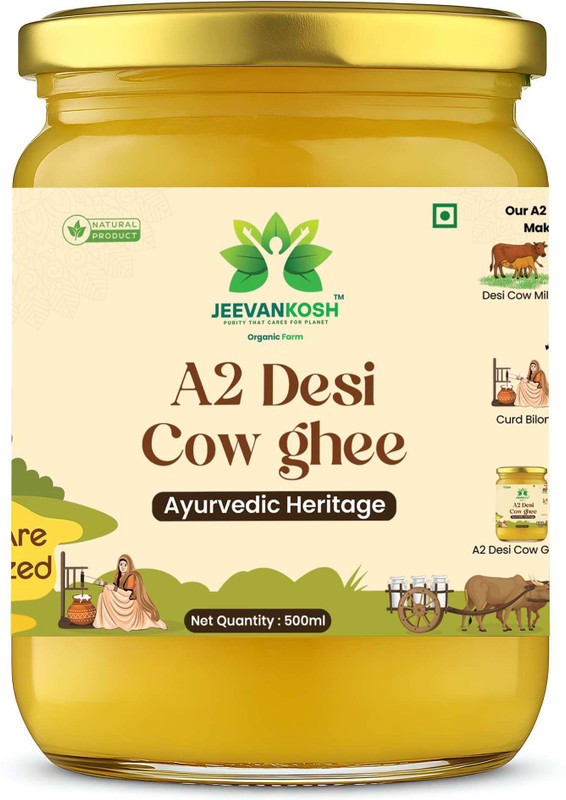
JEEVANKOSH A2 Desi Cow Bilona Ghee| Traditional Hand Churned | Ghee Glass Bottle(500 ml)
Rs. 744 in stock
Highlights
- Rich in Nutrients
Specifications
| In The Box | |
| Sales Package | Glass Jar |
| Pack of | 1 |
| General | |
| Brand | JEEVANKOSH |
| Model Name | A2 Desi Cow Bilona Ghee| Traditional Hand Churned | |
| Container Type | Glass Bottle |
| Quantity | 500 ml |
| Maximum Shelf Life | 12 Months |
| Source Type | Cow Milk |
| Organic | Yes |
| Added Preservatives | No |
| Dietary Preference | Wheat Free, Sugar Free, Non-GMO, No Trans Fat, No Trans Fat, No Sodium, No MSG, No Cholesterol, Gluten Free |
| Ingredients | DESI RATHI COW A2 MILK |
| Other Features | High Smoke Point (250°C – 260°C), Nutrient-Rich, Digestive Friendly, No Artificial Additives |
| Net Quantity | 500 ml |
| Moisture Content | 0.3 % |
| Allergens Included | Yes |
| Nutrient Content | A2 MILK |
| Caloric Value | 899 kcal |
| Texture | Grainy |
| Additives | NO Additives |
| Trans Fat per Serving | 0 g |
| Storage Condition | Normal Room Temprature |
| Certification | FSSAI |
| FSSAI Number | 12125561000043 |
| Manufactured By | Lakhdatar Enterprises |
| Fortified | No |
| Smoking Point | 260 K |
| Usage Instructions | Used on Chappati, Dal Rice, Tadka, Ayurvedic Usage |
| Flavor | Rich, Natural Ghee, Nutty Aroma |
| Type | Ghee |
| Dimensions | |
| Width | 12 cm |
| Depth | 20 cm |
| Height | 12 cm |
| Weight | 500 g |
| Additional Features | |
| Key Features | Traditional Bilona Method: Crafted using age-old hand-churning process for authentic taste., 100% Natural & Preservative-Free: No chemicals, additives, or artificial colors., Lactose-Friendly: Easy to digest, suitable for the whole family., Rich Aroma & Flavor: Enhances taste of all Indian cooking & sweets., Health Benefits: Supports digestion, immunity, and overall wellness. |
| Legal Disclaimer | |
| Flipkart endeavours to ensure that the sellers provide accurate information on the platform. It is pertinent to note that, actual product packaging and materials may contain more and different information, which may include nutritional information/allergen declaration/special instruction for intended use/warning/directions, health & nutritional claims, etc. We recommend that consumers always read the label carefully before using or consuming any products. Please do not solely rely on the information provided on this website. For additional information, please get in touch with the manufacturer. | |
Pure Desi Rathi Cow Ghee – From Our Organic Farm to Your Home Our A2 Rathi Cow Ghee is made from the milk of our own free-grazing Rathi cows, raised on our Ecocert-certified organic farm. The cows bask in the sunshine and graze freely for over 5 hours daily, ensuring they stay healthy and active....
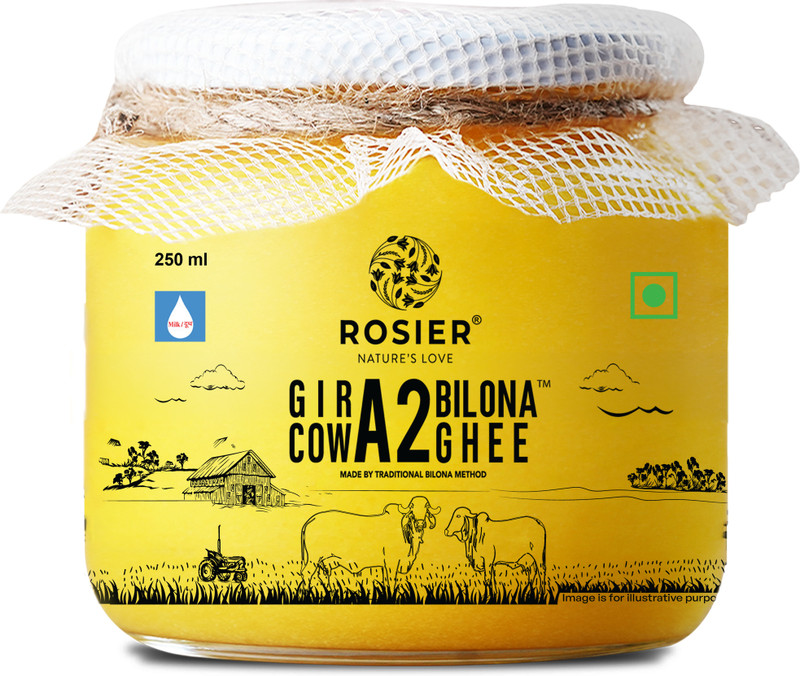
ROSIER A2 Gir Cow Ghee 250ml Traditional Bilona Method A2 Ghee Pure & Healthy Desi Ghee Ghee Glass Bottle(250 ml)
Rs. 531 in stock
Highlights
- Ghee is good for skin
Specifications
| In The Box | |
| Sales Package | 1Ghee Bottle |
| Pack of | 1 |
| General | |
| Brand | ROSIER |
| Model Name | A2 Gir Cow Ghee 250ml Traditional Bilona Method A2 Ghee Pure & Healthy Desi Ghee |
| Container Type | Glass Bottle |
| Quantity | 250 ml |
| Maximum Shelf Life | 12 Months |
| Source Type | Cow Milk |
| Organic | Yes |
| Ingredients | Milk Fat |
| Net Quantity | 250 ml |
| Nutrient Content | Energy (Kcal) - 897.8, Total Fat (g) - 99.7, Saturated Fat (g) - 67.7, PUFA (g) - 2.7, MUFA (g) - 27.3, Omega 3 (g) - 0.35, Omega 6 (g) - 2.4, Cholesterol (mg) - 129.2 |
| FSSAI Number | 12724051000040 |
| Manufactured By | Rosier Foods Private Limited |
| Flavor | Ghee |
| Type | Ghee |
| Dimensions | |
| Width | 7.5 cm |
| Depth | 7.5 cm |
| Height | 8.5 cm |
| Weight | 449 g |
| Additional Features | |
| Key Features | A2 Desi Ghee and its Indian roots always have a story to tell. Rosier Cow Desi Ghee is crafted from Milk using the traditional Bilona Curd Churning process, Rosier Cow Ghee has an Unique & Distinct TASTE and AROMA which you would have never tasted before. A spoonful of this Ghee will greatly enhance your meals and keeps you FIT Naturally., Rosier Cow Ghee is full of nutritive fatty acids, an ideal fat source for an Indian vegetarian diet. Regular consumption of our high-quality ghee helps reduce cholesterol, improves the heart's functioning and reduces joint pain. It keeps the body healthy and increases its potency., Desi Ghee enhances eyesight and improves the immune system. It is great for anti-aging and It is highly nutritive, cooling in nature and easily digestible. |
| Legal Disclaimer | |
| Flipkart endeavours to ensure that the sellers provide accurate information on the platform. It is pertinent to note that, actual product packaging and materials may contain more and different information, which may include nutritional information/allergen declaration/special instruction for intended use/warning/directions, health & nutritional claims, etc. We recommend that consumers always read the label carefully before using or consuming any products. Please do not solely rely on the information provided on this website. For additional information, please get in touch with the manufacturer. | |
A2 Gir Cow Ghee is made using fresh Gir cow milk. The Cows are free-grazed. The milk from them is brought to a boil and naturally cooled down to room temperature and inoculated with a natural starter culture and left overnight to make curd. The curd is churned using the traditional 'Bilona method'
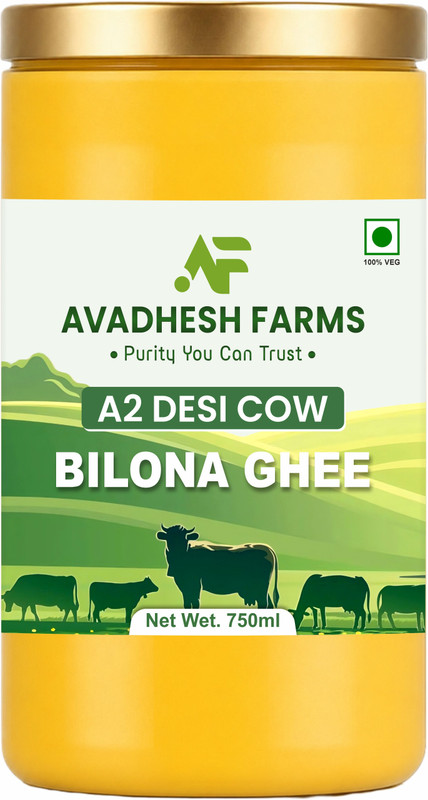
Avadhesh Farms A2 Desi Cow Vedic Bilona Cultured Ghee | Pure & Traditional Ghee Glass Bottle Ghee Glass Bottle(750 ml)
Rs. 566 in stock
Highlights
- Cow Ghee
Specifications
| In The Box | |
| Sales Package | 1 Ghee |
| Pack of | 1 |
| General | |
| Brand | Avadhesh Farms |
| Model Name | A2 Desi Cow Vedic Bilona Cultured Ghee | Pure & Traditional Ghee Glass Bottle |
| Container Type | Glass Bottle |
| Quantity | 750 ml |
| Maximum Shelf Life | 12 Months |
| Source Type | Cow Milk |
| Organic | Yes |
| Added Preservatives | No |
| Dietary Preference | NA |
| Ingredients | 100% Pure A2 Desi Cow Milk Fat, No additives |
| Other Features | Traditional Bilona (Hand Churned) Method, Made from milk of Free Grazed Cows, No Preservatives, No Additives, High Smoke Point – Suitable for Cooking, Rich Aroma & Natural Grainy Texture, 100% Pure desi Cow Ghee |
| Net Quantity | 750 ml |
| Moisture Content | 0.3 % |
| Allergens Included | Yes |
| Nutrient Content | Energy-897 |
| Caloric Value | 900 kcal |
| Texture | Grainy |
| Additives | None |
| Trans Fat per Serving | 0 g |
| Storage Condition | Store in a cool and dry place |
| Certification | FSSAI Licensed Product, Msme |
| FSSAI Number | 21426850000189 |
| Manufactured By | Avadhesh farms |
| Fortified | No |
| Smoking Point | 250 K |
| Usage Instructions | Ideal for cooking, frying and tempering, Suitable for Ayurveda, daily consumption and religious rituals |
| Flavor | Natural |
| Type | Ghee |
| Dimensions | |
| Width | 11 cm |
| Depth | 11 cm |
| Height | 15 cm |
| Weight | 0.1 g |
| Other Dimensions | Filled Glass Jar |
| Additional Features | |
| Key Features | Pure A2 Desi Cow Ghee – Made from milk of indigenous desi cows, containing natural A2 protein, Traditional Bilona Hand Churned Method – Prepared using slow hand-churned bilona process for authentic taste and aroma, Free Grazed & Handmade – Ghee prepared from milk of free-grazing cows using traditional techniques, Lactose Free & Easy to Digest – Suitable for lactose-sensitive individuals, supports digestion and immunity, Farm to Home Freshness – Hygienically packed in food-grade steel can to preserve purity and long shelf life |
| Legal Disclaimer | |
| Flipkart endeavours to ensure that the sellers provide accurate information on the platform. It is pertinent to note that, actual product packaging and materials may contain more and different information, which may include nutritional information/allergen declaration/special instruction for intended use/warning/directions, health & nutritional claims, etc. We recommend that consumers always read the label carefully before using or consuming any products. Please do not solely rely on the information provided on this website. For additional information, please get in touch with the manufacturer. | |
Avadhesh Farms A2 Desi Cow Bilona Ghee is a traditionally prepared premium ghee made using the ancient hand-churned bilona method. Fresh curd is churned slowly to extract butter, which is then gently heated to produce aromatic and nutrient-rich ghee.This A2 cow ghee is lactose free, handmade and...
Culinary Uses: Cooking and Baking
A small amount of ghee works well for sautéing vegetables, finishing rice or lentils, greasing a pan, or enriching baked goods. Its toasted flavor is noticeable, so it can be especially useful when you want depth without adding a complicated sauce. In baking, remember that replacing butter with ghee changes the water content and may slightly alter texture.
For a simple routine, try these uses across different meals:
- Warm a teaspoon with spices before adding vegetables or lentils.
- Brush a small amount over roasted vegetables or cooked grains.
- Use it to grease a baking pan or add richness to a simple batter.
- Stir a little into soup or beans just before serving.
These options keep the focus on flavor and portion awareness. They also make it easier to notice whether you genuinely enjoy the ingredient, rather than adding it to every meal because of a broad wellness claim.
Ayurvedic Practices and Wellness Routines
Ghee has a long history in Ayurvedic food and wellness traditions, where it may be used in cooking and selected routines. Those traditions are culturally meaningful, but a traditional practice should not be confused with a clinically proven treatment. If you use ghee in a wellness routine, consider the serving, the rest of your diet, and any medical advice you already follow.
A calm, practical routine might be as simple as using a measured spoonful in breakfast or a cooked meal. Avoid putting ghee into a routine that promises to treat disease, cleanse the body, or replace prescribed care. Food can support everyday nourishment without needing to carry a medical claim.
Conclusion
A2 cow ghee is best understood as clarified butter made from A2-associated milk, with a rich flavor and a concentrated fat profile. It may offer useful fat-soluble nutrients and culinary flexibility, while evidence for special digestive, heart, or anti-inflammatory effects remains mixed and limited. Used in modest portions as part of a varied diet, it can earn a practical place in the kitchen without being treated as a cure-all.
Frequently Asked Questions
Is A2 cow ghee the same as A2 milk?
No. A2 milk contains A2 beta-casein, while ghee is clarified butter in which most water and milk solids, including most milk protein, have been removed.
Does A2 ghee contain lactose?
Clarification removes most milk solids, so ghee generally contains very little lactose. People with a milk allergy should still seek medical guidance because trace dairy components may remain.
Is A2 ghee easier to digest?
Some people find ghee comfortable to eat, but individual tolerance varies. Evidence about A2 milk cannot automatically be applied to A2 ghee, and persistent digestive symptoms should be evaluated professionally.
How much A2 ghee should you eat daily?
There is no universal amount. Start with a small serving and account for ghee within your total calorie and saturated-fat intake, following personalized advice when needed.
Can you cook with A2 ghee?
Yes. It can be used for sautéing, finishing cooked foods, greasing pans, and some baking applications. Its rich flavor means a little may be enough.
Does A2 ghee reduce cholesterol?
There is no reliable basis for treating A2 ghee as a cholesterol-lowering food. It contains saturated fat, so people managing cholesterol should consider it within their overall dietary pattern.
Is A2 ghee anti-inflammatory?
Ghee contains fatty acids and other compounds studied for possible biological effects, but eating it has not been proven to reduce inflammation in every person. Strong therapeutic claims should be treated cautiously.


