
Key Takeaways
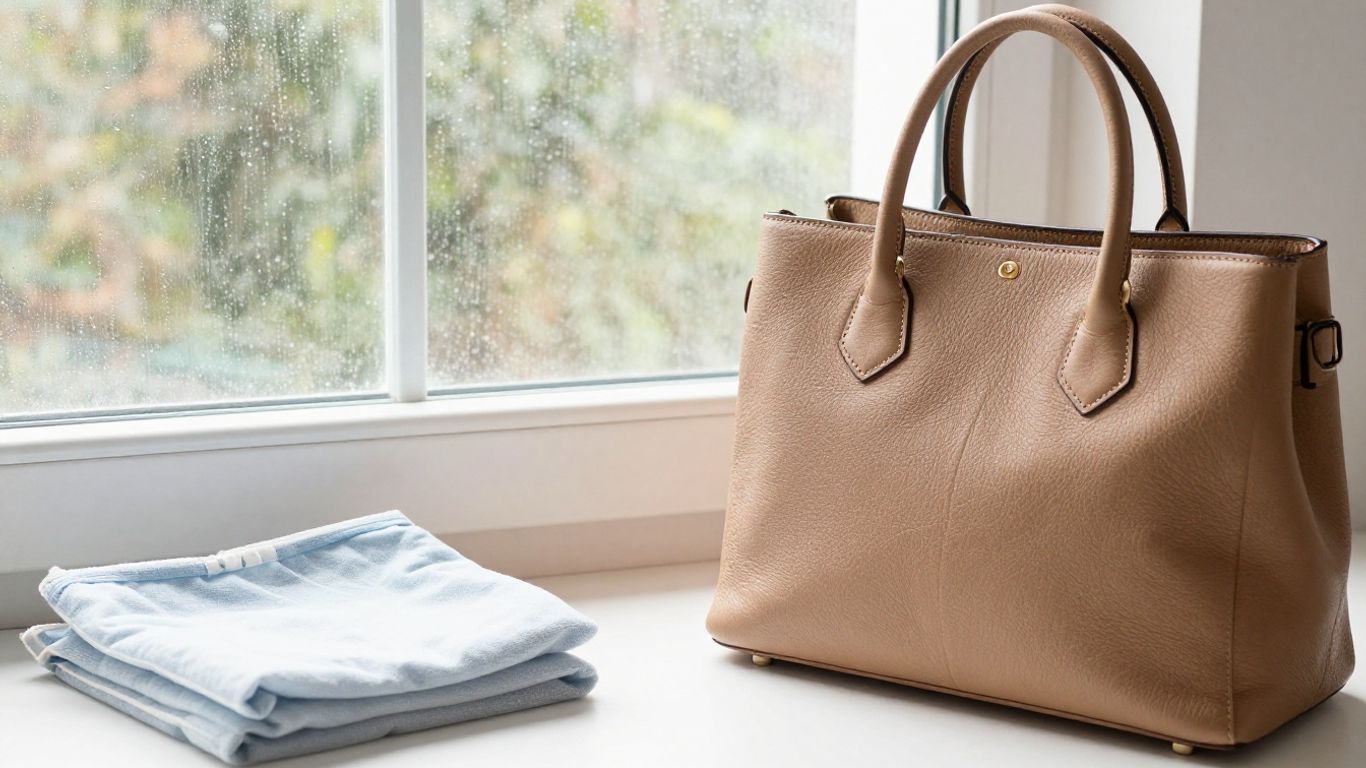
A little preparation and regular ventilation can keep your leather bag in good condition through wet, humid weather.
- Wipe away rain and surface moisture as soon as you get home.
- Let the bag dry naturally before returning it to storage.
- Use breathable dust bags, not airtight plastic covers.
- Inspect seams, pockets, and linings where dampness may linger.
- Treat recurring mould as a humidity problem, not only a surface stain.
- Understand why monsoon weather causes mould on leather bags
- Prepare your leather bag before the rainy season
- Keep leather bags dry during daily monsoon use
- Dry and clean a leather bag safely
- Store leather bags to prevent mould between uses
- Build a monsoon leather-care routine
- Avoid common mistakes that increase mould risk
- Conclusion
- Frequently Asked Questions
- Can leather bags develop mould during the monsoon?
- How should you dry a leather bag after rain?
- Is it safe to store a leather bag in plastic?
- How often should you inspect stored leather bags?
- Can sunlight remove mould from leather?
- Should you condition leather during the rainy season?
- When should you seek professional leather cleaning?
Understand why monsoon weather causes mould on leather bags
Monsoon weather brings the combination leather dislikes most: moisture, warmth, and limited airflow. A bag may feel dry on the outside while its lining, seams, or base still hold dampness. Understanding where that moisture collects makes it easier to prevent mould rather than react to it later.
How humidity, heat, and poor airflow encourage mould growth
Leather is porous, so humid air can leave moisture within its surface and stitching. Warm, closed cupboards make the problem worse, especially when a bag is placed inside immediately after a rainy commute. Airflow is your first defence because it helps trapped moisture evaporate before mould has a chance to establish itself.
If the bag is not used often, check it every few days during particularly wet spells. Everyday use alone is not a guarantee, but opening the bag and moving it into a dry, ventilated room can prevent a damp pocket from remaining unnoticed.
Early signs of mould, mildew, and moisture damage
Look for powdery white, green, grey, or black spots, a musty smell, darkened patches, and a surface that feels unusually tacky or stiff. Mould may first appear around handles, piping, folds, and the bottom corners because these areas receive less air. A lining can also develop an odour before visible growth appears.
Do not brush suspicious spots aggressively while the bag is indoors. Loose particles can spread to nearby clothing and accessories, so isolate the bag and clean the surrounding storage area as well.
Leather types that need different levels of protection
Smooth finished leather generally tolerates careful wiping better than suede, nubuck, or unfinished aniline leather. Suede can show water marks quickly, while glossy patent finishes may resist a splash but still suffer from trapped humidity, cracking, or adhesive failure. If you are unsure what you own, check the care label or ask the maker before applying any treatment.
A useful leather care guide can help you compare the needs of full-grain, suede, and other finishes before you choose a cleaner or protector. Always test a product on a hidden area first.
Why damp storage can damage linings, hardware, and adhesives
Moisture does not stay on the outer hide. It can soften cardboard or foam inside structured panels, stain fabric linings, dull metal hardware, and weaken adhesives used around trims. Repeated dampness can also distort the bag’s shape as materials expand and contract.
That is why drying the outside is only one part of care. Open every pocket, remove inserts, and allow the interior to breathe before you close the bag or place it on a shelf.
Prepare your leather bag before the rainy season
Preparation is easiest before the first prolonged spell of rain, when the bag is clean and fully dry. Start with inspection rather than immediately applying a spray or conditioner. You want to remove grime, identify weak areas, and choose protection that suits the leather’s finish.
Cleaning away dirt, oils, and existing mould spores
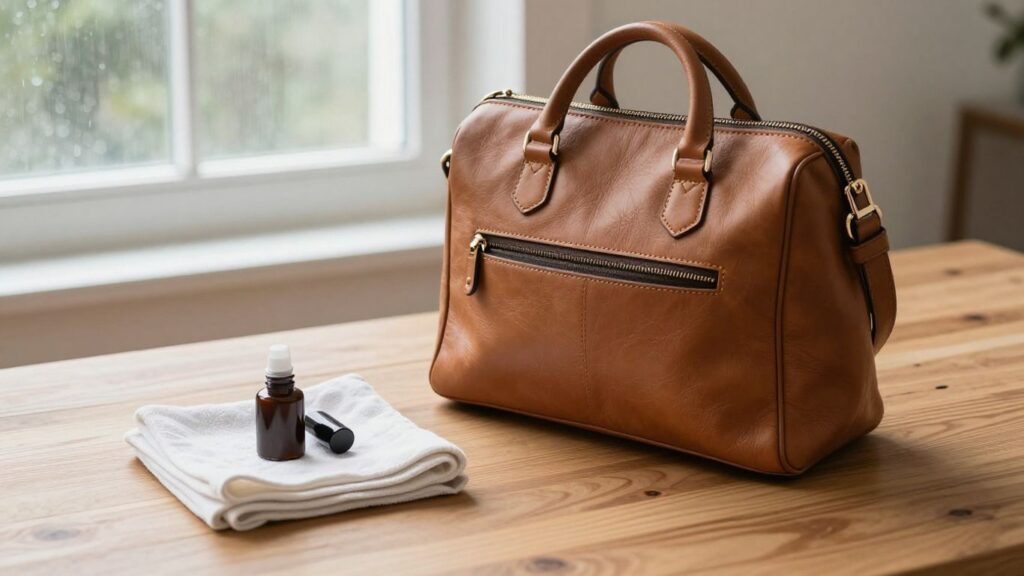
Dust, skin oils, and food residue give moisture something to cling to, so wipe the bag gently with a suitable soft cloth. If you see mould, move the bag away from other belongings and avoid shaking or vigorous brushing. For delicate finishes, a specialist should confirm the safest cleaning method.
The broader advice in this monsoon leather storage guide is useful here: prevention depends on keeping leather clean, dry, and away from humid storage. Clean the shelf or cupboard too, because treating the bag while leaving its damp surroundings unchanged will not solve the cause.
Choosing a leather conditioner without over-moisturising
Conditioner can help dry, tired leather remain flexible, but too much product leaves the surface oily and may hold moisture against it. Use a small amount only when the leather maker permits it, and apply it to a clean, dry bag in a thin, even layer. Suede and nubuck usually need their own specialist products rather than a standard cream.
Let the conditioner absorb completely before storage. If the surface still feels greasy after the recommended drying time, you have probably used too much.
Checking seams, pockets, handles, and hidden areas
Before the rains begin, inspect the places you rarely see: inside zipped compartments, beneath the flap, around handle attachments, and along the base. These areas collect lint and may stay damp after the rest of the bag feels dry. Check also for loose stitching or peeling edges that could let water reach internal layers.
Emptying the bag makes this inspection much easier. Remove old receipts, fabric pouches, and other objects that can retain moisture, then leave each compartment open while you examine it.
Waterproofing products to use and products to avoid
A protector should be labelled for your specific leather type, and it should be tested discreetly before wider use. Follow the manufacturer’s instructions about distance, drying time, and ventilation. Avoid improvised oils, strong household sprays, and products that leave a heavy film unless the leather maker specifically recommends them.
When comparing products, use a practical buying guide to consider material compatibility, instructions, reviews, and long-term value rather than choosing only the cheapest option. PromoDeals can help shoppers find discounts and promotional offers, but the product still needs to be suitable for your bag.
Keep leather bags dry during daily monsoon use
Daily habits matter because a bag often encounters several small sources of water before it reaches your home. Rain on the exterior, a wet umbrella beside the lining, and condensation from a bottle can add up. A simple routine after each commute is more reliable than trying to rescue a heavily soaked bag later.
Using a rain cover or protective bag when commuting
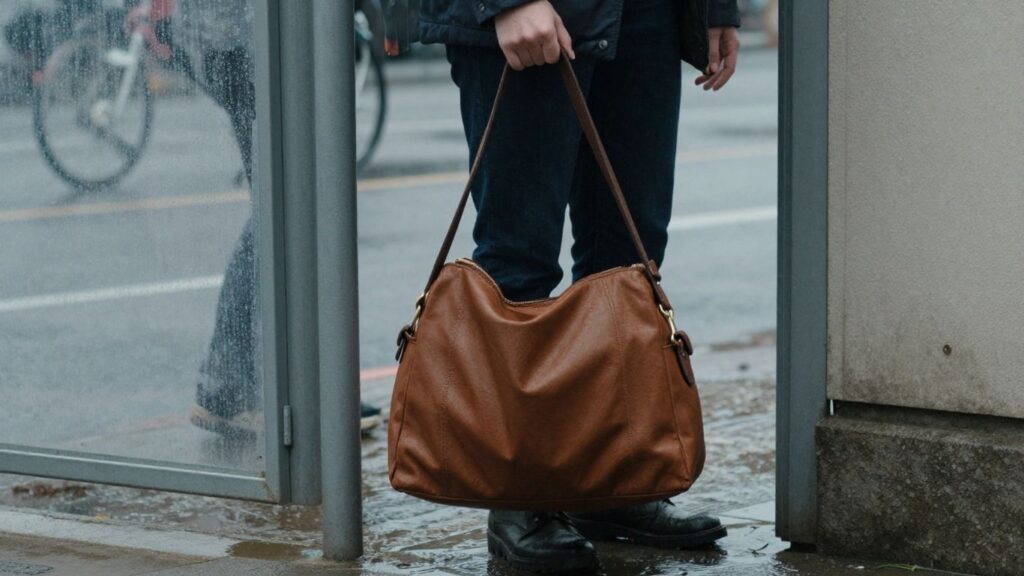
Use a rain cover or a roomy protective outer bag when you expect a downpour, leaving enough space that the leather is not pressed against wet material. Keep the cover clean and dry between uses; a damp cover can transfer moisture back onto the bag. Choose a breathable storage layer once you are indoors rather than sealing the wet item immediately.
A cover reduces exposure, but it is not a substitute for drying. Check the underside and base when you arrive, especially if the bag rested on a wet seat or floor.
What to do when your bag gets wet
Take out the contents, blot the surface with a clean absorbent cloth, and open every compartment. Do not rub hard, twist the leather, or put the bag away while its seams are still damp. Shape it gently with clean, unprinted paper if needed, then leave it upright in a ventilated room.
The aim is gradual drying, not speed. Recheck the base and lining after several hours, and do not condition the bag until it is fully dry.
Why direct heat and sunlight can crack leather
A hairdryer, radiator, or strong window heat can dry the surface faster than the oils inside it can redistribute. That uneven drying may leave leather brittle, warped, faded, or cracked. Bright direct sunlight can also alter colour, so choose shade and steady room-temperature airflow instead.
Patience is especially important for thick handles and structured panels. They may feel dry first while deeper layers remain damp.
Managing wet umbrellas, bottles, and clothing inside the bag
Keep wet objects separate from leather whenever possible. Use a leakproof bottle sleeve, wrap a closed umbrella in a waterproof case, and do not place damp clothing directly against the lining. If something spills, remove it promptly and blot rather than pushing moisture deeper into the fabric.
A few minutes of unpacking when you get home can prevent a hidden damp pocket from becoming a mould problem. Leave the bag open until the inside smells neutral and feels dry.
Dry and clean a leather bag safely
Safe cleaning is deliberately gentle. Your first task is to remove moisture without spreading spores or damaging the finish, and your second is to improve airflow. If the bag has extensive growth, strong odour, dye transfer, or structural damage, home treatment may do more harm than good.
Removing surface moisture with the right materials
Use a clean, soft, absorbent cloth and press lightly against wet areas. Rotate to a dry section as the cloth becomes damp, and avoid coloured towels that might transfer dye. Do not use paper with printed ink on pale leather, since moisture can cause the ink to bleed.
After blotting, inspect the underside, corners, and handle joins. Surface dryness does not prove that the interior is ready for storage.
Improving airflow without exposing the bag to damage
Set the bag upright in a shaded room and open its compartments, pockets, and zip sections. Keep it away from a crowded cupboard, damp bathroom, or exterior wall that feels clammy. A fan may circulate room air from a distance, but it should not blast one area continuously.
A gradual approach protects the shape and finish. Once the bag is dry, close it loosely or store it in a breathable cover rather than returning it to a sealed container.
Handling mould spots with leather-safe cleaning methods
For a small suspected spot, isolate the bag, wear suitable protection, and follow the leather maker’s care instructions. A barely damp cloth may be appropriate for some finished leathers, but suede, nubuck, and unfinished surfaces can mark easily. Never saturate the hide in an attempt to wash mould away.
Use separate cloths for the affected item and nearby surfaces, then discard or wash them appropriately. Do not condition over visible growth, because adding oils before the area is clean and dry may encourage further residue.
When professional cleaning is safer than home treatment
Professional help is sensible when mould covers several panels, has entered the lining, keeps returning, or is accompanied by a strong smell. It is also safer for valuable, vintage, dyed, suede, nubuck, or structurally damaged bags. Ask what process will be used and whether the cleaner has experience with your leather type.
If the bag has been exposed to a persistently damp room, cleaning alone may not be enough. You will also need to improve the storage conditions that allowed the problem to recur.
Store leather bags to prevent mould between uses
Storage is where many monsoon problems begin. A clean bag can still develop mould if it is pressed against other items in a humid cupboard with no air movement. Choose a location that stays reasonably cool and dry, then prepare the bag before it goes inside.
Selecting a cool, dry, and ventilated storage location
Choose a shelf away from bathrooms, kitchen steam, leaking windows, and exterior walls with signs of dampness. Keep bags off the floor, where spills and rising moisture are harder to notice. If the cupboard smells musty, solve that issue before using it for leather.
Storage should also be convenient enough that you will actually inspect the bags. An overcrowded, rarely opened cabinet makes early warning signs easy to miss.
Using breathable dust bags instead of plastic covers
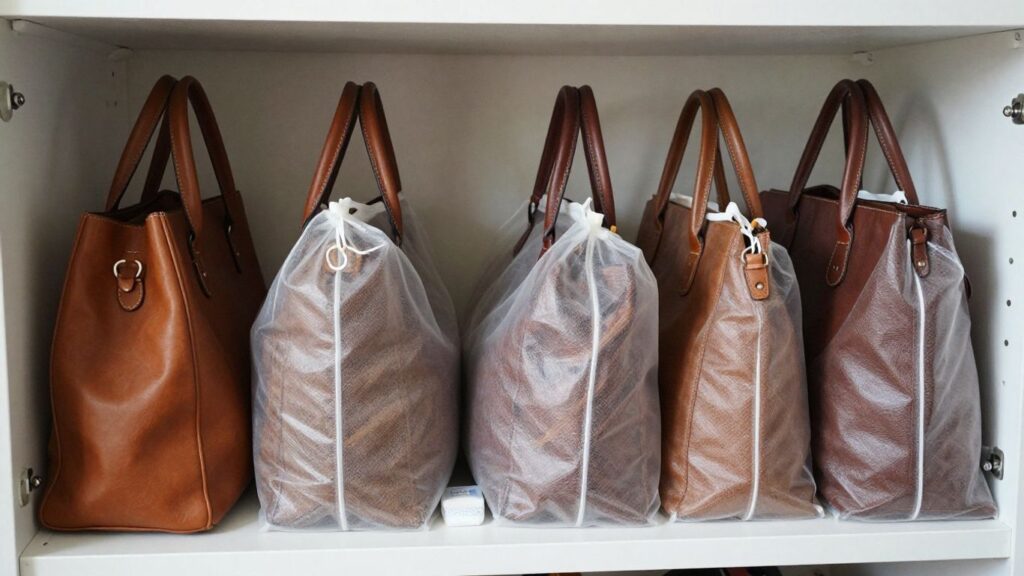
A breathable cotton or non-woven dust bag protects against dust while allowing some air exchange. Plastic covers can trap the moisture already present in the leather or surrounding air, creating a humid pocket. Make sure the bag is completely dry before covering it.
Do not force a large bag into a tight dust cover. The fabric should not press wet folds against one another, and handles should have enough room to rest naturally.
Maintaining space between bags for proper air circulation
Leave a little space around each bag instead of stacking them tightly. The following arrangement makes regular checks easier and keeps air moving around the surfaces:
- Stand structured bags upright with their handles supported.
- Leave gaps between neighbouring bags and the back wall.
- Keep soft bags from being compressed under heavier ones.
- Open or remove inserts that could retain dampness.
After arranging the shelf, walk away and return later to check whether any item has slumped into another. Small gaps are useful only when they remain open.
Positioning silica gel and other moisture absorbers safely
Place a fresh desiccant nearby, not loose inside the leather bag where it could leak or rub against the finish. Replace or recharge it according to its instructions, and do not treat one sachet as a substitute for ventilation. A moisture absorber works best in a reasonably enclosed storage area that is already clean and dry.
Inspect the absorber regularly, especially after several rainy days. If it fills quickly, investigate the cupboard’s humidity instead of simply adding more packets.
| Storage choice | Better practice | Main reason |
|---|---|---|
| Cover | Breathable dust bag | Reduces dust without sealing in dampness |
| Shelf | Raised, ventilated position | Keeps the base away from floor moisture |
| Arrangement | Space between bags | Allows air to move around surfaces |
| Desiccant | Nearby and monitored | Helps manage local moisture safely |
This setup is simple, but it gives you several points of control rather than relying on a single product. Recheck the arrangement whenever you add a new bag or return from a wet trip.
Build a monsoon leather-care routine
A routine turns prevention into a small, repeatable task. You do not need to handle every bag every day, but you should increase checks when humidity stays high or rain has continued for several days. Keep a soft cloth and the correct care products nearby so maintenance does not feel like a major project.
How often to inspect bags during periods of high humidity
During prolonged wet weather, inspect frequently used bags after damp commutes and check stored bags at least weekly. Look first at bases, folds, handles, linings, and any area that touches the shelf. A quick smell check can reveal trapped moisture before visible spots develop.
If a bag is rarely used, do not assume it is safe because it remains untouched. Still air inside a closed cupboard can be more problematic than regular, careful handling.
A weekly cleaning and ventilation schedule
Once a week, empty each bag, wipe away surface dust, open all compartments, and allow the item to air in a shaded room. Check the dust bag and shelf at the same time. This short sequence is easier to maintain than occasional intensive cleaning after mould has spread.
Record which bags were exposed to rain and give those extra attention. Consistency matters more than making every inspection elaborate.
When to condition, polish, or re-waterproof the leather
Condition only when the leather is clean, dry, and showing a genuine need for it, such as dryness or stiffness consistent with the maker’s guidance. Polish should match the finish and colour, while re-waterproofing should follow the product’s stated interval rather than a guess. Avoid layering products during humid weather.
If the finish changes after a small test, stop and seek advice. A protective product that is unsuitable for the leather can create more visible damage than the rain itself.
How to monitor closets and storage cabinets for dampness
Check for musty smells, condensation, peeling paint, swollen wood, or surfaces that feel cool and clammy. A simple humidity monitor can show whether the cupboard remains damp even when the room feels comfortable. Clean dust from vents and avoid packing the cabinet so tightly that air cannot circulate.
PromoDeals focuses on bringing discounts and promotional offers together, which can be useful when you are comparing practical household items such as a humidity monitor or breathable storage supplies. Choose based on fit and reliability, not only the advertised reduction.
Avoid common mistakes that increase mould risk
Most avoidable damage comes from rushing after a wet journey or using a product that was never meant for leather. The safest approach is gentle drying, suitable materials, and attention to the storage environment. If a problem repeats, treat it as evidence that the routine or room needs changing.
Storing a damp bag immediately after use
Closing a wet bag in a cupboard traps moisture around folds, lining, and hardware. Even if the exterior looks acceptable, the base and inner pockets may remain damp for hours. Empty the bag and give it time to dry in moving room air before covering or shelving it.
This is the habit worth changing first because it affects almost every other prevention step.
Applying household cleaners, alcohol, or excessive water
Kitchen sprays, bleach, alcohol, and strong solvents can strip colour, dry the finish, or leave marks that cannot be reversed. Excessive water may spread the problem into the lining and padding. Use only a product intended for the particular leather, and test it in an inconspicuous area.
If you cannot identify the finish, pause before cleaning. Professional advice is usually less costly than repairing a permanently discoloured panel.
Overloading pockets and blocking internal ventilation
Stuffed pockets press damp materials against the lining and stop air from moving through the bag. Heavy contents can also stress seams and distort the base, making small wet areas harder to notice. Remove unnecessary items regularly and keep wet belongings separate.
A lighter bag is easier to inspect, dry, and store correctly. It also gives you more room to notice a smell or texture change early.
Ignoring recurring mould and underlying humidity problems
If mould returns after careful cleaning, inspect the cupboard, wall, floor, and nearby belongings. The source may be a leak, condensation, poor ventilation, or a desiccant that is already saturated. Repeatedly wiping the same marks without correcting the environment only postpones the next outbreak.
Move the bag to a drier location while you investigate, and ask a professional to assess persistent or extensive growth. Prevention works best when both the leather and its surroundings receive attention.
Conclusion
When you understand how humidity affects leather, dry your bag patiently, and store it with space and airflow, monsoon care becomes manageable. Inspect often, avoid harsh shortcuts, and respond to dampness before it becomes mould.
Frequently Asked Questions
Can leather bags develop mould during the monsoon?
Yes. Warm, humid air and poor ventilation can leave enough moisture on or inside a bag for mould to grow, particularly when the bag is stored damp.
How should you dry a leather bag after rain?
Blot it gently with a clean absorbent cloth, empty the contents, open its compartments, and let it dry naturally in a shaded, ventilated room. Avoid direct heat.
Is it safe to store a leather bag in plastic?
Plastic can trap moisture and reduce airflow, so a breathable dust bag is generally safer once the leather is fully dry.
How often should you inspect stored leather bags?
Check them at least weekly during humid weather, paying attention to seams, folds, linings, handles, and the bottom of the bag.
Can sunlight remove mould from leather?
Strong sunlight is not a reliable mould treatment and may fade or dry the leather unevenly. Gentle cleaning and controlled ventilation are safer.
Should you condition leather during the rainy season?
Condition only when the leather is clean, dry, and suitable for the product. Too much conditioner can leave an oily surface that holds dust and moisture.
When should you seek professional leather cleaning?
Seek professional help for extensive mould, persistent odour, delicate finishes, valuable bags, lining damage, or mould that returns after careful home treatment.