
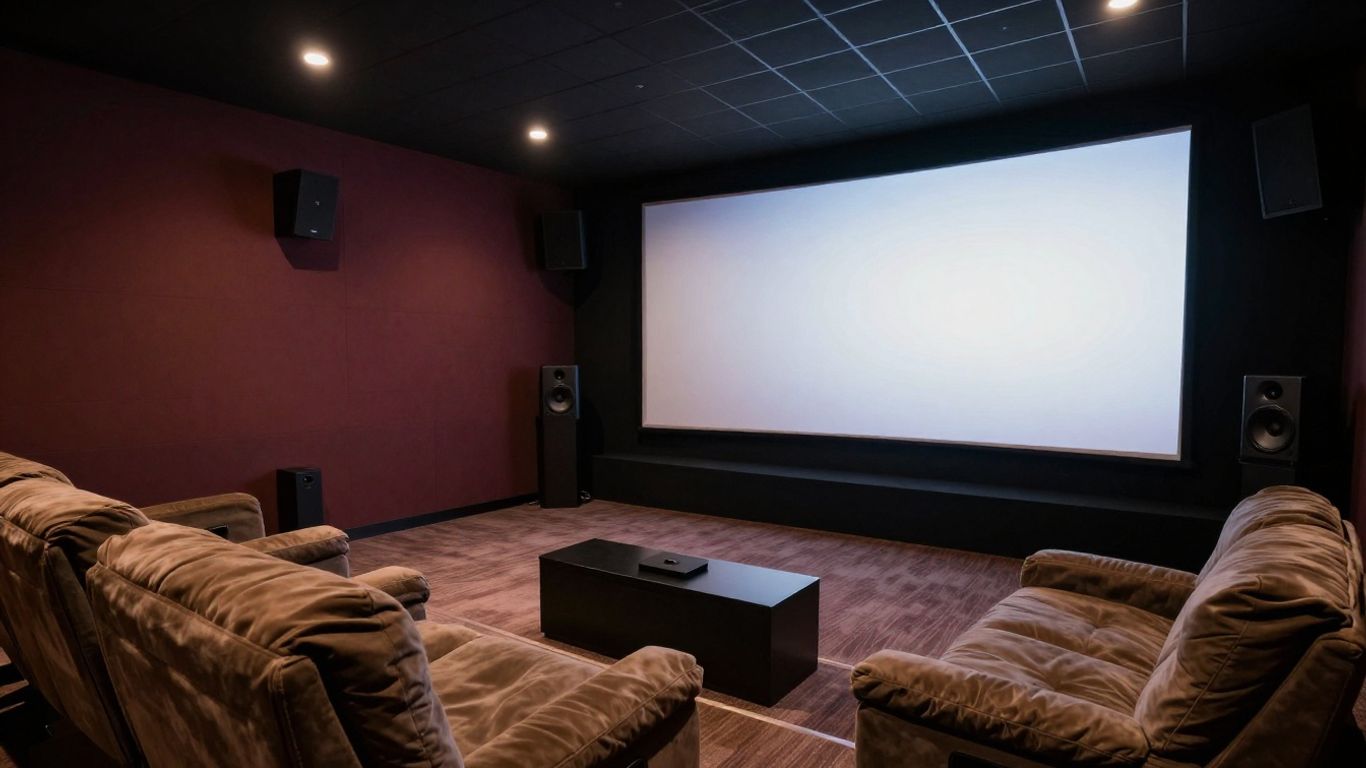
Key Takeaways
Dolby Atmos can make movies, games, and music feel more spacious by adding height and movement to the soundstage. You do not need the biggest room or the most expensive system, but you do need compatible content, equipment, and sensible placement.
- Dolby Atmos uses object-based audio rather than relying only on fixed speaker channels.
- Height information can come from ceiling speakers, height speakers, or upward-firing drivers.
- Your source device, HDMI connection, receiver, soundbar, and speakers all affect playback.
- Careful placement and calibration usually matter more than simply buying more speakers.
- You can start small and upgrade as your room, budget, and listening habits allow.
What Dolby Atmos is and how it differs from surround sound
If you have searched for “What Is Dolby Atmos and How Does It Work at Home?”, the short answer is that Dolby Atmos adds a sense of vertical space to surround audio. Instead of treating every sound as part of a fixed channel alone, it can describe sounds as objects with positions and movement. That gives you a more flexible soundstage, especially when something seems to pass above or around you.
The idea behind object-based audio
Traditional surround formats assign audio to channels such as the front left, center, surround right, or subwoofer. Object-based audio adds another layer: the mix can carry information about where a sound should appear and how it should move. Your playback system then uses that information to reproduce the scene with the speakers available to it.
This does not mean every sound is a separate file or that every speaker plays independently all the time. The system interprets the mix and distributes sound across its available speakers. That is why a well-configured smaller system can still create a convincing sense of movement.
How Dolby Atmos adds height to the soundstage
Height is the feature you notice first. Rain can seem to fall from above, a helicopter can travel across the upper part of the room, and a soundtrack can extend beyond the flat ring created by ear-level speakers. The result depends on the mix, your room, and the way your speakers reproduce height information.
For a useful overview of the format, you can read this Dolby Atmos explanation, which describes how creators place sounds to build a more immersive experience. The practical point is simple: height works best when the system can create a believable separation between sounds beside you and sounds above you.
Dolby Atmos compared with 5.1 and 7.1 surround sound
A 5.1 system generally has five main speaker channels and one low-frequency effects channel. A 7.1 system adds two more ear-level surround channels. Dolby Atmos can use those foundations while also adding height information, so the comparison is not always a choice between one fixed speaker layout and another.
| Format | Main sound arrangement | Height information | Typical impression |
|---|---|---|---|
| 5.1 surround | Five ear-level channels plus low frequencies | Usually absent | Front, side, and rear separation |
| 7.1 surround | Seven ear-level channels plus low frequencies | Usually absent | More rear and side detail |
| Dolby Atmos | Ear-level channels plus height-capable playback | Supported when the mix and system allow it | A broader, more three-dimensional field |
The table is a useful starting point, but labels do not guarantee the same experience in every room. Speaker quality, placement, room reflections, and the quality of the source can all change what you hear.
Why sound placement matters for immersion
Your brain uses timing, volume, and direction to decide where a sound is coming from. When those cues are consistent, a moving sound feels continuous instead of jumping between speakers. That is why a modest system placed carefully can be more enjoyable than a larger system with speakers scattered around the room.
Immersion is also personal. You may value clear dialogue, convincing overhead effects, strong bass, or a wide music presentation more than maximum volume. Start with the kind of listening you actually do, then choose equipment that supports it.
How Dolby Atmos works in a home theater
At home, Dolby Atmos is a chain rather than a single component. The movie, show, game, or music track must contain compatible audio; the source must pass it correctly; and the receiver or soundbar must decode and render it. Your speakers then turn that information into sound in the room.
That chain explains why two people can play the same title and get different results. One may have ceiling speakers and a compatible receiver, while the other uses a television speaker system that folds the soundtrack into a simpler output.
Audio objects, metadata, and the Dolby Atmos mix
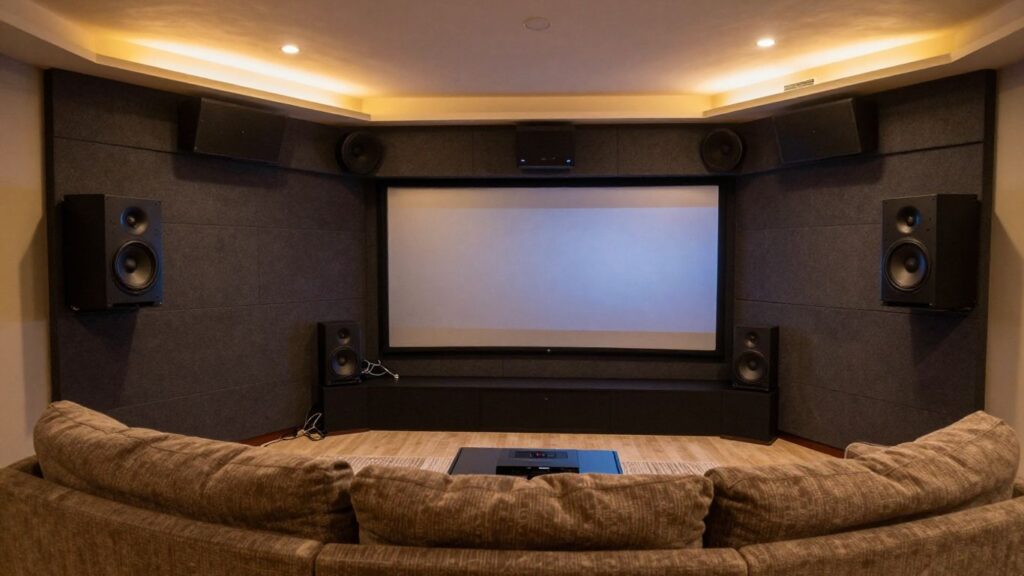
A Dolby Atmos mix can include audio objects, their movement, and information that helps the playback system position them. The mixer may describe a sound as moving through a three-dimensional space rather than assigning it permanently to one speaker. At home, the system translates that intent into the layout you have installed.
This is why the same content can work across different speaker arrangements. A system with more physical height speakers has more tools for reproducing the mix, while a soundbar may create the impression using a smaller number of drivers and room reflections.
The role of the AV receiver or soundbar
The AV receiver or soundbar sits between your source and your speakers. It receives the audio signal, identifies the format, decodes compatible content, and sends signals to the appropriate drivers. In a traditional home theater, the receiver also manages speaker distances, levels, and crossover settings.
A soundbar keeps the system simpler, which can be useful when you rent, have limited floor space, or do not want to run speaker wire. An AV receiver gives you more control and usually makes expansion easier, but it requires more planning and separate speakers.
How speakers reproduce overhead effects
True in-ceiling or ceiling-mounted speakers place sound above you. Height speakers can sit high on a wall and aim into the listening area. Upward-firing speakers send sound toward the ceiling, where a suitable surface reflects it back down.
The last method depends heavily on the room. A reasonably flat, solid ceiling can help preserve the reflected path, while a vaulted, heavily textured, or very absorbent ceiling may make the effect less precise. The speaker cannot compensate for every architectural problem.
What happens when Atmos content plays on a non-Atmos system
When your system cannot decode or reproduce Dolby Atmos, the content is normally rendered through a compatible fallback format or a simpler output path. You may still hear the movie or game, but the overhead placement and movement will not be reproduced in the same way.
The result is not automatically bad. A good 5.1 system can still deliver clear dialogue, directional effects, and useful bass. Atmos is an additional layer of spatial information, not a guarantee that every other part of the system will sound better.
What equipment you need for Dolby Atmos at home
You can build an Atmos system around a receiver and separate speakers, or choose a soundbar designed to reproduce height effects. The right route depends on your room, tolerance for installation work, and plans for future upgrades. Before buying, map the full signal path rather than focusing on one logo on a box.
Prices can vary widely, so it is sensible to compare equipment and watch for discounts. Promo Deals gathers offers and price drops from across the internet, which can make it easier to check the market before committing to a receiver, soundbar, or cable.
Choosing between an AV receiver and a soundbar
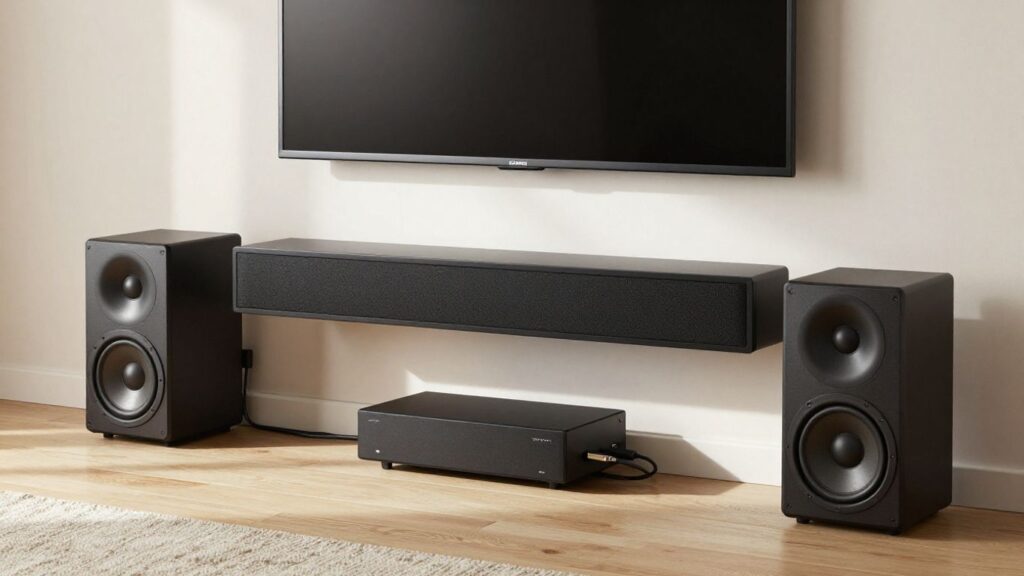
An AV receiver is a strong fit when you want separate left, center, surround, and height speakers. It gives you more placement flexibility and can support a gradual upgrade path. You will, however, need space for the receiver, speakers, wiring, and often a subwoofer.
A soundbar is easier to install and can be a practical choice for a television-centered room. Some models include separate rear speakers or upward-firing drivers, while others create a wider effect from the bar itself. Read the connection and speaker-layout details carefully rather than assuming every model works the same way.
Understanding ear-level, height, and overhead speakers
Ear-level speakers establish the main front and surround field. Height speakers add sound above that field, while overhead speakers place drivers physically above the listening position. A subwoofer handles deep bass and is not a substitute for height information.
The following comparison can help you decide where an upgrade would have the greatest effect:
| Speaker type | Main job | Placement concern | Best first question |
|---|---|---|---|
| Ear-level | Dialogue, music, and directional effects | Symmetry around the seating area | Are the front and surround positions balanced? |
| Height | Adds vertical movement | Clear path toward the listening area | Can the speakers aim at the seats? |
| Overhead | Places effects above the listener | Ceiling access and joist locations | Is installation practical and safe? |
| Subwoofer | Reproduces deep bass | Room modes and nearby surfaces | Can bass be integrated without dominating? |
Use the table as a planning tool, not as a shopping checklist. If your dialogue is unclear or your front speakers are badly positioned, adding overhead channels may not be the best first move.
When upward-firing speakers make sense
Upward-firing speakers can make sense when you want height effects without cutting into the ceiling or mounting speakers high on a wall. They are especially convenient for a clean-looking installation. Their performance depends on the ceiling height, angle, material, and seating position.
Before buying, check whether the speakers are intended to sit on your existing front or surround cabinets, or whether they are part of a soundbar system. Keep the reflecting surface unobstructed where possible, and avoid placing tall furniture between the speakers and the ceiling.
Checking HDMI, eARC, and device compatibility
Your source device, television, receiver, and soundbar all need a compatible connection path. HDMI eARC can carry higher-bandwidth audio from a compatible television to an audio system, while older ARC implementations may have more limitations. Streaming apps can also behave differently depending on the television or playback device.
Check the manuals for the exact devices you own. Confirm the supported audio formats, HDMI inputs and outputs, passthrough behavior, and whether your chosen source can send Atmos rather than converting it before it reaches the receiver.
How to get Dolby Atmos content
A capable system cannot create Atmos detail from every soundtrack. You need content mixed in the format and a playback route that preserves it. Streaming catalogs, discs, games, and music services can all differ in availability, device support, and subscription requirements.
The safest habit is to check the title page, disc case, game settings, or service information before troubleshooting the speakers. If the content is only available in stereo or standard surround, changing a cable will not add missing height data.
Streaming services and supported devices
Many streaming platforms offer selected movies and shows with Dolby Atmos, but the exact catalog and plan requirements can change. Your television app, streaming box, and audio connection also matter. Look for the Atmos badge or audio-format information on the title page, then verify that your device supports the same format.
If playback is inconsistent, test the same title through another supported device if you have one. This can help you identify whether the issue comes from the service, the app, the television settings, or the home theater chain.
4K Blu-ray discs and game consoles
4K Blu-ray discs often provide clearly listed audio formats on the case, making them useful for testing a system. Game consoles may support immersive audio through selected games or system settings, but the output mode and connection route still need to be configured correctly.
Use a known-compatible title when checking a new setup. A reliable test source gives you a better reference than switching randomly among compressed streams, older discs, and games with different audio menus.
Dolby Atmos in television broadcasts and music
Atmos can also appear in selected television programming and music services. Availability varies by region, service, device, and title. Music can make the difference easy to hear because vocals, instruments, and ambience may occupy a wider vertical space than they do in a conventional stereo presentation.
You should still approach format labels carefully. A title being available on a service does not necessarily mean every device connected to that service will deliver the same audio output.
How to verify that Atmos is actually playing
Start with the receiver or soundbar display, which may show the incoming format. Then check the television or player audio settings and confirm that the source is not forcing stereo, PCM, or another output mode. A compatible signal indicator is more useful than judging the effect from one short scene.
You can also use a familiar scene with movement above the listening position. If the display reports Atmos but the result sounds flat, revisit speaker placement, calibration, and room conditions before assuming the content is faulty.
How to set up Dolby Atmos speakers
Speaker placement determines how successfully your system turns a technical format into a believable room-sized image. Begin with the main seating position, then work outward. You want the speakers to create a coherent field around the seats you actually use, not merely satisfy a diagram.
Take measurements before drilling, running cable, or moving furniture. A little planning can prevent uneven distances, blocked drivers, and a system that sounds impressive from one chair but unbalanced everywhere else.
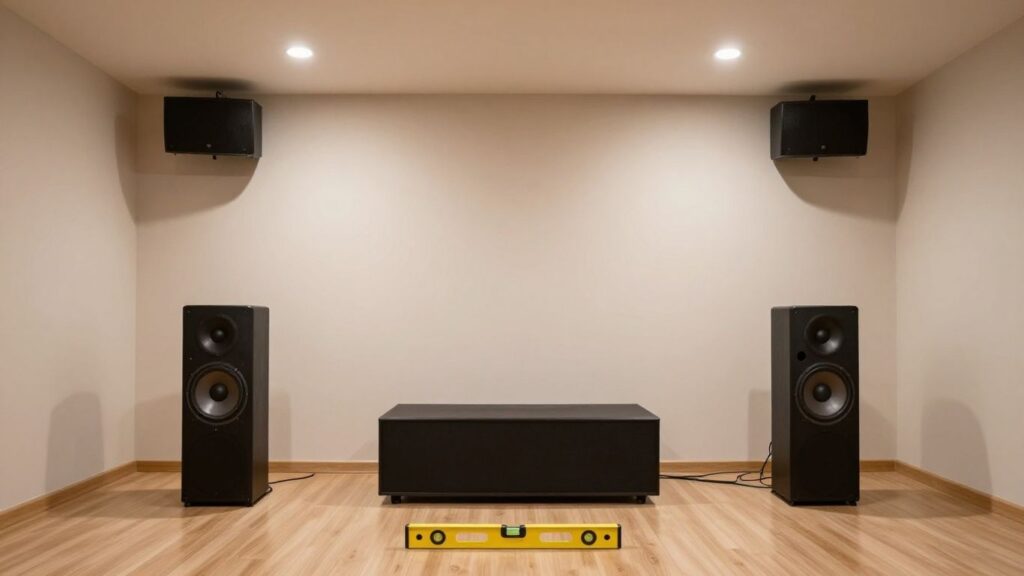
Planning speaker placement for your room
Place the main listening position where the front speakers can remain reasonably symmetrical. Keep left and right channels at similar distances when possible, and avoid putting a surround speaker directly beside one listener if you can move it slightly behind or above the seating area.
For height channels, follow the speaker manufacturer’s placement guidance and aim them toward the listening area. If you use ceiling speakers, consider joists, lighting, ventilation, and access above the ceiling before choosing exact locations.
Configuring speaker size, distance, and levels
Your receiver’s setup menu will usually ask about speaker size, distance, and level. Enter measured distances rather than guessing, and make sure every connected speaker is identified correctly. Crossover settings should allow the subwoofer and main speakers to share bass without creating a gap or an exaggerated overlap.
A sensible setup sequence keeps the process manageable:
- Mark the main listening position and measure each speaker distance.
- Confirm that every speaker is connected to the intended output.
- Set speaker presence and size according to the actual installation.
- Adjust levels with the receiver’s test tones or calibration system.
After those steps, listen to familiar dialogue and music before making small manual changes. If you alter several settings at once, it becomes difficult to tell which change helped.
Calibrating the system for accurate sound
Automatic room correction can measure speaker distance, level, and the way your room affects the sound. Use the supplied microphone at the recommended seating positions, keep the room quiet, and follow the on-screen instructions. The result is a starting point, not an instruction to stop listening critically.
Check the center channel first because dialogue problems are easy to notice. Then listen for smooth movement between front, surround, and height speakers. If the calibration makes the system too bright, too bass-heavy, or unusually quiet, review the measurements and adjust carefully rather than raising every channel.
Handling open ceilings, low ceilings, and unusual layouts
Open-plan rooms, vaulted ceilings, low ceilings, and asymmetrical seating can limit the precision of reflected or overhead effects. You may need to prioritize the main seats, use wall-mounted height speakers, or choose a simpler layout that remains balanced.
There is no requirement to force a four-speaker ceiling arrangement into a room that cannot support it. A well-placed pair of height speakers can be more convincing than several poorly positioned speakers. The room should guide the installation, not the other way around.
Common Dolby Atmos problems and buying decisions
Most Atmos problems come from the signal path or the room rather than from the format itself. A setting may be forcing stereo, a television may be passing a different output, or the speakers may be positioned where their effects cannot reach the listening area. Troubleshooting works best when you test one link at a time.
Buying decisions deserve the same patience. You may get more value from a compatible receiver, better front speakers, or a dependable connection than from adding expensive height channels immediately.
Buy from Flipkart
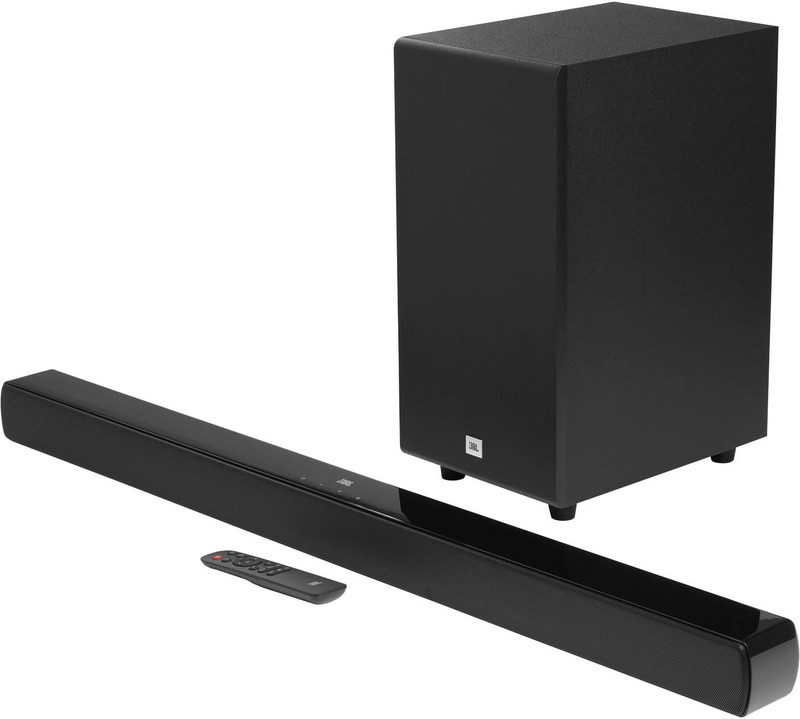
JBL Cinema SB190, Dolby Atmos Sound, Wireless Subwoofer for Extra Deep Bass 380 W Bluetooth Soundbar(Black, 2.1 Channel)
Rs. 19,999 in stock
Highlights
- Power Output(RMS): 380 W
- Power Source: AC Adapter
- Bluetooth Version: 5.1
- Wireless range: 10 m
- Wireless music streaming via Bluetooth
Specifications
| Other Details | |
| Technology Used | Dolby Atmos Technology |
| Controls | Play, Pause, Volume, Bluetooth Pairing, Power |
| Remote Control Support | Yes |
| Power Input | AC 100 - 240 V, 50 - 60 Hz |
| Other Features | 380 W of Powerful JBL Sound, Deep Bass Sound, Optic, HDMI Cable and HDMI eARC Connectivity Options |
| Audio Features | |
| Maximum Output RMS Per Satellite | 200 W |
| Maximum SPL | 96 dB |
| Tweeter Support | Yes, 2 |
| In the Box | |
| Sales Package | 1 x Soundbar, 1 x Subwoofer, 1 x Remote control with batteries, Power Cords, 1 x HDMI cable, Wall-mount bracket kit with screws, 2 x Side caps, 1 x Quick start guide, Safety instruction and Warranty card |
| General | |
| Brand | JBL |
| Model Number | SB190BLKIN |
| Model Name | Cinema SB190, Dolby Atmos Sound, Wireless Subwoofer for Extra Deep Bass |
| Type | Soundbar |
| Bluetooth | Yes |
| Memory Card Slot | No |
| Configuration | 2.1 |
| Power Source | AC Adapter |
| Power Output (RMS) | 380 W |
| Frequency Response | 40 - 20000 Hz |
| Color | Black |
| Wired/Wireless | Wireless |
| Subwoofer | 1 |
| Brand Color | Black |
| Dimensions | |
| Subwoofer Width | 200 mm (20.0 cm) |
| Subwoofer Height | 409 mm (40.9 cm) |
| Subwoofer Depth | 280 mm (28.0 cm) |
| Subwoofer Weight | 5.6 kg |
| Width | 90 cm |
| Height | 6.2 cm |
| Depth | 6.7 cm |
| Product Details | |
| Configuration | 2.1 Channel |
| Driver Type | 1 Subwoofer |
| Compatible Devices | Television, Laptop, Tablet, Mobile, Audio Player |
| Bluetooth | 5.1 withA2DP V1.3, AVRCP V1.5 |
| Bluetooth Range | 10 m |
| Smart Assistant Technology | NA |
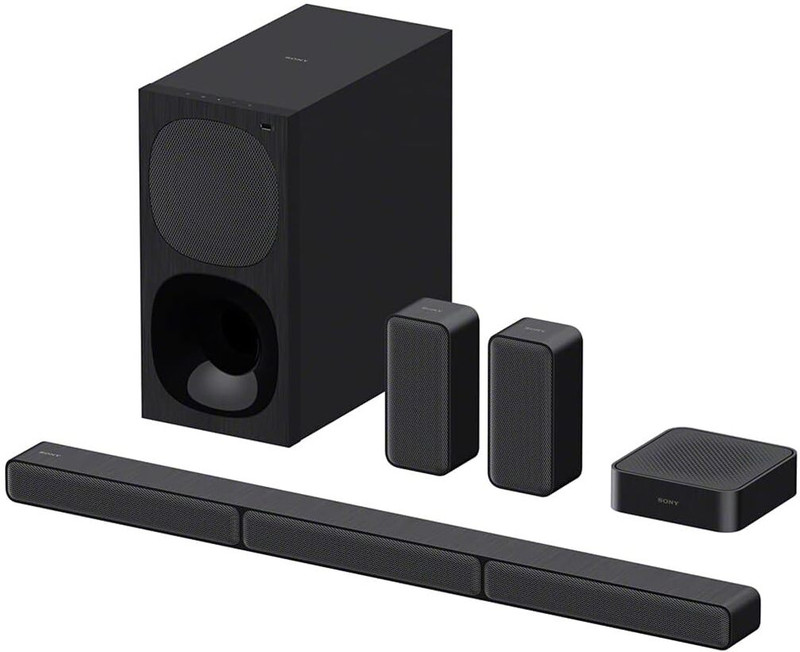
SONY HT-S40R 5.1ch Home Theatre with Dolby Digital, Subwoofer, Rear Speakers, 600 W Bluetooth Soundbar(Black, 5.1 Channel)
Rs. 26,990 in stock
Highlights
- Power Output(RMS): 600 W
- Power Source: AC Cord
- Bluetooth Version: 5.0
- Wireless range: 10 m
- Wireless music streaming via Bluetooth
Specifications
| Other Details | |
| Technology Used | Dolby Digital |
| Remote Control Support | Wireless |
| Power Input | AC 220 - 240 V |
| Audio Features | |
| Maximum Output RMS Per Satellite | 75 W |
| Maximum Output RMS Subwoofer | 180 W |
| Maximum Output RMS Center Satellite | 90 W |
| Amplifier | Built-in |
| In the Box | |
| Sales Package | 1 Soundbar, Subwoofer, Rear Speakers, Amplifier, HDMI Cable, AC Cord, Remote, Batteries |
| General | |
| Brand | SONY |
| Model Number | HT-S40R |
| Model Name | HT-S40R 5.1ch Home Theatre with Dolby Digital, Subwoofer, Rear Speakers, |
| Type | Soundbar |
| Bluetooth | Yes |
| Configuration | 5.1 |
| Power Source | AC Cord |
| Power Output (RMS) | 600 W |
| Color | Black |
| Wired/Wireless | Wired |
| Subwoofer | 1 |
| Wall Mountable Satellite | Yes |
| Built-in Fm Radio | No |
| Outdoor Usage | No |
| Brand Color | Black |
| Dimensions | |
| Subwoofer Width | 192 mm (19.2 cm) |
| Subwoofer Height | 387 mm (38.7 cm) |
| Subwoofer Depth | 366 mm (36.6 cm) |
| Subwoofer Weight | 7.8 kg |
| Satellite Width | 83 mm (8.3 cm) |
| Satellite Height | 180 mm (18.0 cm) |
| Satellite Depth | 74.5 mm (7.45 cm) |
| Satellite Weight | 0.6 kg |
| Center Satellite Width | 900 mm (90.0 cm) |
| Center Satellite Height | 52 mm (5.2 cm) |
| Center Satellite Depth | 74.5 mm (7.45 cm) |
| Center Satellite Weight | 2 kg |
| Width | 96.8 cm |
| Height | 24.8 cm |
| Depth | 52 cm |
| Product Details | |
| Configuration | 5.1 Channel |
| Compatible Devices | Television |
| USB Ports | 1 USB Ports |
| Bluetooth | 5.0 withA2DP, AVRCP |
| Bluetooth Range | 10 m |
| Smart Assistant Technology | NA |

SONY HT-A3000 A Series 3.1ch Home Theatre 360 SSM, Dolby Atmos, Premium Bluetooth Soundbar(Black, 3.1 Channel)
Rs. 49,990 in stock
Highlights
- Power Source: AC Cord
- Bluetooth Version: 5
- Wireless range: 10 m
- Wireless music streaming via Bluetooth
Specifications
| Other Details | |
| Remote Control Support | Yes |
| Driver Size | No |
| Power Input | 220 - 240 V |
| Audio Features | |
| Distortion | No |
| In the Box | |
| Sales Package | 1 Speaker, AC Cord, Warranty Card, HDMI Cable, Instruction Manual, Setup Guide, Remote Control, Batteries |
| General | |
| Brand | SONY |
| Model Number | HT-A3000 |
| Model Name | HT-A3000 A Series 3.1ch Home Theatre 360 SSM, Dolby Atmos, Premium |
| Type | Soundbar |
| Bluetooth | Yes |
| Configuration | 3.1 |
| Power Source | AC Cord |
| Color | Black |
| Wired/Wireless | Wireless |
| Wall Mountable Satellite | Yes |
| Built-in Fm Radio | No |
| Outdoor Usage | No |
| Brand Color | Black |
| Dimensions | |
| Width | 8.3 cm |
| Height | 9 cm |
| Depth | 101 cm |
| Product Details | |
| Headphone Jack | No |
| Configuration | 3.1 Channel |
| Memory Card Supported | No |
| Driver Type | No |
| USB Ports | 1 USB Ports |
| Bluetooth | 5 withA2DP, AVRCP |
| Bluetooth Range | 10 m |
| Touch Pad | No |
| Smart Assistant Technology | NA |
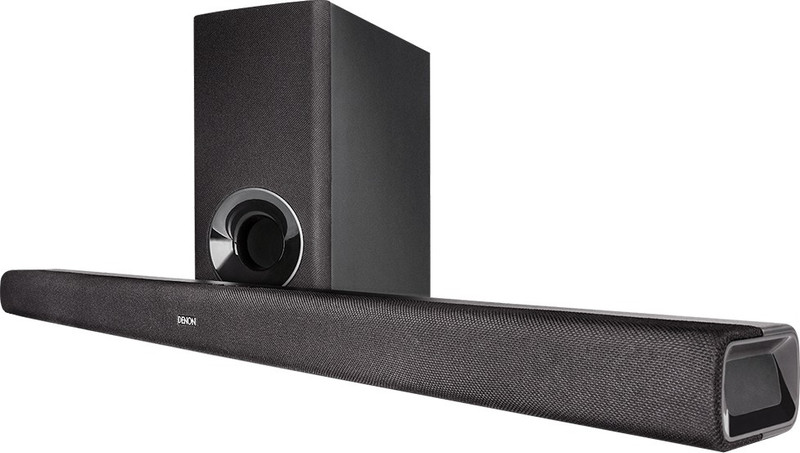
DENON S316 Dolby Dil with DTS 100 W Bluetooth Soundbar(Black, 2.1 Channel)
Highlights
- Power Output(RMS): 100 W
- Power Source: Power Cable
- Wireless music streaming via Bluetooth
Specifications
| Other Details | |
| Chassis Material | Yes |
| Other Features | TV (Optical) |
| Audio Features | |
| Amplifier | Built-in |
| In the Box | |
| Sales Package | 1 Main Unit (Sound Bar), Subwoofer |
| General | |
| Brand | DENON |
| Model Number | -DHTS316 |
| Model Name | S316 Dolby Dil with DTS |
| Type | Soundbar |
| Bluetooth | Yes |
| Memory Card Slot | No |
| Configuration | 2.1 |
| Power Source | Power Cable |
| Power Output (RMS) | 100 W |
| Frequency Response | NA |
| Color | Black |
| Wired/Wireless | Wired & Wireless |
| Subwoofer | 1 |
| Wall Mountable Satellite | Yes |
| Built-in Fm Radio | No |
| Outdoor Usage | No |
| Brand Color | Black |
| Dimensions | |
| Width | 90 cm |
| Height | 5.5 cm |
| Depth | 8.2 cm |
| Product Details | |
| Headphone Jack | No |
| Configuration | 2.1 Channel |
| Memory Card Supported | No |
| Smart Assistant Technology | NA |
Description Relive the ultimate home cinema surround sound experience through this Denon soundbar. It comes with features like Dolby Digital and DTS Decoding that deliver an amazing acoustic experience for you. This soundbar also has a Dialogue Enhancer that allows you to enjoy an enhanced...
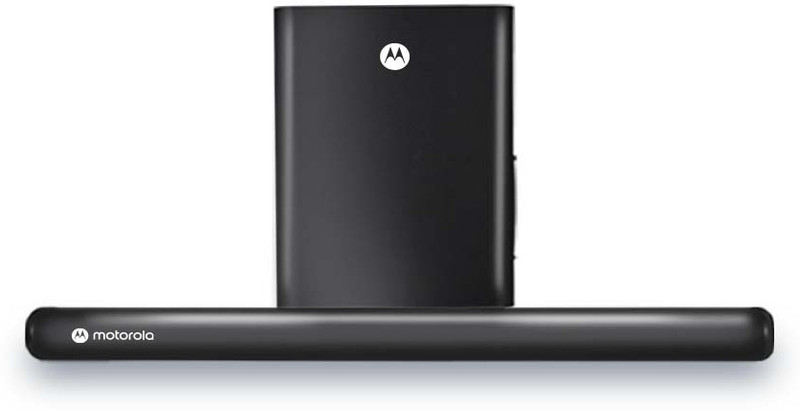
MOTOROLA Vibe Dolby Digital with wireless Subwoofer 250 W Bluetooth Soundbar(Black, 2.1 Channel)
Rs. 10,999 out of stock
Highlights
- Power Output(RMS): 250 W
- Power Source: AC Adapter
- Wireless music streaming via Bluetooth
Specifications
| In the Box | |
| Sales Package | 1 Soundbar with Wireless Subwoofer, User Manual, Remote, AUX Cable, Power Cable, Wall Mounting Screwse |
| General | |
| Brand | MOTOROLA |
| Model Number | MT250-DSB21 |
| Model Name | Vibe Dolby Digital with wireless Subwoofer |
| Type | Soundbar |
| Bluetooth | Yes |
| Configuration | 2.1 |
| Power Source | AC Adapter |
| Power Output (RMS) | 250 W |
| Color | Black |
| Brand Color | Black |
| Dimensions | |
| Width | 86 cm |
| Height | 6.5 cm |
| Depth | 9.2 cm |
| Product Details | |
| Configuration | 2.1 Channel |
| Smart Assistant Technology | NA |
You can bring home this Motorola AmphisoundX Vibe Bluetooth Soundbar home to set up a home theatre. With 250 W PeakPower Output, you can enjoy crystal clear audio and bring the party home. You can choose the sound output to suit your needs. This soundbar has a sleek and stylish design that...
Why Dolby Atmos may not appear on your system
If the format indicator never appears, check the content first, then the source settings and HDMI path. Confirm that the receiver or soundbar is set to receive audio from the correct input and that the television is not converting the signal. Also check whether your subscription, disc, game, or app supports the format.
A missing label does not always mean silent or broken equipment. Some devices display a shortened format name, while others show the incoming signal only briefly. Use the manuals and settings screens to confirm what the system is receiving.
Fixing audio dropouts, compatibility issues, and delays
Audio dropouts can come from an unstable connection, incompatible settings, overloaded processing, or a device that is struggling with the selected output. Reseat HDMI cables, restart the source and receiver, update relevant firmware, and test a different input or source. Change one variable at a time.
Lip-sync delay usually requires checking the television’s audio processing and the receiver’s delay controls. If sound arrives late, turn off unnecessary processing where possible and compare direct playback with audio routed through the television. A stable, simpler path is often easier to diagnose.
Deciding whether ceiling speakers are worth installing
Ceiling speakers are worth considering when you own the home, can install wiring safely, and care about precise overhead placement. They can provide a more direct height effect than reflected sound. The installation cost and disruption, however, may not suit a rental, open ceiling, or room you expect to change soon.
If you are shopping around, compare the complete cost rather than the speaker price alone. Wiring, mounting hardware, professional installation, and possible ceiling repairs can change the decision. Deal-focused resources such as audio deals may help you compare prices, but compatibility should remain the first filter.
Evaluating room size, budget, and upgrade priorities
A large room may benefit from more powerful speakers and wider spacing, while a smaller room can become congested quickly. Your budget should cover the complete system, including stands, cables, mounting, and any installation work. Promo Deals is designed to bring discounts and price drops together, which can be useful when you are comparing several parts of a setup.
A practical upgrade order is often front speakers and placement first, followed by the receiver or soundbar, subwoofer integration, and height channels. If your current system already sounds balanced and you mainly want a stronger sense of space, height speakers may move higher on the list.
Conclusion
Dolby Atmos works at home by combining compatible content, object-based audio information, suitable decoding equipment, and speakers placed to create height and movement. You can begin with a soundbar or a modest receiver system, then improve the result through careful placement and calibration. Compare the whole signal path before buying, and let your room and listening habits decide how far you need to go.
Frequently Asked Questions
Is Dolby Atmos better than 5.1 sound?
Dolby Atmos can add height and more flexible sound movement, while 5.1 can still provide a clear and immersive surround presentation. The better choice depends on your content, room, equipment, and setup quality.
Do you need ceiling speakers for Dolby Atmos?
No. You can use in-ceiling speakers, wall-mounted height speakers, upward-firing drivers, or a compatible soundbar. Ceiling speakers can provide direct overhead sound, but they are not practical or necessary for every room.
Can a soundbar create Dolby Atmos?
Some soundbars are designed to reproduce Atmos effects using built-in, separate, or upward-firing drivers. Their results depend on the model, room shape, ceiling, seating position, and the content being played.
Does every movie support Dolby Atmos?
No. Atmos must be included in the movie, show, game, or music release. Availability can vary between formats, services, titles, subscription plans, and playback devices.
Can HDMI ARC carry Dolby Atmos?
HDMI ARC may carry some Atmos formats, but eARC generally provides a broader high-bandwidth path. Check the specifications and settings of the television, source, receiver, and soundbar rather than relying on the cable label alone.
Why does Dolby Atmos sound quiet or flat?
Incorrect speaker placement, room reflections, calibration, source settings, or a non-Atmos fallback signal can reduce the effect. Confirm the incoming format, check speaker levels, and test a known-compatible scene.
Is Dolby Atmos worth it in a small room?
It can be worthwhile if you sit in a suitable position and can place the speakers sensibly. In a small room, careful balance and clean setup often matter more than adding the maximum number of channels.