
Key Takeaways
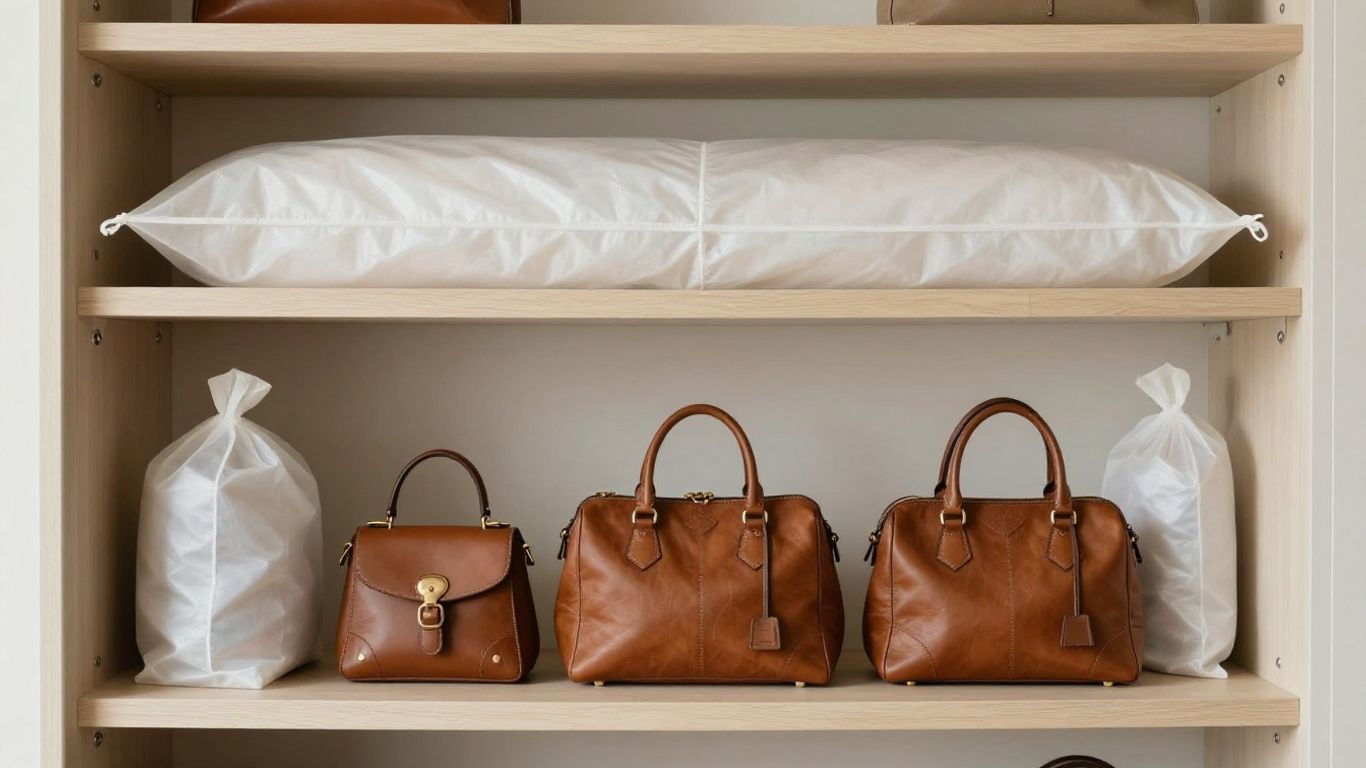
India’s changing humidity, heat, dust, and monsoon conditions call for thoughtful leather handbag storage. A clean, dry, breathable, and well-spaced setup will help you protect your bags through the seasons.
- Clean and dry every handbag before putting it away.
- Use breathable dust bags and acid-free tissue instead of plastic or newspaper.
- Store bags upright with gentle support to preserve their shape.
- Check moisture, mold, dust, and pressure marks regularly during storage.
- Keep handbags away from direct sunlight, heat, kitchens, and damp walls.
- Understand how India’s climate affects leather handbags
- Prepare your handbag before storage
- Choose the right materials for protection
- Store handbags in the right position
- Control moisture during India’s monsoon season
- Protect handbags from heat, light, and dust
- Build a practical handbag maintenance routine
- Conclusion
- Frequently Asked Questions
- Can I store a leather handbag in a plastic cover?
- Should I hang my leather handbag in the closet?
- How often should I inspect handbags during monsoon season?
- Is silica gel safe for leather handbags?
- Can I use newspaper to stuff a leather bag?
- How should I dry a leather handbag after rain?
- What should I do if I see mold on a handbag?
Understand how India’s climate affects leather handbags
When you learn how to store leather handbags in India’s climate, begin with the environment around the bag rather than the cupboard itself. India’s regions experience very different combinations of humidity, heat, dust, rain, and dry air. Leather responds to those changes gradually, so small storage habits can make a noticeable difference over time.
Humidity, monsoon moisture, and mold risk
During the monsoon, damp air can linger inside wardrobes, drawers, and rooms with limited circulation. Leather may absorb some of that moisture, while dark seams, pockets, and folded edges can remain damp longer than the visible surface. Those conditions can encourage mold or mildew, especially if a bag is stored before it has dried fully.
Do not seal a damp handbag in a closed container and assume it will dry there. Give it room to breathe, and open the storage area periodically when the weather is reasonably dry. If a bag has been exposed to rain, let it dry naturally away from direct heat before you clean or store it.
Heat, sunlight, and leather drying
Strong sunlight can fade dyed leather and warm the material unevenly. Prolonged heat may also draw out moisture and oils, leaving some finishes feeling dry, stiff, or more vulnerable to cracking. A windowsill, hot loft, or cabinet beside a heated appliance is therefore a poor long-term location.
Aim for a stable indoor spot with moderate temperature changes. You do not need to create a laboratory environment; avoiding extremes is the practical goal. Keep the bag shaded, away from radiators or hot equipment, and do not use a hair dryer to speed up drying after accidental wetting.
Dust, pollution, and seasonal grime
Dust settles along handles, piping, zippers, and the inside edges of flaps. In busy urban areas, airborne grime can mix with skin oils and moisture, creating a dull film that becomes harder to remove if left untouched. Monsoon splashes and post-monsoon mud can add another layer of residue.
A light surface check before storage is more useful than an occasional aggressive scrub. Use the cleaning method recommended for that particular finish, and be cautious with dyed, suede, patent, or otherwise treated leather. A leather care guide can also help you think through seasonal dust and mud removal before a bag goes back into storage.
Differences between coastal, tropical, and dry regions
Your local climate changes the balance of risks. Coastal cities may require closer attention to persistent humidity, while hot tropical areas combine heat with damp air. Drier inland locations may bring more dust and greater risk of leather becoming brittle if the bag is neglected.
Use the table below as a starting point rather than a rigid climate prescription. Your room, building, ventilation, and monsoon exposure matter just as much as the city where you live.
| Climate pattern | Main storage concern | Practical response |
|---|---|---|
| Coastal and humid | Moisture, odor, and mold | Improve airflow and inspect bags frequently |
| Hot and tropical | Heat, sunlight, and dampness | Choose a cool shaded cabinet with space around each bag |
| Dry and dusty | Surface grime and drying | Dust gently and condition only as suitable for the finish |
| Strongly seasonal | Rapid changes between damp and dry air | Adjust inspection and ventilation habits through the year |
This approach keeps storage simple: identify the dominant local problem, then adjust ventilation, cleaning, spacing, and inspection accordingly.
Prepare your handbag before storage
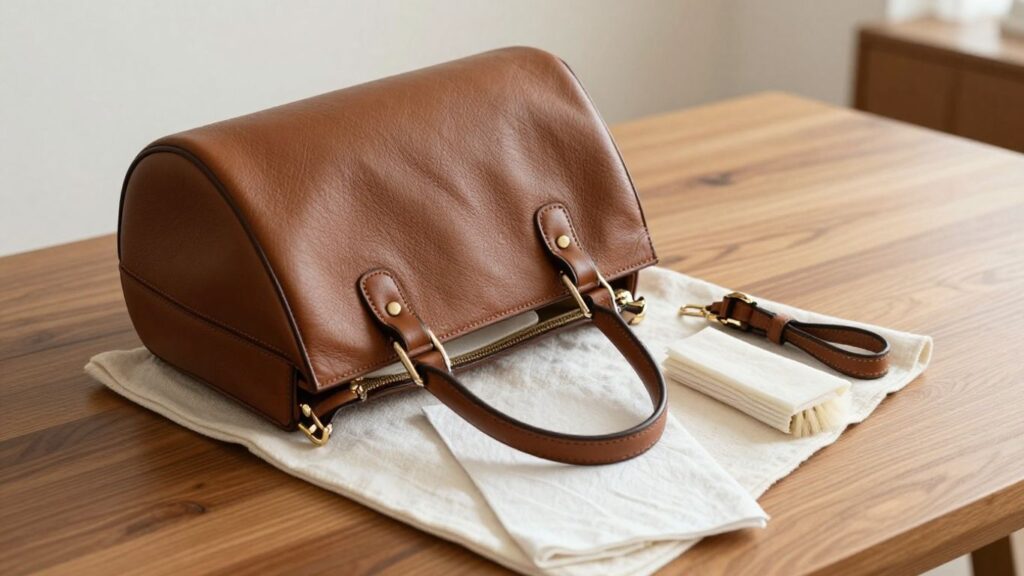
Storage cannot compensate for a bag that goes away dirty, overfilled, or damp. Before you put a handbag aside, empty it, inspect the surface, and make sure its shape is supported without pressure. These steps take only a few minutes and reduce the chance that a small stain or moisture problem will worsen unnoticed.
Emptying pockets and removing detachable accessories
Remove receipts, cosmetics, food wrappers, pens, coins, and anything else left in the interior. Small objects can press against the lining or create marks, while forgotten liquids can leak during storage. Shake out crumbs gently and check interior compartments, zip pockets, and side sections.
Take off detachable straps, charms, scarves, and other accessories if the manufacturer’s care guidance allows it. Store them separately or loosely beside the bag so hardware does not rub against the leather. Keep small pieces together in a breathable pouch, not in a tightly packed plastic sleeve.
Cleaning surface dirt without damaging the finish
Start with a soft, dry cloth to lift loose dust. If the finish permits gentle damp cleaning, use only a barely damp cloth and avoid soaking seams, piping, or the lining. Test any cleaner on a hidden area first, because a product that suits one leather finish may darken or dull another.
Never scrub forcefully to remove a stubborn mark. Vigorous rubbing can spread the stain or alter the finish around it, making the repair more visible. For unknown stains, strong odors, or color transfer, stop experimenting and seek advice from a leather-care professional.
Conditioning different types of leather
Conditioner is not a universal answer for every handbag. Smooth finished leather may tolerate a suitable product, while suede, nubuck, patent finishes, metallic leather, and heavily treated surfaces can require entirely different care. Read the care instructions supplied with the bag before applying anything.
Use a small amount only when conditioning is appropriate, and allow the product to absorb naturally. A little restraint protects leather better than repeated heavy applications, which can leave a sticky surface and attract dust. Never condition a bag that is still wet or visibly contaminated with mold.
Ensuring the bag is completely dry
Drying should happen at room temperature in a shaded, ventilated area. Leave the bag open enough for air to circulate through the interior, but do not force the shape or place it under harsh sunlight. Touch the base, pockets, seams, and lining rather than checking only the outside.
If the bag was caught in rain, give it additional time even when the surface feels dry. Moisture can remain in padding or folded sections. Once completely dry, it is ready for tissue stuffing, a dust bag, and a suitable storage position.
Choose the right materials for protection
The materials around your handbag can either support good storage or trap problems. Breathable fabric, clean tissue, and gentle separators protect against dust and abrasion without creating a sealed humid pocket. Avoid using whatever packaging happens to be nearby; storage materials should be chosen for airflow and low risk of transfer.
Using breathable cotton or non-woven dust bags
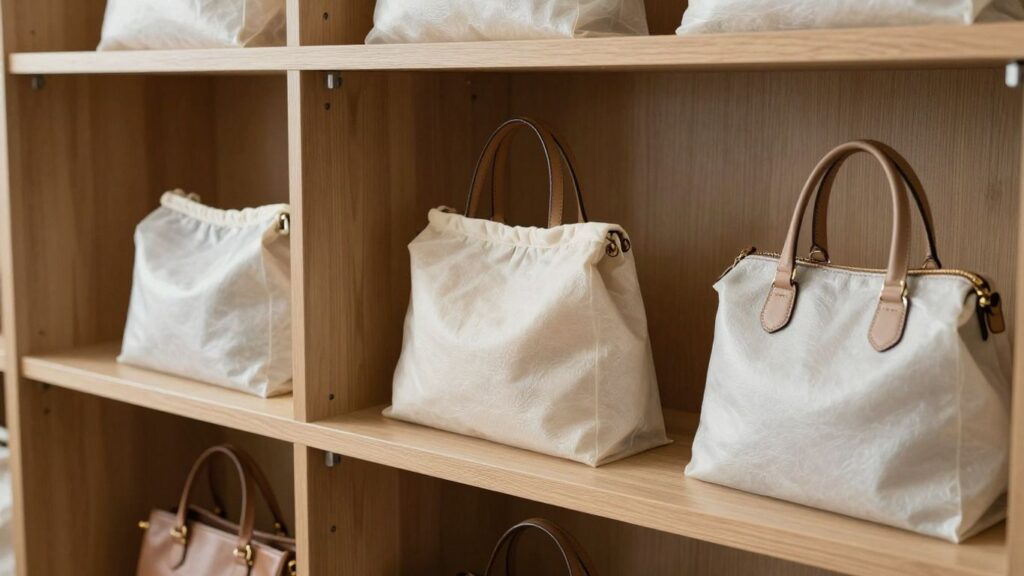
A breathable cotton or non-woven dust bag helps limit surface dust while allowing some air exchange. Choose one that is large enough for the handbag to sit without being compressed. The fabric should be clean and dry, and the drawstring should close without pulling tightly against the bag.
Do not place a fabric dust bag inside an airtight plastic container during humid weather. That combination may reduce visible dust while trapping moisture. If you are shopping for replacement storage supplies, the practical buying comparisons gathered on Promo Deals can help you assess offers without rushing into the cheapest option.
Selecting acid-free tissue paper for stuffing
Acid-free tissue paper is useful for supporting the body of a handbag without adding harsh dyes or unstable materials. Crumple it loosely and fill the main compartment until the bag holds its natural shape. Use smaller pieces for corners and larger folds rather than packing the interior tightly.
The aim is gentle support, not firmness. Overstuffing can stretch leather, strain zippers, and push out the sides. Replace tissue if it becomes damp, dusty, or discolored, and keep it away from sharp folds that could leave marks on delicate finishes.
Avoiding plastic covers and newspaper
Plastic covers can limit airflow and hold condensation close to the leather, particularly during monsoon weather. Newspaper is also a poor choice because ink may transfer and the paper can become acidic or brittle. These materials may look convenient for short-term wrapping but are not suitable for extended storage.
If a bag needs extra protection from neighboring items, use clean acid-free tissue or a soft fabric separator instead. The bag should remain covered from dust without being sealed away from the surrounding air. That balance is more useful than adding several layers of packaging.
Storing metal hardware and embellishments safely
Metal clasps, chains, studs, and decorative pieces can scratch nearby leather when they move against it. Wrap chains loosely in acid-free tissue, place detachable hardware away from exposed surfaces, and avoid letting a heavy strap rest across the front of the bag for months.
Keep embellishments dry and inspect them for tarnish before storage. Do not apply metal polish near leather unless the product is specifically suitable and you can protect the material. Separating contact points now is easier than repairing abrasion later.
Store handbags in the right position
A handbag can be clean and dry yet still suffer from poor positioning. Weight, pressure, and repeated folding may create dents or permanent creases, especially when bags are stacked tightly. Choose a position that supports the original structure while allowing you to remove the bag without dragging it against its neighbors.
Maintaining the bag’s shape with gentle support
Fill the body with loose acid-free tissue so the panels remain supported but not stretched. For a larger structured bag, you can add clean, soft material around the sides if it does not create bulges. Keep handles and straps in their natural position rather than forcing them into sharp bends.
Check the silhouette from the front and side before closing the cabinet. If the base is sagging, adjust the support rather than piling another bag on top. The right stuffing should preserve the shape quietly, without making the handbag look inflated.
Keeping structured and soft bags upright
Structured handbags generally fare best upright on a stable shelf, with their bases flat and their sides supported. Soft bags may need more tissue to prevent slumping, but they should not be crushed between rigid objects. Avoid hanging heavy handbags by their handles for long periods because the attachment points may bear too much weight.
If a bag has a delicate or unusually shaped body, follow its maker’s care instructions. A shelf divider can help keep it upright without pressing hard against the panels. The goal is to preserve the design, not to force every style into the same storage method.
Preventing creases in straps and handles
Handles should rest naturally, with no sharp fold pressed into the leather. Detachable straps can be coiled loosely in a wide curve and wrapped in tissue. Long, narrow straps are particularly prone to pressure marks when tucked under a bag or trapped between stacked items.
Every few weeks, change the position of straps that have been resting against the same surface. Do not hang a full, heavy handbag from a thin hook for long-term storage. A broad, supported shelf usually distributes pressure more gently.
Leaving space between neighboring handbags
Crowding makes it difficult to inspect your bags and increases rubbing between hardware, textured leather, and dyed surfaces. Leave enough room to remove one handbag without pulling on another. If the shelf is full, store fewer pieces there rather than compressing the entire collection.
A simple inventory can make this easier. Note where each bag sits, when it was last inspected, and whether it needs cleaning before its next use. This turns storage into a manageable routine instead of a seasonal scramble.
Control moisture during India’s monsoon season
Monsoon storage deserves extra attention because moisture can enter through the room, the wardrobe, or the handbag itself. You do not need to seal every item away; you need to reduce trapped dampness and notice changes early. Ventilation, spacing, and regular checks are usually more useful than a single moisture product used without thought.
Choosing a dry, well-ventilated storage area
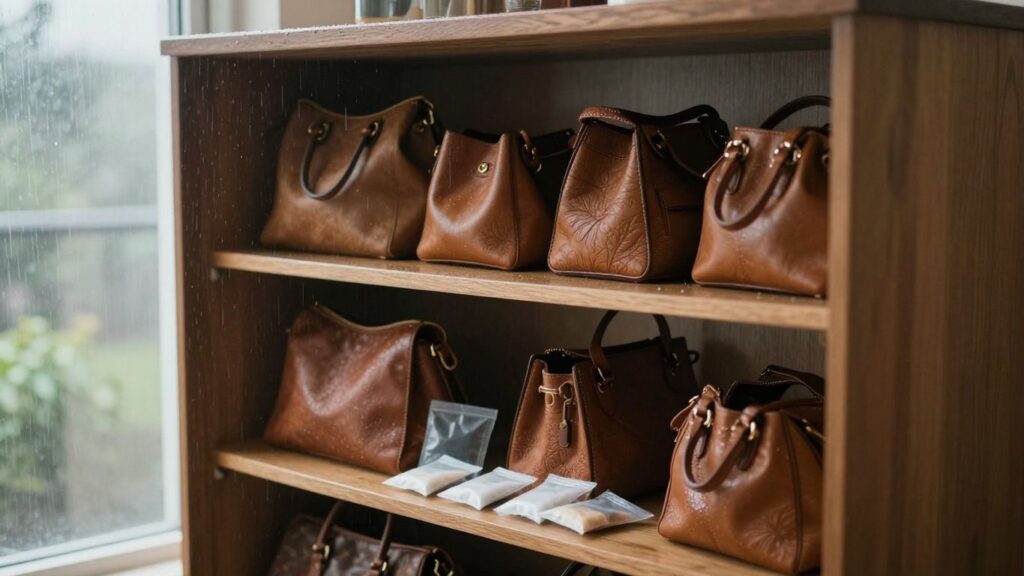
Pick an interior location that is away from leaks, damp exterior walls, and direct rain exposure. A cabinet with some airflow is preferable to a tightly packed trunk. Keep handbags off the floor, where splashes, cleaning water, and cool damp surfaces can create additional risk.
Open the cabinet periodically when outdoor conditions are suitable. Avoid doing so during heavy rain if the room would simply take in more humid air. If you notice a musty smell, treat it as a reason to inspect the bags rather than masking it with fragrance.
Using silica gel and moisture absorbers correctly
Silica gel packets can be placed in the broader storage area, provided they are intact, dry, and kept where they cannot rub against the handbag. They should not replace ventilation or be scattered loose inside a bag. Follow the packet or absorber’s instructions and replace it when it has reached its limit.
Do not place liquid-filled moisture absorbers directly above leather handbags. A spill can cause more damage than the humidity you were trying to manage. Use a stable container on a separate shelf, check it regularly, and keep it out of reach of children and pets.
Managing wardrobes in humid coastal cities
In a coastal city, inspect bags more often during prolonged damp weather. Avoid packing the wardrobe so tightly that fabric covers touch one another without any air movement. If possible, organize bags in a single layer or with dividers, leaving access to the rear and sides of the cabinet.
Rotate which bags you use and inspect the less-used ones first. A brief check of seams, handles, and interiors can reveal moisture before it becomes visible mold. If the room itself feels persistently damp, improving room ventilation may help more than adding packets to an overcrowded cupboard.
Recognizing and preventing early mold growth
Early mold may appear as a musty odor, pale or dark speckling, or a fuzzy deposit in a seam or pocket. Do not brush visible growth around the room, as that can spread particles to other belongings. Isolate the handbag in a breathable area away from the rest of your collection and avoid sealing it while damp.
For valuable, delicate, or extensively affected pieces, ask a leather professional for advice. Home remedies can discolor leather or push contamination deeper into the material. You can also review this humidity protection guidance for a broader reminder about breathable storage, surface cleaning, and desiccants in damp climates.
Protect handbags from heat, light, and dust
The storage location matters just as much as the wrapping. A dark, reasonably cool cabinet is usually safer than an open display beside a bright window, but it still needs some airflow. Think of the cabinet as a sheltered space, not an airtight box.
Keeping bags away from windows and direct sunlight
Sunlight can fade color unevenly, particularly on exposed panels, flaps, and handles. Heat from glass can also warm the bag repeatedly during the day. Place handbags away from windows, skylights, and bright spots where the same side remains exposed for months.
If you display a favorite bag occasionally, rotate its position and return it to a shaded area afterward. A dust bag can reduce surface exposure, but it cannot fully cancel the effects of heat or strong light. Shade and distance remain the simplest protections.
Avoiding kitchens, bathrooms, and damp walls
Kitchens expose leather to cooking oils, steam, smoke, and fluctuating temperatures. Bathrooms bring repeated humidity and occasional splashes, while a bag pressed against a damp wall may absorb moisture from behind even when the room appears dry. These areas are poor long-term storage choices.
Choose a bedroom or living-area cabinet that is separated from steam and cooking residue. Leave a small gap between the cabinet and any wall that feels cool or damp. If you smell moisture near the storage area, investigate the room before putting more handbags there.
Using closed cabinets with adequate airflow
A closed cabinet protects against dust and household activity, but it should not be packed so tightly that air cannot move. Shelves should be dry and clean, and bags should not be pressed against the cabinet’s back panel. Open the doors occasionally during suitable weather.
Use fabric covers inside the cabinet rather than wrapping each item in layers of plastic. If the cabinet has a musty odor, clean and dry it before returning the handbags. Storage furniture itself can become a source of moisture or smell if it is overlooked.
Reducing exposure to dust and household pollution
Dust the shelf and cabinet interior before placing clean handbags inside. Keep bags away from incense smoke, aerosol sprays, strong cleaning chemicals, and areas where indoor dust collects quickly. These contaminants may settle on leather or interact with its finish over time.
When you take a bag out, wipe loose dust gently before using it. That small habit keeps grime from becoming embedded around seams and hardware. If you are buying storage or cleaning supplies online, Promo Deals can help you compare available offers while keeping the care requirements of your particular leather finish in mind.
Build a practical handbag maintenance routine
Good storage works best as a repeating habit rather than a once-a-year project. A short inspection every few weeks is enough for most collections, with more frequent checks during the monsoon or after a bag has been exposed to rain. Keep the routine simple so you will actually follow it.
Inspecting stored bags every few weeks
Open the dust bag and look at the handbag’s surface, base, handles, seams, and interior. Check for changes in smell, spotting, dampness, pressure marks, or hardware rubbing. Do not leave the bag exposed for hours; a brief inspection followed by clean, careful replacement is sufficient.
A useful check can be organized into these four steps:
- Feel the lining, base, and seams for hidden dampness.
- Look for discoloration, mold-like spots, or transferred color.
- Check tissue, dust bags, and moisture absorbers for dirt or moisture.
- Confirm that straps, handles, and neighboring bags are not under pressure.
After the inspection, allow a questionable bag to air in a shaded, dry room before putting it away again. Replace damp materials and clean the shelf if needed. A consistent check catches manageable issues before they affect the whole collection.
Rotating handbags to prevent long-term pressure marks
If several handbags share one shelf, rotate their positions from time to time. This changes which side rests near a divider and reduces prolonged pressure on the same panel or handle. Rotation also gives you a reason to inspect bags that are rarely used.
Do not interpret rotation as a need to handle every bag constantly. Move them gently, support the base, and avoid dragging hardware across the shelf. The fewer unnecessary bends and impacts, the better.
Handling stains, odor, and mildew safely
Deal with fresh spills promptly by blotting rather than rubbing. For odors, begin with ventilation and a clean, dry environment instead of perfume or strongly scented products. A musty odor that persists may indicate hidden moisture or mold inside a pocket or lining.
Keep visibly affected pieces away from unaffected handbags. Avoid soaking leather, applying household bleach, or using untested oils. If the stain is spreading, the finish is changing, or mold is visible, professional assessment is safer than repeated home treatments.
Knowing when to consult a leather professional
Professional help is sensible when a bag has extensive mold, deep staining, dye transfer, water rings, peeling finish, structural damage, or valuable embellishments. It is also worth asking for advice when you cannot identify the leather type or the correct cleaning method. Early guidance may prevent an unsuitable product from causing permanent discoloration.
Describe what happened, when it happened, and what you have already applied. Take clear photographs if an in-person assessment is not immediately possible, but remember that a photo cannot always reveal moisture inside padding or lining. Careful storage remains the best protection after the repair is complete.
Conclusion
Leather handbags can live comfortably through India’s changing seasons when you keep them clean, dry, shaded, supported, and easy to inspect. Use breathable materials, avoid cramped or damp locations, and adjust your routine during the monsoon. A few calm checks throughout the year will do more for long-term condition than hurried repairs after damage appears.
Frequently Asked Questions
Can I store a leather handbag in a plastic cover?
It is better to use a breathable cotton or non-woven dust bag. Plastic can trap humidity and condensation, especially inside a closed wardrobe during the monsoon.
Should I hang my leather handbag in the closet?
Long-term hanging can strain handles and attachment points, particularly when the bag is heavy. Store most handbags upright on a supported shelf instead.
How often should I inspect handbags during monsoon season?
Check them every few weeks, and more often if your room or wardrobe feels damp. Look for musty odors, spotting, wet tissue, and moisture around seams or pockets.
Is silica gel safe for leather handbags?
Silica gel can be used in the surrounding storage area when kept intact and away from direct contact with the leather. It should support, not replace, ventilation and sensible spacing.
Can I use newspaper to stuff a leather bag?
Newspaper is not recommended because ink can transfer and the paper may become brittle or acidic. Acid-free tissue is a safer stuffing material.
How should I dry a leather handbag after rain?
Blot surface water gently and let the handbag dry naturally in a shaded, ventilated room. Keep it away from hair dryers, radiators, and direct sunlight.
What should I do if I see mold on a handbag?
Separate the affected bag from the rest of your collection and avoid brushing or scrubbing visible growth indoors. For valuable or extensively affected leather, consult a qualified leather professional.