
Key Takeaways
Power reserve tells you how long an automatic watch can continue running after its stored energy is replenished. Understanding it helps you choose, wear, restart, and care for your watch with fewer surprises.
- It is the approximate running time available from a sufficiently wound mainspring.
- The mainspring stores energy, while the rotor replenishes it as you wear the watch.
- Many automatic watches run for roughly a day and a half to two days, though designs vary.
- A watch that stops after sitting unused is often simply out of stored energy.
- A longer reserve can be convenient, but accuracy, servicing, and fit still matter.
- Understanding power reserve in an automatic watch
- How an automatic watch stores and replenishes energy
- How long an automatic watch can run
- How to tell how much power reserve remains
- What happens when an automatic watch runs out of power
- How power reserve affects everyday watch use
- Power reserve terminology and common misconceptions
- Conclusion
- Frequently Asked Questions
- What does power reserve mean in an automatic watch?
- How long does an automatic watch usually run?
- Does wearing an automatic watch keep it fully wound?
- What should you do when an automatic watch stops?
- Is a longer power reserve always better?
- Can a stopped automatic watch be damaged by stopping?
- How can you check the remaining power reserve?
Understanding power reserve in an automatic watch
Power reserve is one of the simplest specifications to understand once you connect it to the way a mechanical watch stores energy. It answers a practical question: if you take the watch off, how long can it keep running? The answer is approximate rather than a promise of identical performance in every situation.
The meaning of power reserve
Power reserve is the amount of time an automatic watch is expected to run after its mainspring has been sufficiently wound and the watch is no longer receiving additional winding energy. If the specification says 40 hours, the movement may run for about 40 hours under suitable operating conditions. It does not mean the watch will remain on your wrist for that entire period without variation.
A useful power reserve indicator can display the remaining stored energy directly. Without one, you usually learn the reserve by observing how long the watch continues running after you set it aside.
How stored energy keeps the watch running
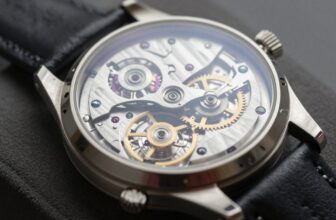
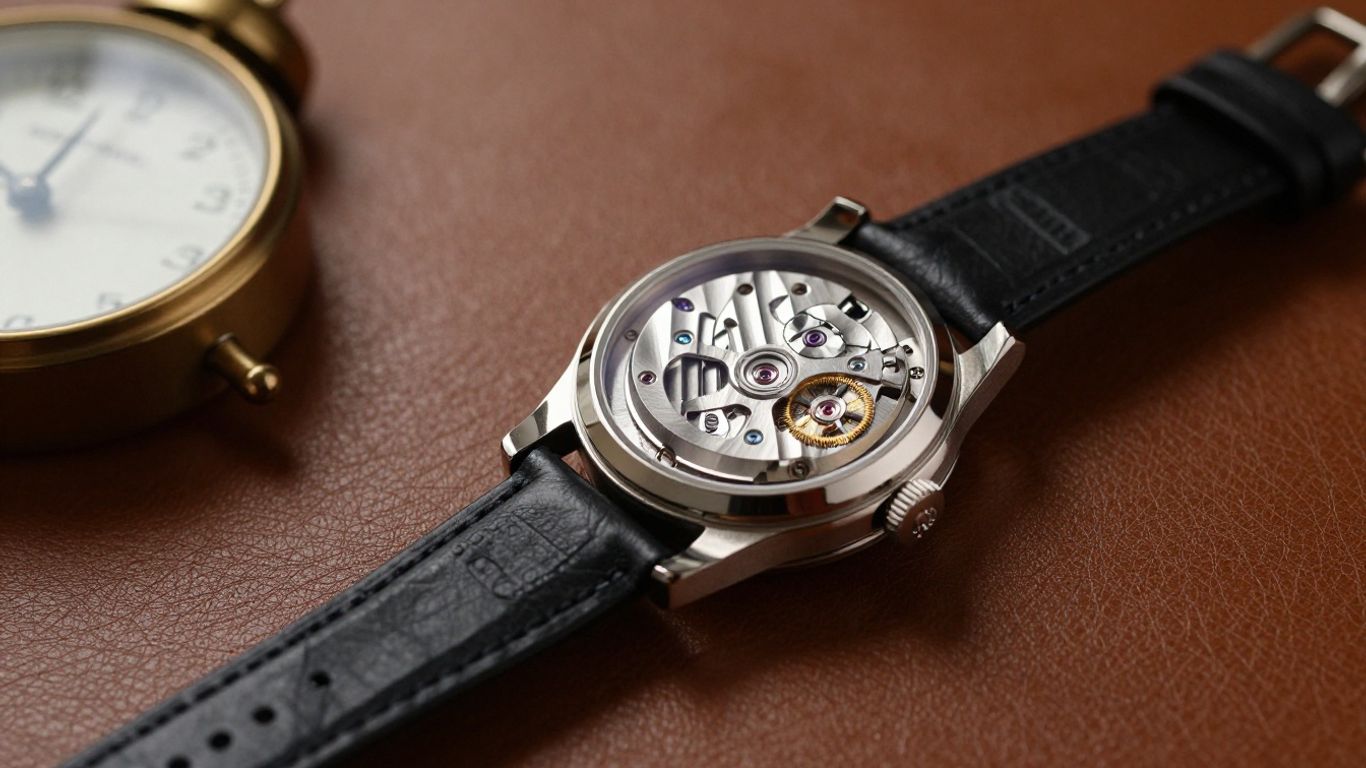
Inside the movement, a coiled mainspring holds energy. As it gradually unwinds, that energy passes through the gear train and supports the balance and escapement, the parts that regulate and distribute the release of power. When the stored energy is nearly gone, the movement eventually stops.
This is why the watch can continue ticking in a drawer. It is not creating energy while sitting still; it is using energy that was stored earlier. Stored energy, not motion alone, is what keeps the hands moving during that period.
Why power reserve is measured in hours
Hours make the specification easy to apply to ordinary routines. You can compare a watch’s stated reserve with a night, a full day, or a weekend away from the wrist. A 40-hour reserve, for example, gives you a rough sense of whether the watch may still be running after being removed on Friday evening.
The number describes duration from a wound state, not a promise that the watch will always reach the exact figure. Winding level, position, condition, and the movement’s design can all affect the result.
How power reserve differs from battery life
A quartz watch uses an electrical battery, while an automatic watch uses mechanical energy stored in a mainspring. Battery life describes how long a cell can power the electronic movement before replacement or charging is needed. Power reserve describes how long a mechanical movement can operate before its stored spring energy runs out.
The two ideas sound similar because both describe running time, but the way you maintain them is different. You recharge an automatic watch through winding and wear; you do not charge its mainspring with electricity.
How an automatic watch stores and replenishes energy
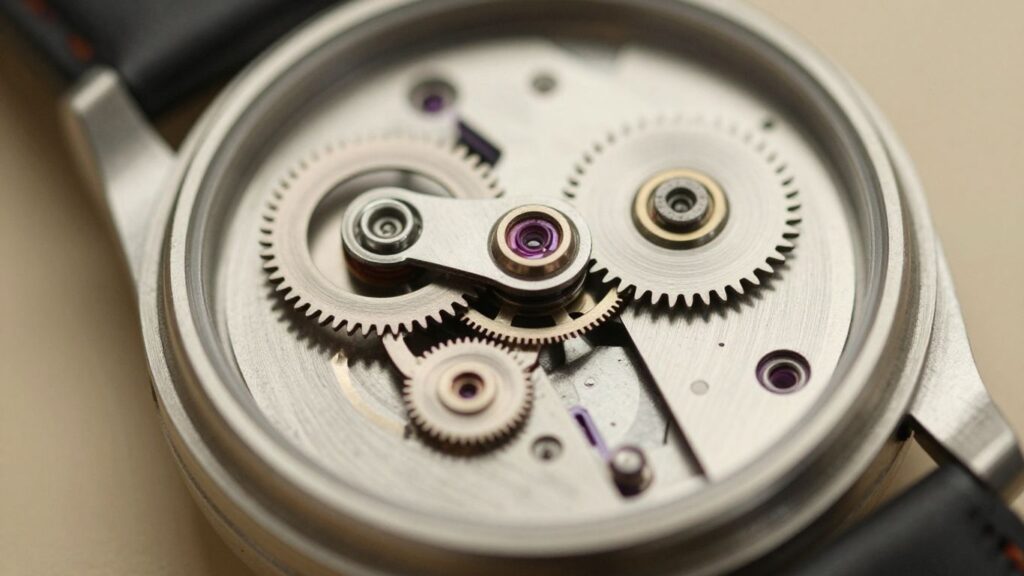
An automatic watch combines a spring, gears, and a winding system in a small case. Your wrist movement can keep adding energy, although the exact amount depends on how much you wear and move the watch. Knowing the basic sequence makes the watch feel less mysterious and helps you restart it sensibly.
The role of the mainspring
The mainspring is a long, coiled spring housed in a barrel. Winding tightens the spring and stores potential energy; controlled unwinding then supplies power to the movement. The reserve is therefore closely linked to how much usable energy the mainspring can hold and how efficiently the movement releases it.
A fully wound mainspring does not make the watch run faster by itself. The regulating parts still determine the rate, while the spring provides the energy those parts need.
How the rotor winds the movement
An automatic movement contains a weighted rotor that can turn as your wrist changes position. Through the winding mechanism, that motion winds the mainspring in small increments. Regular wear can therefore replenish energy that the watch has already used.
The rotor does not guarantee that every watch will remain fully wound. If you wear the watch briefly, keep your wrist relatively still, or leave it off for a long period, the movement may use energy faster than the rotor replaces it.
Manual winding and automatic winding compared
Manual winding adds energy when you turn the crown, while automatic winding adds energy through rotor movement. Many automatic watches also allow manual winding, but you should follow the manufacturer’s instructions rather than assume every crown or movement behaves identically.
Manual winding is useful when a stopped watch needs a quick start. Automatic winding is convenient during regular wear because the movement can continue receiving small additions of energy without repeated crown turns.
What happens when the watch is fully wound
When the mainspring reaches its intended winding limit, the automatic system is designed to prevent ordinary wrist motion from forcing it tighter and tighter. The rotor can continue moving, but the winding arrangement manages the extra motion rather than storing unlimited energy.
That does not mean you should wind aggressively or ignore unusual resistance. A crown that feels rough, tight, or abnormal deserves attention from a qualified watchmaker instead of extra force.
How long an automatic watch can run
There is no single running time that applies to every automatic watch. The movement’s architecture, mainspring, winding system, and complications all play a part. The number printed in a specification is best treated as a useful estimate for planning wear, not as a stopwatch result.
Typical power reserve ranges
Many everyday automatic movements offer a reserve in the broad range of about 36 to 48 hours. Other movements provide shorter or longer periods, so you should check the specific movement or watch documentation before comparing models.
The practical difference becomes clear when you remove a watch for the night or for a weekend. A reserve near two days may cover that pause, while a shorter one may require winding or resetting when you return to it.
Standard movements versus extended-reserve movements
A standard movement may be designed around a reserve that covers roughly one to two days. An extended-reserve movement is built to run longer, sometimes for several days, through changes to the mainspring, barrel arrangement, gear train, or efficiency of the movement.
Longer running time can make an occasional-wear watch easier to live with. It can also involve different design priorities, so reserve length should be considered alongside service support, accuracy, case design, and price.
Factors that affect actual running time
Your watch may not deliver the same duration every time you test it. Common influences include:
- How fully the mainspring was wound before the watch was set aside.
- How much wrist motion the rotor received during wear.
- The movement’s age, condition, and service history.
- The position and conditions in which the watch is left.
These factors explain why a small difference from the stated figure is not automatically a fault. Repeated, substantial changes are more useful as a reason to seek professional advice.
Why the stated reserve may vary slightly
Manufacturers generally state a tested or expected duration under defined conditions. Your daily experience can differ because you may not start from the same winding level, and the watch may operate in a different position or temperature. Measurement itself also has practical tolerances.
Treat the figure as a planning guide. If the watch consistently stops much earlier than expected when properly wound, or if its timekeeping changes noticeably, have it checked rather than trying to correct the issue through repeated winding.
How to tell how much power reserve remains
Some watches show remaining energy clearly, while others make you estimate it from your habits. Either way, you are looking for a reasonable indication rather than laboratory precision. A little observation over several days can tell you more than a single quick test.
Reading a power reserve indicator
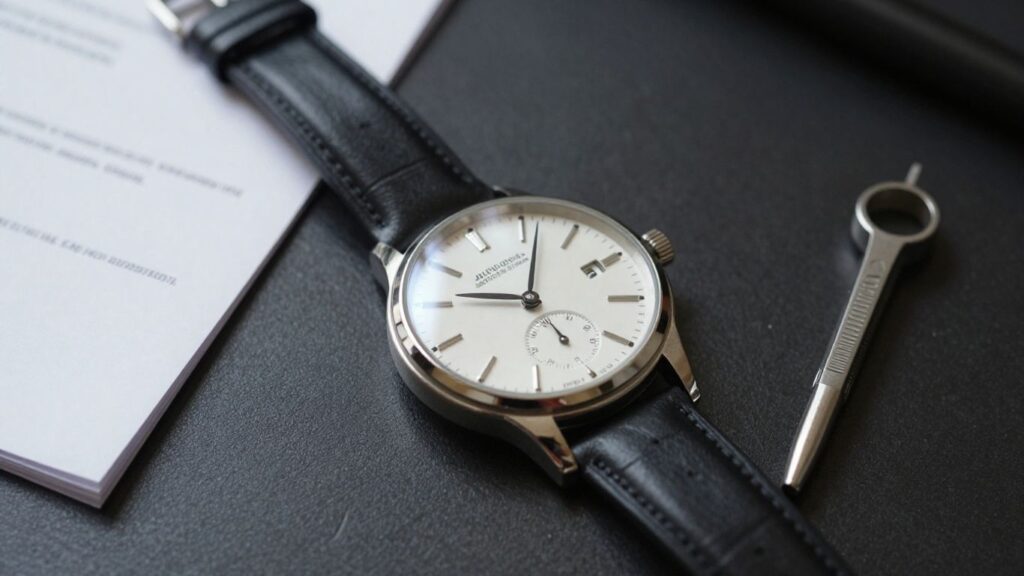
A power reserve indicator may use a hand, scale, window, or another display to show the approximate tension in the mainspring. The markings might run from low to high, empty to full, or display hours directly. Read the indicator according to the watch’s own scale because layouts differ.
The indicator usually changes as energy is used and replenished. It may not move in a perfectly intuitive way, and it is not the same as a second time display or a battery percentage on an electronic device.
Estimating reserve without an indicator
To estimate the reserve, wind the watch according to its instructions, note the time, and set it aside without wearing it. Record when it stops. Repeating the observation can reveal the watch’s approximate range, although you should avoid treating a home test as a service diagnosis.
You can also notice whether the watch remains running after a normal overnight or weekend break. That simple habit often gives you enough information for everyday planning.
Recognizing signs that the movement is slowing
A mechanical watch may show irregular behavior when its available energy is very low, but you should not rely on a visible slowdown as a precise gauge. If the watch stops, loses substantial time, or behaves differently from its usual pattern, the cause may be low reserve or a maintenance issue.
Do not deliberately run a watch down repeatedly just to watch for symptoms. Normal use, careful observation, and the manufacturer’s guidance are safer ways to understand its behavior.
Using timing and winding habits as practical clues
Keep a simple note of when you put the watch on, when you take it off, and whether you wind it. After a week or two, you may see a pattern: perhaps your normal wear keeps it running, or perhaps it regularly needs a small manual wind after a day away from the wrist.
That information is also useful when comparing purchases. Promo Deals brings offers and discounts together so shoppers can compare buying opportunities, but you still need to check the movement’s stated reserve and care instructions before deciding.
What happens when an automatic watch runs out of power
When the stored energy is exhausted, the hands stop because the movement no longer has enough power to keep the regulating system operating. This is a normal consequence of leaving an automatic watch unwound. The next step is usually straightforward, provided the watch has no special winding instructions.
Why the watch stops
The mainspring gradually releases its stored energy until it can no longer provide the movement’s operating power. At that point, the gear train and escapement stop, and the hands remain at the time when the energy ran out.
A stopped watch is not automatically damaged. It may simply have been off the wrist longer than its available reserve. Other symptoms, such as grinding, persistent roughness, or unexplained loss of power, deserve closer attention.
How to restart it safely
Check the manufacturer’s instructions first. In general, you can place the watch in a stable position, wind it carefully through the crown if manual winding is supported, and set the time once it has started. If the watch is not designed for ordinary manual winding, do not force the crown.
After restarting, normal wear may replenish the reserve through the rotor. If it stops again unusually soon, record what happened and arrange a professional inspection.
When hand-winding is useful
Hand-winding is especially useful when you pick up a stopped automatic watch and want to give it enough energy to begin running before wearing it. It can also help when your daily activity has not provided much rotor motion.
Use a light, controlled touch and stop if the crown feels abnormal. The correct number of turns and the crown position vary by movement, so the supplied instructions remain the best reference.
Whether stopping can damage the movement
Simply stopping because the reserve has run out does not normally damage a healthy automatic movement. Mechanical watches are built to stop when their energy is exhausted. Problems are more likely to come from force, moisture, impact, magnetism, or neglected service than from an ordinary empty mainspring.
If the watch will sit unused for a long time, store it safely and dry. You do not need to keep it running solely to prevent harm, especially if doing so requires a poorly adjusted winder or unnecessary handling.
How power reserve affects everyday watch use
Power reserve matters most when it changes how often you need to reset or wind the watch. A daily wearer may rarely notice the limit, while someone who rotates several watches may notice it every week. Your routine should guide the importance you place on the specification.
Choosing a reserve for daily wear
If you wear one automatic watch most days, a conventional reserve may be perfectly practical. Your wrist supplies additional winding energy, so the watch may keep running between wear sessions. Fit, comfort, legibility, accuracy, and service access can matter just as much.
A longer reserve becomes more attractive if you regularly remove the watch for a full day or two. It can reduce the chance that you return to a stopped watch, but it does not remove the need for occasional setting or maintenance.
Managing a watch worn occasionally
For a rotating collection, note how long each watch normally runs after you take it off. Store pieces where they will not be knocked or exposed to unnecessary moisture, and accept that a watch with a shorter reserve may need resetting when you return to it.
If you compare prices through Promo Deals, treat the reserve as one line in the decision rather than the entire reason to buy. Offers can change, but the movement’s design and your wearing pattern determine whether the feature is genuinely useful.
Using a watch winder responsibly
A watch winder can keep an automatic watch moving while it is off your wrist, but it is not essential for every owner. If you use one, choose a device that follows the movement’s requirements and avoid assuming that constant motion is automatically better.
For many watches, simply letting the reserve run down and restarting the piece later is a reasonable option. Consult the manufacturer’s guidance if the watch has unusual winding needs or complications.
Balancing convenience, accuracy, and maintenance
A longer reserve can make ownership easier, but it does not guarantee better accuracy or fewer service needs. You should weigh the reserve against the movement’s reported performance, the watch’s condition, warranty terms, and the cost and availability of qualified care.
The most convenient watch is the one that suits your routine. A modest reserve can be enough when you wear the same watch daily, while an extended reserve may be valuable if you switch watches often.
Power reserve terminology and common misconceptions
Watch specifications can make related ideas sound interchangeable when they are not. Power reserve concerns stored mechanical energy and running duration; it does not directly measure every aspect of quality. Separating the terms helps you read listings carefully and avoid paying for a feature that does not match your habits.
Power reserve versus accuracy
Power reserve tells you how long the movement can run from stored energy. Accuracy tells you how closely it keeps time. A watch can have a long reserve and still need regulation, just as a watch with a shorter reserve can keep time well within its expected range.
When comparing a purchase, read both specifications where available. Promo Deals is designed to organize offers and price drops, while the technical judgment about reserve and accuracy still belongs to you.
Power reserve versus water resistance
Water resistance describes how a watch is designed to handle exposure to water under stated conditions. Power reserve describes mechanical running time. One does not imply the other, so a watch with a long reserve is not automatically safer around water.
Follow the case and crown guidance, particularly after servicing or if seals may have aged. Treat these as separate parts of watch care.
Why a longer reserve is not always better
A longer reserve can be convenient, especially if you remove the watch for a weekend. But it may come with a different movement design, a different price, or trade-offs that matter more to you, such as thickness, service access, or wearing comfort.
The useful question is not simply whether the number is larger. Ask whether the reserve fits your routine and whether the watch performs well in the areas you value.
How complications can change energy consumption
Additional functions can require more parts and more energy from the movement. A chronograph, calendar, or other complication may affect how the stored energy is distributed, depending on its design and whether you use the function.
That does not let you predict performance from the complication name alone. Check the specific movement’s documentation, and remember that stated reserve, actual condition, winding level, and usage all influence your experience.
Conclusion
Power reserve is simply the approximate time an automatic watch can run on stored mainspring energy, and that number becomes useful when you connect it to your own wearing habits. Once you understand the rotor, mainspring, winding options, and limits of the specification, a stopped watch is usually less alarming and a new purchase is easier to judge.
Frequently Asked Questions
What does power reserve mean in an automatic watch?
It means the approximate length of time the watch can continue running after its mainspring has been sufficiently wound and it is no longer receiving additional winding energy.
How long does an automatic watch usually run?
Many everyday automatic watches run for roughly 36 to 48 hours, but the exact duration depends on the movement and its design. Check the specific watch specification for a reliable estimate.
Does wearing an automatic watch keep it fully wound?
Regular wear can replenish energy through the rotor, but it may not fully wind the watch in every routine. Limited wrist motion, short wear periods, and long pauses can leave the reserve partly depleted.
What should you do when an automatic watch stops?
Follow the manufacturer’s instructions, then manually wind it if the movement supports that feature or wear it normally to restart the winding system. Avoid forcing the crown.
Is a longer power reserve always better?
Not necessarily. It can be more convenient, but accuracy, comfort, serviceability, water resistance, movement condition, and price may be more important for your use.
Can a stopped automatic watch be damaged by stopping?
Ordinary stopping when the mainspring runs out is generally not harmful to a healthy movement. Damage is more likely to involve impact, moisture, force, magnetism, or poor maintenance.
How can you check the remaining power reserve?
Use the watch’s power reserve indicator if it has one. Otherwise, observe how long it runs after careful winding and note the result, remembering that home measurements are approximate.