
Key Takeaways
Protein powder can contribute to weight gain, but only when it helps you consume more total calories than you use. The choice of powder, the foods mixed with it, and your broader eating pattern all matter.
- A calorie surplus, rather than protein alone, drives weight gain.
- Protein powder is a convenient supplement, not a complete weight-gain plan.
- Strength training can help direct additional calories toward muscle growth.
- Whey, casein, and plant-based powders suit different preferences and routines.
- Ingredient labels, portion sizes, allergies, and digestive comfort deserve attention.
- Understanding Weight Gain: Calories In vs. Calories Out
- How Protein Powder Fits into the Weight Gain Equation
- Different Types of Protein Powder and Their Suitability for Weight Gain
- Best Practices for Using Protein Powder for Weight Gain
- Potential Downsides and Considerations
- Conclusion
- Frequently Asked Questions
- Can protein powder increase weight on its own?
- Is protein powder better than whole foods for gaining weight?
- Should I mix protein powder with milk for weight gain?
- Does protein powder build muscle without exercise?
- When is the best time to drink protein powder?
- Can protein powder cause digestive problems?
- How can I choose a protein powder for weight gain?
Understanding Weight Gain: Calories In vs. Calories Out
The basic answer to “can protein powder increase weight” is yes, but not because powder has a special weight-gain effect. Weight generally rises when you consistently take in more energy than your body uses, while weight stays steady when intake and expenditure are closer to balance. Protein powder can make that extra intake easier, especially for people who struggle to eat larger meals.
A shake may add calories on top of your usual meals, or it may simply replace another food. Those two uses can lead to very different results. A powder mixed with water may provide relatively few calories, while one blended with milk, oats, fruit, and nut butter can become a much more substantial snack.
The quality of the overall surplus matters too. A useful approach includes regular meals, carbohydrates for energy, fats for calorie density, and enough protein to support tissue repair and training. Calorie intake and weight gain are closely connected, but the goal is not to treat every extra calorie as interchangeable; steady, manageable additions are usually easier to maintain than forced overeating.
How Protein Powder Fits into the Weight Gain Equation
Protein powder is most useful when it solves a practical nutrition problem, such as a low appetite, a busy schedule, or difficulty reaching a daily protein target. It can add energy to a routine without requiring another full plate of food. The powder still works within the same calorie equation as any other food.
Protein Powder as a Calorie Supplement
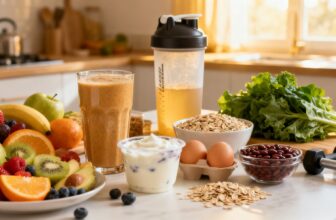
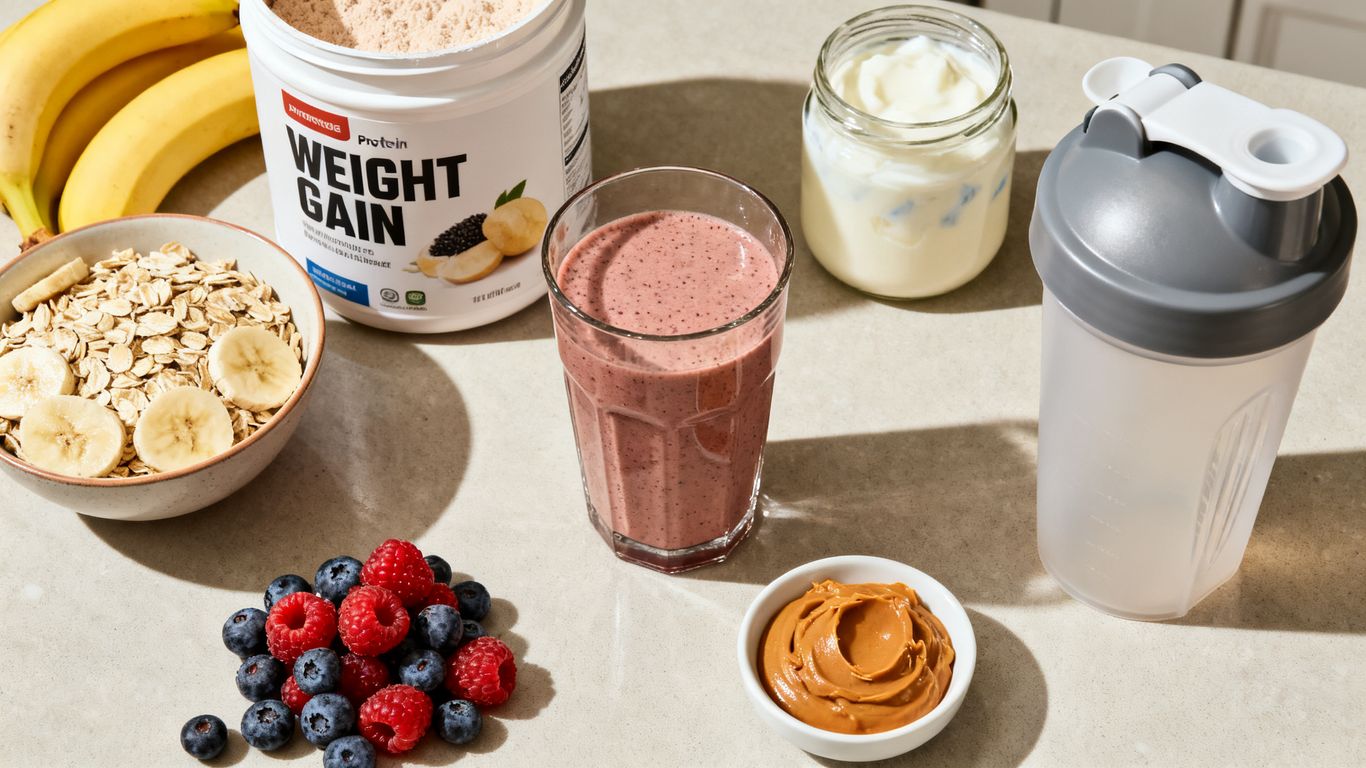
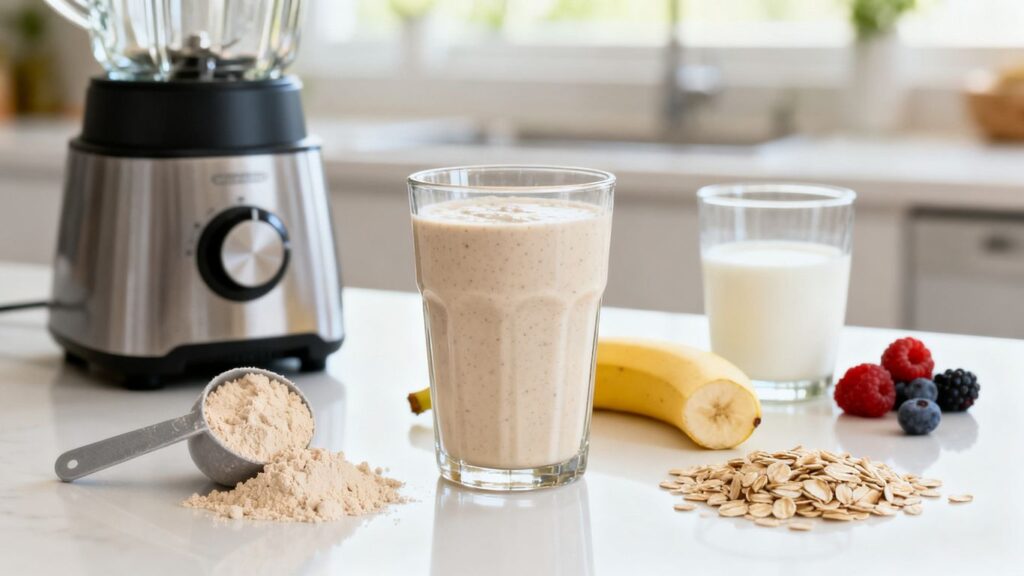
A scoop contributes calories, but the amount varies by product and serving size. When weight gain is the aim, the liquid and ingredients around the powder often make the biggest difference. Milk or a fortified alternative, bananas, oats, yogurt, nut butter, and seeds can turn a basic shake into a fuller snack, while water keeps the addition lighter.
Before making a shake a daily habit, check whether it is being added to meals or quietly replacing them. A simple way to make the choice clearer is to compare the role each drink plays in your day:
| Shake setup | Typical purpose | What to consider |
|---|---|---|
| Powder with water | Quick protein addition | Usually a smaller calorie increase |
| Powder with milk and fruit | Snack or post-workout drink | Adds carbohydrates and more energy |
| Powder with oats and nut butter | Calorie-dense mini-meal | Larger portion may affect appetite |
This comparison does not make one option universally better. It simply shows why the same powder can support weight gain for one person and have little effect for another. Protein supplements in a balanced diet can be convenient, but they work best when their calories and ingredients fit the rest of the day.
The Role of Protein in Muscle Growth
Protein provides amino acids used to build and repair body tissues, including muscle. For someone who is strength training, eating enough protein alongside an appropriate calorie intake can support muscle development; the powder itself does not create muscle without training and recovery. Distributing protein across meals may also be more practical than trying to consume nearly all of it in one large shake.
A gradual increase in training load, adequate sleep, and consistent meals all matter. People with specific medical conditions, kidney concerns, allergies, or unusually high protein needs should ask a qualified clinician or registered dietitian for individual guidance. Research on high-protein diets and health outcomes can provide context, but it cannot replace personal medical advice.
Different Types of Protein Powder and Their Suitability for Weight Gain
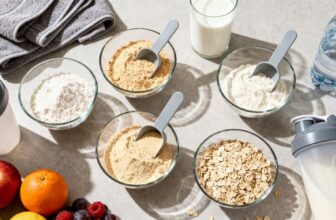
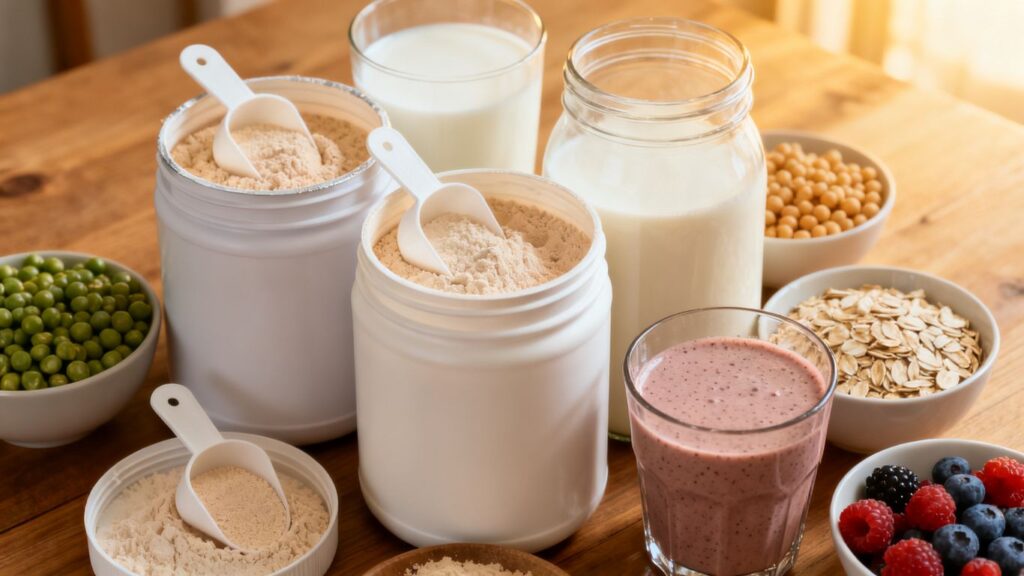
Protein powders differ mainly in their source, digestion speed, texture, and accompanying ingredients. None automatically causes weight gain, so the best choice is the one you can tolerate and use consistently. Reading the full label is more useful than choosing a powder based only on the word “mass” or the size of its tub.
Whey Protein: Fast-Absorbing and Versatile
Whey is a milk-derived protein that mixes easily and is commonly used around workouts or between meals. Its relatively light texture makes it simple to combine with fruit, oats, yogurt, or milk when you want to increase a shake’s calories. People who are sensitive to dairy may need to consider the specific whey product and their own tolerance.
Whey is a reasonable option when convenience matters and dairy fits your diet. The powder’s calorie contribution remains modest unless it is paired with other ingredients, so a person seeking weight gain should look at the complete shake rather than assuming the scoop will do all the work.
Casein Protein: Slow-Digesting for Sustained Release
Casein is another milk-derived protein, often chosen for its thicker texture and slower digestion. Some people like it as an evening snack because it can make a shake feel more substantial. That timing is a preference, not a requirement, and total daily intake remains more relevant than a particular hour.
Casein can be mixed into yogurt or blended with milk for a denser consistency. If that texture reduces your appetite or causes digestive discomfort, it may be less useful than a lighter powder you will actually use. The most suitable option is the one that fits your eating pattern without crowding out varied whole foods.
Plant-Based Proteins: Options for Vegans and Vegetarians
Plant-based powders may be made from sources such as peas, soy, rice, or other plants. They can help vegans and vegetarians add protein to smoothies, oatmeal, or snacks, though flavor and texture vary widely. Checking the ingredient list and nutrition panel helps you understand both the protein amount and the calories per serving.
For a weight-gain shake, a plant-based powder can be combined with soy milk, fruit, oats, avocado, or seed butter. People with food allergies should inspect flavorings and blends carefully, since a product’s main protein source may not be its only relevant ingredient. The broader protein powder ingredient guide is useful when comparing added sugars, flavors, and other components.
Best Practices for Using Protein Powder for Weight Gain
A protein shake is easier to use well when it has a clear place in the day. Start with a serving that feels comfortable, then observe appetite, digestion, training, and weight trends over several weeks. Small adjustments are generally more manageable than suddenly adding a very large drink.
Timing Your Protein Intake
There is no single mandatory time to take protein powder. A shake can work at breakfast, after training, between meals, or later in the day if those are the moments when eating enough is difficult. What matters most is that it complements a consistent intake rather than becoming an excuse to skip varied meals.
Many people find a post-workout shake convenient when they will not be eating a meal soon. Others benefit more from a midafternoon drink that prevents a long gap between lunch and dinner. Let hunger, schedule, and tolerance guide the timing instead of treating the clock as a nutritional rule.
Combining Protein Powder with Other Foods
The ingredients added to a shake determine whether it functions as a light supplement or a more filling mini-meal. A balanced combination can make weight gain less repetitive and provide nutrients that plain powder does not contain. Just Picked offers practical fitness buying advice alongside explanations of how protein supplements may fit different goals, which can be helpful when comparing products without treating any one formula as universally best.
For a homemade shake, these additions are easy starting points:
- Milk or soy milk for liquid, protein, and extra calories.
- Oats for carbohydrates and a thicker texture.
- Banana or berries for flavor and useful variety.
- Nut or seed butter for calorie density and richness.
The right combination depends on appetite and dietary needs. If a shake becomes so large that it replaces lunch or dinner, reduce the portion or move it between meals. Just Picked also covers product reviews and deals, so shoppers can use that broader resource while still checking labels and comparing serving sizes themselves.
Potential Downsides and Considerations
Protein powder is convenient, but convenience can hide how much you are consuming. Some products contain substantial added sugar, large serving sizes, or extra ingredients that may not suit your preferences. A daily shake should be counted as part of your food intake, not treated as nutritionally invisible.
Digestive symptoms are another reason to pause and reassess. Dairy-based powders may be uncomfortable for people with milk allergies or lactose intolerance, while plant-based blends, sweeteners, or thickeners can also bother some individuals. Persistent pain, diarrhea, constipation, or other symptoms deserve a conversation with a healthcare professional rather than repeated experimentation.
Finally, supplements vary in labeling and quality, and they should not crowd out ordinary foods such as grains, vegetables, fruit, legumes, eggs, dairy, fish, or meat. Choose a product whose ingredients and calorie count are clear, use the serving size thoughtfully, and seek individual advice if you have a medical condition or a specific nutrition goal. Just Picked publishes consumer-focused news and buying advice, but personal health decisions still belong with a qualified professional.
Conclusion
Protein powder can increase weight when it helps create a consistent calorie surplus, especially when blended into a nourishing shake and paired with strength training. It is a convenient tool rather than a shortcut, so choose a tolerable formula, monitor how it fits your meals, and adjust gradually.
Frequently Asked Questions
Can protein powder increase weight on its own?
It can contribute to weight gain if its calories push your total intake above what your body uses. The effect depends on the full diet, serving size, activity, and whether the shake is added to meals or replaces them.
Is protein powder better than whole foods for gaining weight?
Not necessarily. Whole foods provide a wider range of nutrients and textures, while powder is convenient when appetite, time, or meal preparation is a challenge. Many people use both.
Should I mix protein powder with milk for weight gain?
Milk can add calories, protein, and a creamier texture compared with water. A fortified plant-based beverage can serve a similar role, depending on your dietary preferences and tolerance.
Does protein powder build muscle without exercise?
Protein supports muscle repair and growth, but resistance training provides the stimulus. Adequate calories, recovery, and a progressive training plan are also part of the process.
When is the best time to drink protein powder?
There is no universally required time. Use it when it helps you meet your overall intake, such as between meals, at breakfast, or after training when a regular meal is not convenient.
Can protein powder cause digestive problems?
Some people experience discomfort from dairy proteins, lactose, sweeteners, thickeners, or other ingredients. Trying a different formula and discussing ongoing symptoms with a healthcare professional may help.
How can I choose a protein powder for weight gain?
Compare calories, protein, added sugars, ingredients, serving size, allergens, and flavor. Choose a powder you can digest and combine with foods that help you eat enough without making meals unpleasant.