
Key Takeaways
A semi-automatic espresso machine gives you a hands-on way to make espresso while handling water pressure and basic brewing mechanics for you.
- Choose a machine based on your drink habits, space, and willingness to practice.
- Boiler type affects temperature management and how easily you can brew and steam together.
- A quality grinder, accurate scale, tamper, and fresh beans matter as much as the machine.
- Start with a repeatable recipe before changing grind size, dose, or extraction time.
- Compare practical buying factors with independent espresso machine reviews before committing.
What is a Semi-Automatic Espresso Machine?
A semi-automatic espresso machine uses an electric pump and a user-operated portafilter. The machine manages the water delivery once brewing begins, while you typically grind the beans, dose the coffee, distribute it, tamp the grounds, and start or stop the shot. That division of work gives you more involvement than a fully automatic setup without requiring you to control every mechanical step by hand.
The portafilter is central to the process because it holds the coffee during extraction. Your grind size, dose, tamping, and timing all influence the result, so the same machine can produce noticeably different cups from one morning to the next. For a useful primer on the relationship between the pump, portafilter, and preparation steps, see this semi-automatic espresso guide.
This format suits people who enjoy a small daily ritual and do not mind adjusting their technique. It also leaves room to learn: you can change one variable, taste the result, and gradually build a recipe that works for your beans. Just Picked’s buying advice is designed for readers comparing those practical trade-offs before shopping.
Why Choose a Semi-Automatic Espresso Machine?
The appeal is the balance between mechanical assistance and personal input. You are not starting with a blank slate, but you still have meaningful control over the coffee in the cup. Before choosing a model, consider whether that balance matches the way you want to prepare drinks.
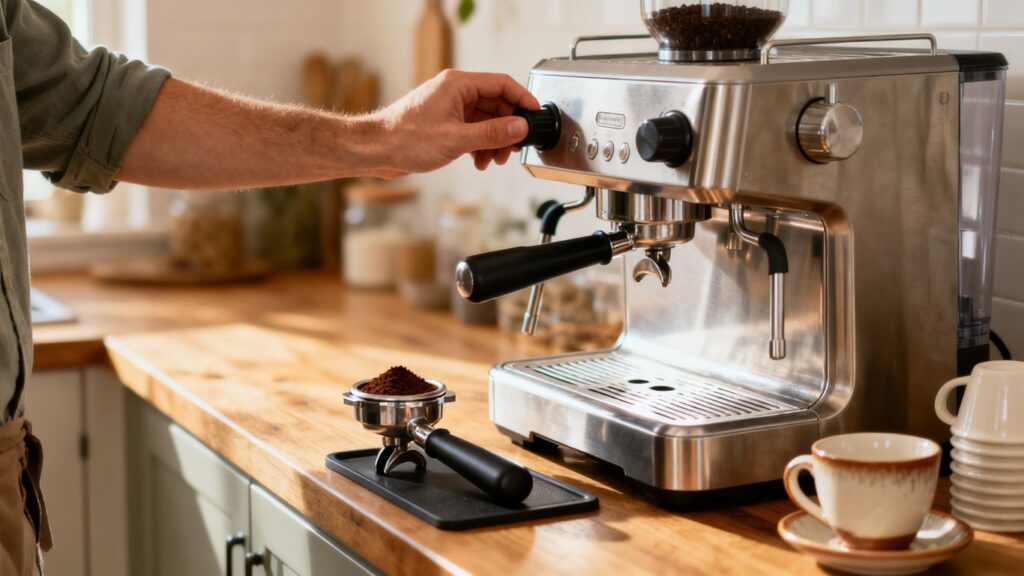
Semi-automatic machines can also fit different routines, from an occasional weekend espresso to several milk drinks each morning. The right choice depends less on a single headline feature than on how the machine handles your preferred pace and preparation style.
Control Over Your Brew
The biggest advantage is the ability to shape the recipe. You can adjust the grind, coffee dose, tamping pressure, and extraction time rather than accepting one preset result. Small adjustments matter with espresso, and the process makes it easier to understand why a shot tastes sharp, bitter, thin, or balanced.
Control does not mean every shot will be perfect. It means you can identify what changed and make a more informed correction next time. A stable routine—fresh beans, a consistent dose, and a measured yield—will usually teach you more than changing several settings at once.
Learning and Experimentation
A semi-automatic machine turns brewing into a practical skill. Begin with a recipe, record the dose and shot time, then alter only one factor. Over time, you will learn how different beans respond to finer or coarser grinding, longer extraction, and changes in dose.
This learning curve is part of the reason many home baristas stay interested. It is also why a machine should be approachable: controls should be clear, the portafilter should feel comfortable, and cleaning should not be so complicated that it discourages regular use. Just Picked reviews and buying advice can help frame those usability questions alongside specifications.
Cost-Effectiveness
A semi-automatic setup can be a sensible middle ground for someone who wants café-style preparation without buying the most elaborate equipment. The machine is only one part of the cost, however. A grinder, accessories, coffee, water filtration, and routine maintenance all affect the real budget.
Think about how often you buy espresso drinks and how much counter space you can give the setup. A less expensive machine paired with a capable grinder may be more satisfying than spending the entire budget on the machine itself. Just Picked also offers deals, so it is worth comparing the complete setup rather than judging a listing by its machine price alone.
Key Features to Consider When Buying
Specifications are useful when they answer a real question about your routine. Start with the drinks you make, how many people you serve, and whether you need to brew and steam close together. This espresso machine buying checklist is a helpful reminder to consider preparation time, installation needs, drink preferences, and price alongside technical details.
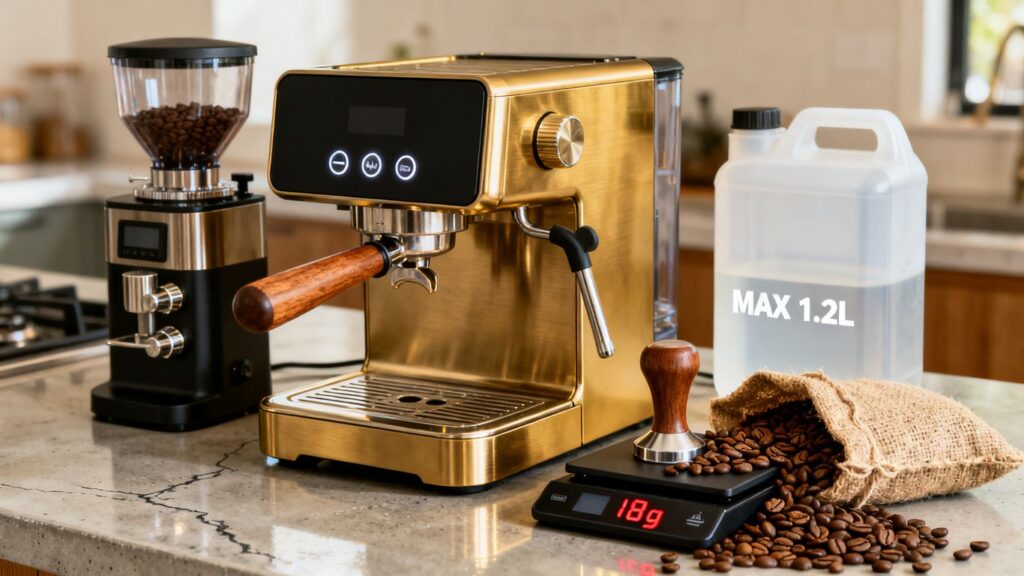
No single configuration is best for every home. A compact machine may be easier to place and maintain, while a larger setup may provide more capacity or smoother multitasking. The sections below explain the main features in plain terms.
Boiler Type (Single, Heat Exchanger, Dual)
The boiler design affects how the machine heats water for brewing and steaming. A single-boiler machine generally requires you to switch between those tasks, while a heat-exchanger design can allow brewing and steaming through separate paths at the same time. A dual-boiler machine uses separate boilers for those functions, which can offer more independent temperature control.
The trade-off is usually size, price, and complexity. Use this quick comparison as a starting point, then check the manufacturer’s operating instructions for the model you are considering.
| Boiler type | Useful for | Main consideration |
|---|---|---|
| Single boiler | Espresso-focused routines | Brewing and steaming may require switching |
| Heat exchanger | Espresso and milk drinks in one session | Brewing and steaming use different paths within the system |
| Dual boiler | Frequent brewing and steaming | Usually larger and more expensive |
For a person who mostly drinks straight espresso, a single boiler may be perfectly practical. If milk drinks are central to the routine, faster transitions can be worth prioritizing.
Pump Pressure
The pump supplies pressure to move water through the coffee puck. Look for clear information about the pump and whether the machine includes a way to monitor or regulate brewing pressure. Pressure is only one part of extraction, so it cannot compensate for stale coffee, an unsuitable grind, or uneven tamping.
Consider whether the controls make it easy to repeat a shot. A pressure gauge can provide useful feedback, but it is most helpful when paired with consistent dosing and timing. Avoid treating a higher number on a specification sheet as a guarantee of better espresso.
Portafilter Size
Portafilter size affects compatibility with baskets, tampers, and other accessories. A common size can make replacements easier to find, but the machine’s included basket and the amount of coffee it is designed to hold matter just as much. Check the dimensions before buying accessories so you do not end up with a tamper that does not fit properly.
The handle should also feel secure and comfortable during locking and removal. If two people will use the machine, a familiar, easy-to-clean design may be more valuable than a small difference in capacity.
Water Reservoir Size and Type
A larger reservoir means fewer refills, but it also takes more space and may be heavier to remove. Measure the clearance above and beside the machine, especially if the reservoir lifts vertically. If the machine sits beneath cabinets, a front-filling or accessible design can make daily use easier.
Water quality deserves attention as well. Follow the manufacturer’s guidance on filtration and descaling, and remember that the reservoir should be emptied and cleaned regularly. The best capacity is the one that supports your routine without turning stale water or maintenance into an afterthought.
Essential Accessories for Your Semi-Auto Setup
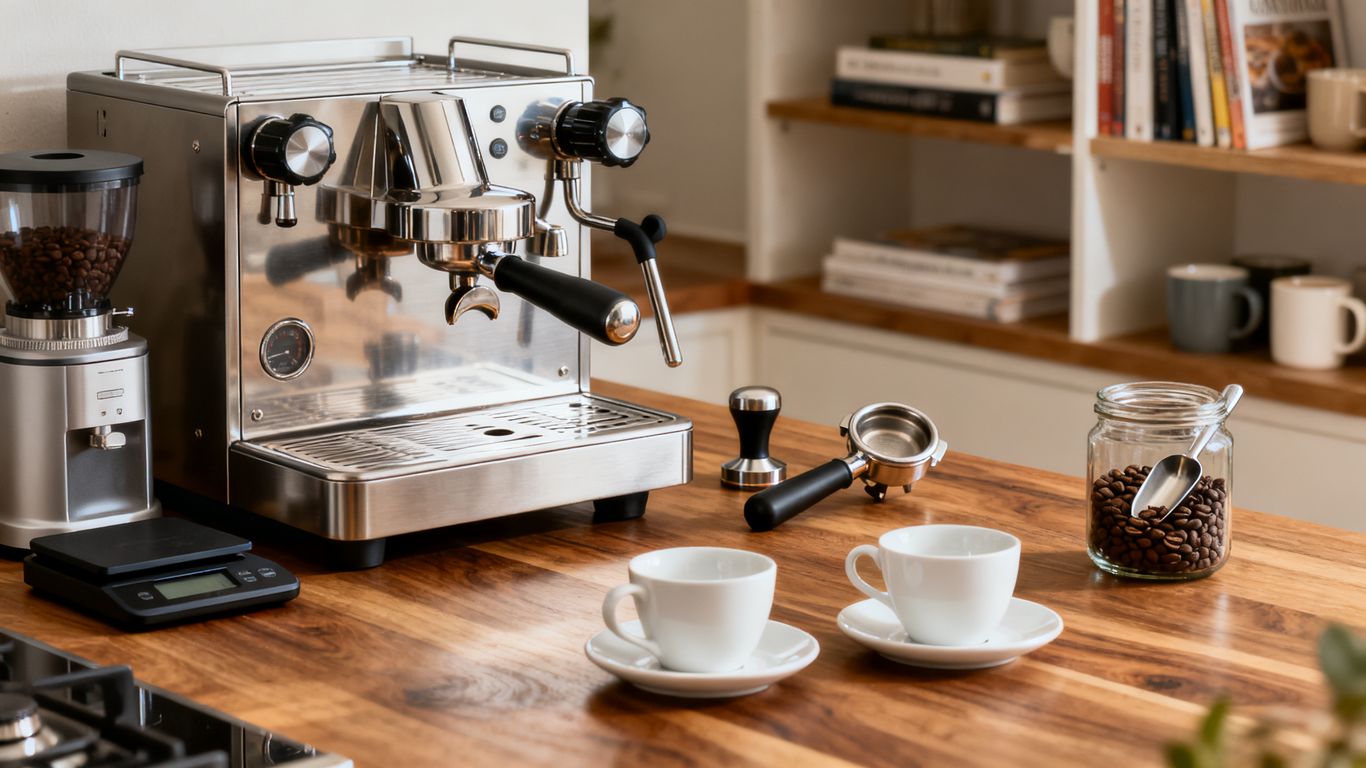
The grinder is usually the first accessory to prioritize because espresso depends on a consistent, adjustable grind. Fresh beans and a burr grinder give you a stronger foundation for dialing in the shot than a machine upgrade made without improving preparation. A scale is equally useful: weighing the dose and the brewed output makes your adjustments repeatable.
A few simple tools cover most beginner needs. Set them beside the machine before you shop so the total footprint and cost are clear:
- An espresso-capable burr grinder with fine adjustment
- A scale that can fit beneath the cup and show small changes
- A properly sized tamper for the portafilter basket
- A knock box or container for spent coffee grounds
These accessories are not decorative extras. They reduce guesswork, keep the work area organized, and make it easier to repeat a recipe. A microfiber cloth, a group-head brush, and the correct cleaning products will also help preserve the machine’s day-to-day performance.
Making Your First Espresso: A Quick Start Guide
Begin by reading the machine’s instructions and warming the equipment as directed. Use fresh coffee, weigh a consistent dose, and grind into the basket. Distribute the grounds evenly, tamp with a level surface, lock in the portafilter, and place a cup beneath the spouts.
Start the shot and watch both the time and the amount in the cup. The first attempt is simply a baseline, not a verdict on the machine. Write down what you used so the next adjustment has a clear reference.
If the espresso runs very quickly and tastes thin or sour, try a finer grind; if it drips slowly and tastes harsh, try a slightly coarser grind. Change one variable at a time and keep the dose steady while learning. Wipe the group area, purge and clean the steam wand after milk use, and empty the used grounds promptly so maintenance becomes part of the routine.
Conclusion
The best Guide to buying a semi-automatic espresso machine starts with an honest look at your habits: how much space you have, which drinks you make, how often you will brew, and whether you enjoy practicing. Match those needs to the boiler, pump, portafilter, reservoir, grinder, and accessories, then choose a setup you will actually use and maintain.
Frequently Asked Questions
What is a semi-automatic espresso machine?
It is an espresso machine that uses a pump to deliver brewing water while the user handles tasks such as grinding, dosing, tamping, and starting or stopping the shot.
Is a semi-automatic machine suitable for beginners?
Yes. It has a learning curve, but beginners can start with a simple recipe and improve by changing one variable at a time.
Do I need a separate grinder?
A separate burr grinder is strongly recommended because grind consistency and adjustment have a major effect on espresso extraction.
Which boiler type should I choose?
Choose based on your drink routine. A single boiler can suit espresso-focused use, while a heat exchanger or dual boiler may be more convenient for frequent milk drinks.
How much pump pressure is enough?
Look for clear brewing specifications and practical controls, but do not judge a machine by pressure alone. Grind, dose, tamping, and timing also affect the result.
What accessories are essential?
Most beginners benefit from a grinder, scale, correctly sized tamper, cleaning tools, and a practical way to dispose of spent grounds.
How often should I clean the machine?
Clean the portafilter and group area regularly, purge and wipe the steam wand after every milk use, and follow the manufacturer’s schedule for deeper cleaning and descaling.