
Key Takeaways
An automatic watch turns your everyday motion into mechanical energy. Once you understand the rotor, mainspring, escapement, and balance wheel, the movement becomes much easier to appreciate and care for.
- An automatic watch is a mechanical watch that winds itself through wrist movement.
- The rotor transfers motion to the mainspring, which stores energy.
- The escapement and balance wheel divide that energy into measured beats.
- Accuracy can change with magnetism, temperature, position, shocks, and power level.
- Regular care, sensible storage, and professional servicing help protect the movement.
- What makes an automatic watch different
- How the automatic winding system works
- How an automatic watch keeps time
- What happens when an automatic watch stops
- What affects automatic watch performance
- How to care for an automatic watch
- Conclusion
- Frequently Asked Questions
- How long does an automatic watch run when fully wound?
- Does an automatic watch need to be worn every day?
- Can you overwind an automatic watch?
- Is an automatic watch more accurate than a quartz watch?
- What should you do if an automatic watch stops overnight?
- Can magnets damage an automatic watch?
- How often should an automatic watch be serviced?
What makes an automatic watch different
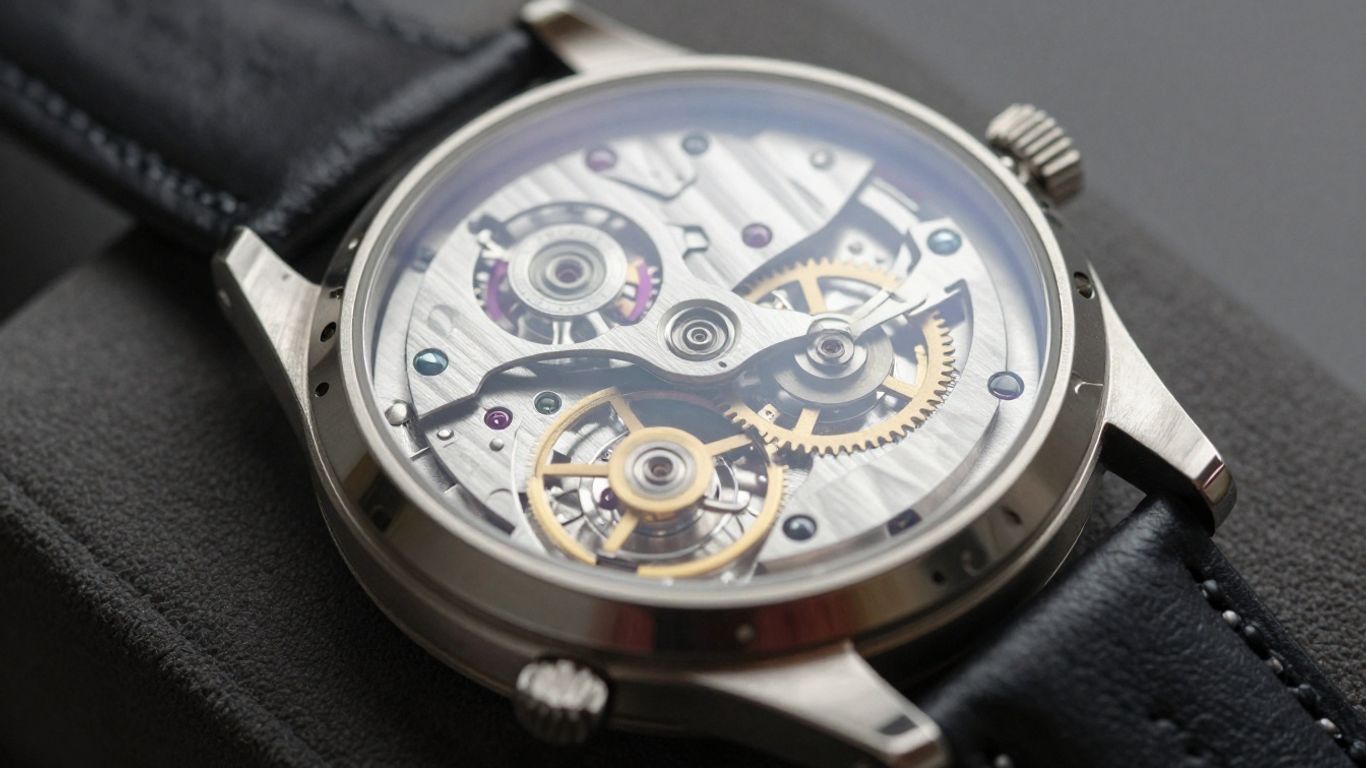
If you have wondered, “How Does an Automatic Watch Work?”, start by separating the movement from the case and dial. The movement is the small mechanical system that creates and regulates energy. Unlike a quartz watch, it does not depend on an electronic oscillator powered by a battery. Instead, it uses springs, wheels, and controlled motion.
The relationship between mechanical and quartz movements
A mechanical watch stores energy in a wound spring and releases it through a train of gears. A quartz watch uses a battery and a quartz crystal to create a highly regular electrical signal. That difference explains why a mechanical watch can be fascinating to inspect, while quartz watches are generally easier to keep highly accurate with little attention.
The distinction is not simply about old versus new. You choose a mechanical movement for its physical interaction and craftsmanship; you choose quartz for convenience, low maintenance, and typically tighter everyday precision. An automatic watch belongs to the mechanical family, but it adds a winding system that uses your movement.
How self-winding sets automatic watches apart
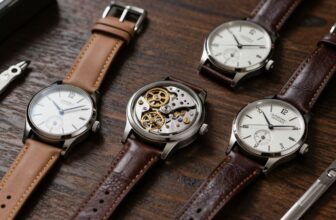
A manual mechanical watch needs you to turn the crown to tighten its mainspring. An automatic watch can receive that energy from the movement of your wrist. A small weighted component, called a rotor, turns as the watch changes position, and the winding mechanism converts that motion into tension in the mainspring.
The process is gradual rather than dramatic. Each movement adds a small amount of energy, so wearing the watch regularly can keep it running. A useful automatic watch overview can help you visualize how the rotor and winding mechanism fit into the larger movement.
The role of gears, springs, and other components
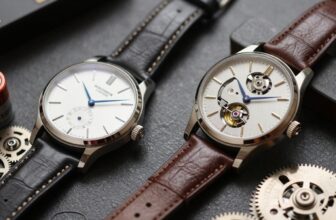
Inside the case, each component has a defined job. The mainspring stores energy, the gear train carries it, and the escapement meters its release. The balance wheel then oscillates at a steady rate, allowing the hands to advance in controlled increments.
Those parts work as a chain rather than as isolated pieces. If the spring stores energy but the escapement cannot release it consistently, the watch will not keep time properly. That dependence on many small interactions is part of the appeal—and part of the reason mechanical watches need careful handling.
Why automatic watches do not need batteries
An automatic watch does not need a battery because its energy comes from a wound mainspring. Wrist movement operates the rotor, the rotor winds the spring, and the spring powers the movement until its stored energy is used. If the watch is left still for long enough, it will stop rather than continue indefinitely.
That does not mean the watch creates energy from nothing. Your movement supplies the input, while the spring acts as the temporary store. The arrangement is mechanical, compact, and remarkably long-lived when clean, lubricated, and properly adjusted.
How the automatic winding system works
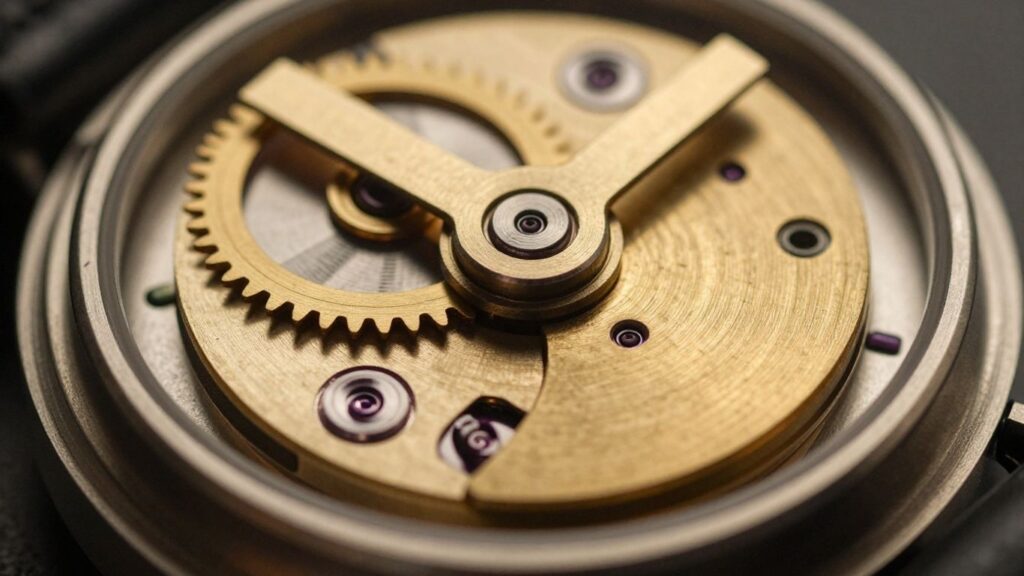
The winding system is the part that gives an automatic watch its self-winding character. As you move your arm, the rotor responds to changes in direction and gravity. The winding train then turns those motions into a controlled tightening of the mainspring.
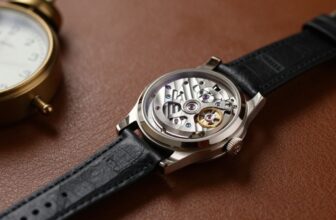
You may see this process through a transparent case back, although the rotor is often hidden behind a solid back. Either way, the principle remains the same: motion is collected in small increments and stored for later use.
How the rotor responds to wrist movement
The rotor is a weighted piece mounted so it can swing around its pivot. When your wrist changes position, inertia and gravity cause the rotor to move. Reversing components transfer suitable motion to the winding train, so the rotor can contribute while turning in more than one direction in many designs.
The rotor does not need to spin constantly. Ordinary walking, reaching, and changing the angle of your arm can provide enough intermittent movement. A quiet day at a desk may wind the watch less than an active day, which is why wearing habits affect how long it continues running.
How the mainspring stores mechanical energy
The mainspring is a long, coiled spring housed inside a barrel. Winding tightens the coil, and the spring gradually unwinds as it supplies energy to the movement. That stored energy is the reason an automatic watch can continue running while it sits briefly on a table.
The spring is not meant to be forced past its safe limit. Many modern movements use a slipping bridle that allows the spring to remain under controlled tension once it is fully wound. The exact design varies, so you should follow the maker’s instructions rather than assume every crown or winding system feels identical.
How gears transfer power through the movement
The gear train carries energy from the mainspring toward the hands and escapement. Different wheels rotate at different speeds, reducing the spring’s relatively strong, gradual force into the precise rates needed for seconds, minutes, and hours.
Think of the train as a carefully proportioned transmission. Its wheels must mesh cleanly, their pivots must move with minimal friction, and their lubrication must remain stable. Even a small increase in resistance can affect how efficiently the stored energy reaches the regulating parts.
Why some movements wind more efficiently than others
Winding efficiency depends on the rotor’s mass, the shape of the winding system, the direction in which it accepts motion, and the friction within its parts. It also depends on you. A watch worn loosely or kept unusually still may receive less useful movement than one worn securely during regular activity.
The practical differences are easier to see in daily use than in a specification sheet. If your watch often stops despite regular wear, the issue may be insufficient motion, a low power reserve, or a movement that needs attention. Avoid shaking it aggressively; normal winding or a measured manual start is safer.
How an automatic watch keeps time
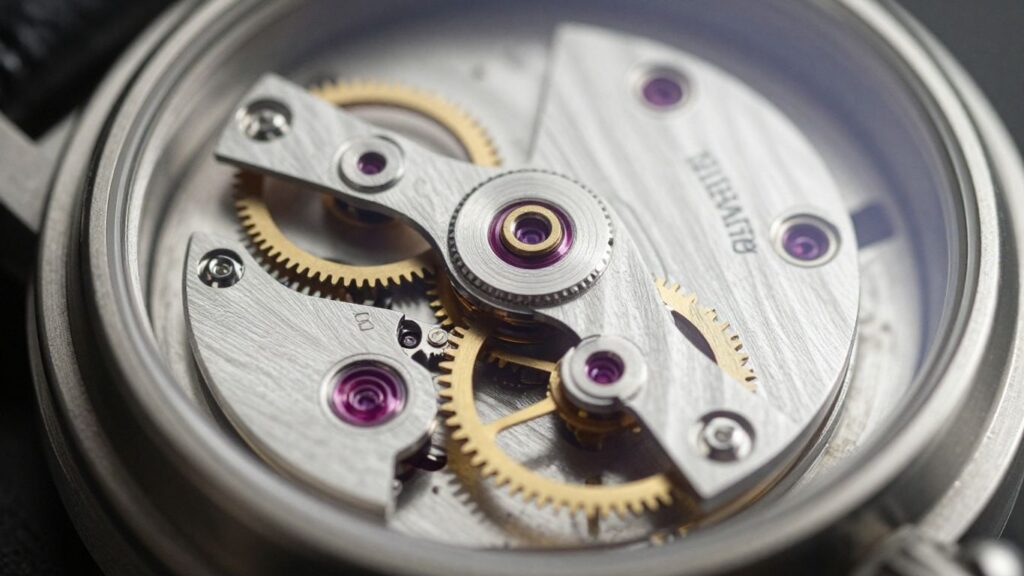
Winding keeps the movement supplied with energy, but it does not by itself create accuracy. The regulating system must release that energy at a consistent rate. The escapement, balance wheel, hairspring, and supporting jewels work together to control the flow.
Mechanical timekeeping is a compromise between precision and physical complexity. Small changes in friction, temperature, position, or force can affect the rate, which is why a mechanical watch may gain or lose seconds over a day.
The function of the escapement
The escapement controls how energy leaves the gear train. It allows the train to move forward in small steps rather than spinning freely, while also giving the balance wheel regular impulses. In a typical mechanical movement, the escape wheel and pallet system perform this stopping-and-releasing action.
Without an escapement, the mainspring would unwind rapidly and the hands would not advance at a useful rate. Its job is both simple to describe and demanding to execute: it meters power repeatedly, many thousands of times during a day.
How the balance wheel regulates the watch
The balance wheel swings back and forth with the hairspring, creating the movement’s basic rhythm. Each oscillation interacts with the escapement, determining how frequently the gear train is allowed to advance. Adjustments to the balance and hairspring can change the rate.
You can think of it as the watch’s mechanical reference. It is not perfectly isolated from its surroundings, though. Position, temperature, magnetism, and the amount of force arriving from the mainspring can all influence its behavior.
What jewels do inside a mechanical movement
Jewels are tiny synthetic stones used as bearing surfaces at selected pivot points. They reduce friction and wear where moving components rotate against fixed parts. They do not make the watch more valuable by themselves, and a higher jewel count is not automatically proof of better performance.
Their usefulness comes from placement and execution. A jewel must be correctly fitted and lubricated, and the surrounding components must be clean. During servicing, a watchmaker checks these interfaces for wear, contamination, and damaged or dried lubricant.
Why mechanical watches are less precise than quartz watches
Quartz watches benefit from a highly stable electronic frequency, while mechanical watches depend on physical parts moving under changing conditions. As a result, a mechanical watch usually has a wider expected daily variation than a quartz watch.
That variation is not necessarily a fault. What matters is whether the rate is consistent for the movement and whether it remains within the maker’s stated expectations. A sudden change, rather than a small stable gain or loss, is a stronger reason to have the watch checked.
What happens when an automatic watch stops
When an automatic watch stops, it has usually used the energy held in its mainspring. This is normal if you have not worn it for longer than its available power reserve. The hands will remain still until you restore enough energy through winding or movement.
Stopping does not automatically mean the movement is damaged. Still, restarting it gently gives you a chance to notice whether the crown feels normal, the hands move freely, and the watch resumes a steady rhythm.
Understanding power reserve
Power reserve is the approximate running time a fully wound watch can provide without additional winding. The amount varies by movement and can also depend on how completely the mainspring was wound. Wearing a watch for a short period does not always fill its reserve.
A reserve indicator, when present, shows the remaining energy. Without one, you can learn your watch’s pattern by noting when it stops after being set aside. Treat the published figure as a guide, not a promise of identical performance in every situation.
How to restart an automatic watch safely
If the watch has stopped, hold it securely and wind it according to the movement’s instructions. You can usually turn the crown in its winding position several times, then set the time and wear the watch normally. If the crown is screw-down, release it carefully before winding and secure it again afterward.
Avoid swinging or shaking the watch hard to start it. Sudden force can put unnecessary stress on the rotor and winding components. If the crown feels gritty, unusually loose, or difficult to turn, stop and seek professional help rather than forcing it.
When hand-winding is useful
Hand-winding is useful when you want to restart a stopped watch before putting it on. It is also convenient when you wear the watch only occasionally and do not want to wait for wrist movement to build the reserve. The crown transfers your motion directly to the winding system.
Use a gentle, even action and observe the maker’s instructions. Some automatic movements can be hand-wound, but the details differ. A few turns may be enough to begin operation; there is rarely a reason to wind aggressively.
Why a watch winder may not be necessary
A watch winder keeps an automatic watch moving while it is off your wrist, but many owners do not need one. If you are comfortable resetting the time and winding the watch when you wear it, leaving it stopped can be simpler and may reduce unnecessary running time.
A winder can be convenient for watches with complicated calendar displays, but it should match the movement’s winding direction and rotation needs. It is an accessory, not a requirement for preserving an automatic watch.
What affects automatic watch performance
An automatic movement can be well made and still show changes in rate. Its regulating parts are sensitive to their environment, and the force delivered by the mainspring is not exactly the same throughout the reserve. Your daily habits therefore matter more than a single timing check.
The following factors are especially useful to understand because they can create noticeable changes without meaning the watch has permanently failed.
The impact of magnetism and strong magnetic fields
Strong magnetic fields can affect ferrous components, especially the hairspring. In some cases, the coils may cling together or behave differently, causing the watch to gain time significantly. Everyday exposure can come from speakers, magnetic closures, electronics, or specialized equipment.
If your watch suddenly runs much faster after being near a strong magnet, do not try to correct the rate yourself. A watchmaker can test it and, when necessary, demagnetize it with the proper equipment.
How temperature and position influence accuracy
Temperature changes can alter the dimensions and elasticity of tiny components. The position of the watch also matters because gravity affects pivots and the balance assembly differently when the watch is dial-up, dial-down, or resting on its side.
For that reason, a watch may gain slightly during the day and lose slightly overnight, or behave differently on your wrist than on a nightstand. Consistent patterns are more informative than one isolated reading.
Why shocks and everyday movement matter
Normal wrist movement is what powers an automatic watch, but hard impacts are another matter. A fall, collision, or sharp blow can affect the balance staff, rotor, pivots, or case seals. Even if the dial and crystal look fine, the movement may need inspection.
Useful precautions are straightforward:
- Remove the watch for contact sports or activities with repeated impacts.
- Keep it away from tools and surfaces where it could fall.
- Do not use the watch as a striking or pressing tool.
- Have it checked after a serious impact or sudden rate change.
These habits do not make the watch fragile; they simply reduce avoidable stress. If the watch remains accurate and the crown and case are sound, ordinary daily wear is generally the use it was designed to handle.
How complications can change power consumption
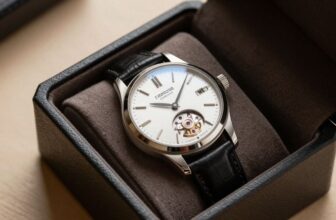
A complication adds another function to the movement, such as a calendar, chronograph, or second time zone. Its additional wheels and operating parts can increase mechanical complexity and may draw more energy when active.
That can affect how long the watch runs or how sensitive it is to a low reserve. The effect depends on the movement, so you should consult its instructions rather than assume every complication has the same impact. For broader background on automatic watch mechanics, this mechanical movement guide offers another useful perspective.

How to care for an automatic watch
Good care is mostly routine rather than complicated. Keep the watch away from strong impacts and magnetic sources, operate the crown gently, and pay attention to changes in timekeeping. Cleaning the outside does not replace movement servicing, but it can help you notice damage early.
You should also treat water resistance as a condition that needs maintenance. A rating is not permanent protection if seals age, the crystal is damaged, or the crown is not fully secured.
Recommended servicing intervals
Servicing intervals vary by movement, use, environment, and the maker’s guidance. A service generally involves inspection, disassembly, cleaning, lubrication, adjustment, and checks of the case and seals. You do not need to wait for the watch to stop completely before considering it.
If the watch is several years old, runs noticeably differently, or shows reduced reserve, consult an appropriately qualified watchmaker. A practical product buying guide is useful for general purchase research, but movement servicing should rely on watch-specific instructions and professional assessment.
How to store a watch between uses
Store the watch in a clean, dry place where it cannot fall or become scratched. Keep it away from strong magnets, damp bathrooms, and direct heat. A soft watch pouch or lined box can prevent contact with harder objects.
You do not need to keep an automatic watch running simply because it is stored. If it stops, reset and wind it when you next wear it. For a watch with a complicated calendar, record the correct settings before putting it away so restarting it is less frustrating.
Water resistance and crown precautions
Before exposing the watch to water, make sure the crown is fully pushed in or screwed down as designed. Never operate the crown or pushers while the watch is wet or submerged. Water resistance protects against specified conditions; it does not mean the watch is suitable for every aquatic activity.
Seals age and can be disturbed by opening the case. If the watch has been serviced, dropped, or exposed to water unexpectedly, have its resistance tested rather than relying on the original rating.
Signs that a movement needs professional attention
A sudden loss or gain of several minutes, repeated stopping, grinding during winding, or a loose rotor deserves attention. Condensation beneath the crystal is another warning sign because moisture can damage the movement quickly. Visible damage to the crown, crystal, or case should also be taken seriously.
Do not open the case at home unless you have the right tools and experience. A qualified professional can identify whether the issue is magnetism, shock, dried lubricant, worn parts, or a seal problem and recommend the appropriate repair.
Conclusion
An automatic watch works by turning your movement into stored spring energy, then releasing that energy through a carefully regulated mechanical system. Once you understand the rotor, mainspring, gear train, escapement, and balance wheel, you can use the watch more confidently and recognize when normal variation has become a service concern.
Frequently Asked Questions
How long does an automatic watch run when fully wound?
The running time depends on the movement and its power reserve, but many watches run for roughly a day or two after being fully wound. Check the maker’s specification for the most reliable figure.
Does an automatic watch need to be worn every day?
No. It can stop when its stored energy runs out. You can restart it by winding it as directed, setting the time, and wearing it normally.
Can you overwind an automatic watch?
Many modern movements include a slipping mechanism that limits tension once the mainspring is full. Even so, wind the watch gently and follow its instructions rather than applying force.
Is an automatic watch more accurate than a quartz watch?
Usually not. Quartz watches generally offer greater everyday precision, while automatic watches accept some variation in exchange for a fully mechanical movement and self-winding operation.
What should you do if an automatic watch stops overnight?
First, consider whether its power reserve was already low. Wind it gently according to the instructions and observe it. If it repeatedly stops despite sufficient wear or winding, have it inspected.
Can magnets damage an automatic watch?
Strong magnetic fields can affect parts such as the hairspring and may cause a noticeable change in rate. If the watch suddenly gains time after magnetic exposure, professional testing and demagnetization may be needed.
How often should an automatic watch be serviced?
The appropriate interval depends on the movement, age, use, and manufacturer guidance. Service it when its performance changes or when the recommended interval has arrived, using a qualified watchmaker.