
Key Takeaways
Decorative vases can anchor a room, soften hard lines, and add height without making a surface feel busy. The best arrangements come from choosing the right scale first, then editing with purpose.
- Match vase size to the furniture and wall around it.
- Mix heights, shapes, and textures without losing visual calm.
- Use consoles and shelves to build layered focal points.
- Keep coffee and dining tables practical for daily use.
- Leave enough negative space for every piece to breathe.
- Start with the right vase for your space
- Build a balanced console table arrangement
- Style decorative vases on open shelves
- Arrange vases on coffee, dining and side tables
- Combine vases with flowers, branches and greenery
- Use designer composition principles for a polished look
- Avoid common vase-styling mistakes
- Conclusion
- Frequently Asked Questions
- How many vases should you place on a console table?
- Should decorative vases match each other?
- How do you style a vase without flowers?
- What vase height works best on a coffee table?
- How do you keep open shelves from looking cluttered?
- What flowers look best in a narrow vase?
- How can you make vase arrangements look more expensive?
Start with the right vase for your space
Before styling a vase, look at the surface, wall, and furniture as one composition. A beautiful vessel can still feel awkward if it is too small for a deep console or too tall beside a low table. Begin with proportion, then consider the room’s materials and mood.
Match vase proportions to furniture scale
A wide console can support a substantial urn or a pair of medium vessels, while a narrow entry table usually benefits from one taller, slimmer shape. On a side table, keep the vase low enough that it does not compete with a lamp or obstruct the room. You want the arrangement to feel connected to the furniture rather than perched on top of it.
Choose shapes that suit your interior style
Use cylindrical or sharply angled vases when your room has clean architectural lines. Rounded vessels bring softness to a space filled with wood, stone, or metal, while sculptural silhouettes can act almost like small works of art. For more ideas, browse these decorative vase styling tips and notice how shape changes the feeling of a room.
Use color, texture and finish intentionally
Treat the vase as part of the room’s material palette, not as an isolated accent. A matte finish can calm a glossy space, while ribbing, clay, glass, or natural stone introduces quiet texture. A restrained color story usually looks more considered than a collection of unrelated bright tones.
Decide between single statement vases and grouped pieces
Choose one statement vase when the vessel has a strong silhouette or the surface already contains plenty of visual activity. Group smaller pieces when you want movement, but vary their height and shape so they do not read as a matched set. A simple trio often feels more relaxed than two identical objects placed at equal distances.
Build a balanced console table arrangement
A console works best when its styling connects the tabletop to the wall behind it. Start with one anchor, such as art or a mirror, then build outward with vases, lighting, and a few useful objects. If you are shopping for pieces, Promo Deals brings home decor offers and discounts together so you can compare options more easily.
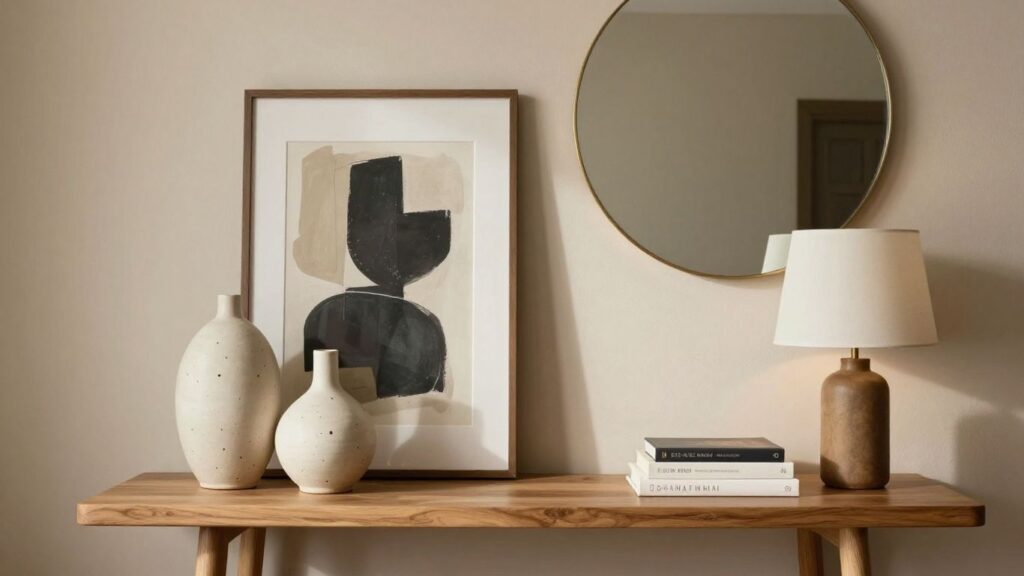
Create a focal point above or behind the console
Choose the visual anchor before placing the smaller accessories. A mirror can reflect light in an entryway, while a large artwork gives the arrangement a clearer color direction. The anchor does not need to fill the entire wall, but it should relate to the console’s width and leave a little breathing room around the edges.
Layer vases with art, mirrors and lighting
Place a vase slightly in front of a mirror or artwork to create depth rather than lining every piece up along one plane. A lamp can provide a second vertical element, especially when the vase is low and rounded. Turn some objects toward the room, not all toward the wall, so the arrangement feels collected over time.
Vary heights without making the surface feel crowded
Height variation gives a console its rhythm, but too many tall objects create a jagged silhouette. Use one dominant high point, one medium piece, and a few low accents. A small stack of books or a shallow bowl can lift a shorter vase without adding another large object.
Leave practical space for everyday use
An entryway console still needs room for keys, mail, or a bag, and a console behind a sofa should not become a hazard. Reserve one clear section of the surface instead of filling every inch. That small decision keeps the display attractive after the first day.
Style decorative vases on open shelves
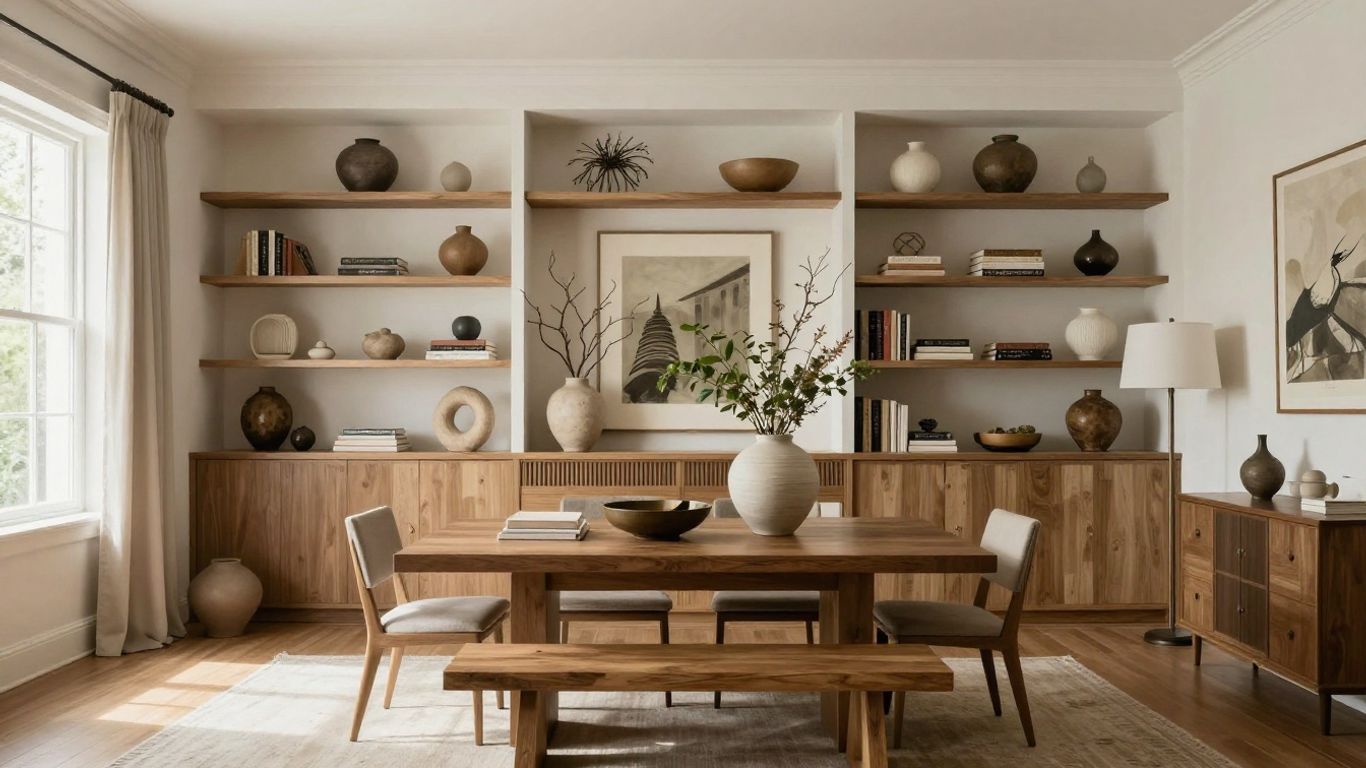
Open shelving asks you to think vertically as well as horizontally. Each shelf is part of a larger rhythm, so a vase should relate not only to its neighbors but also to the objects above and below it. The goal is a display that feels varied at first glance and cohesive when you look longer.
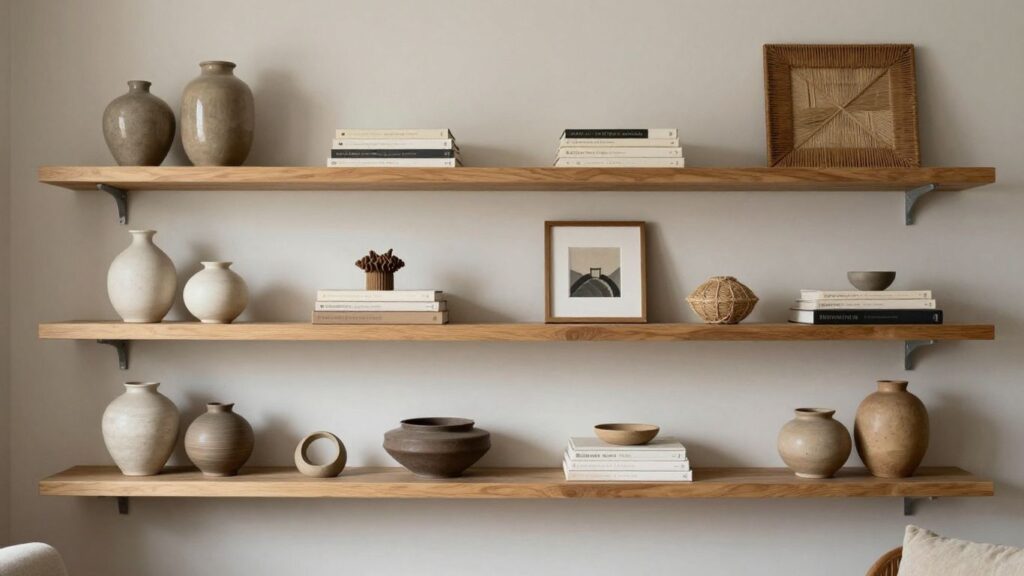
Work with the visual rhythm of each shelf
Avoid placing similarly shaped vases at the same point on every shelf. Shift the visual weight from left to right as you move upward, and leave some shelf space empty. That irregular pacing keeps the display from looking like a store fixture.
Combine vases with books, artwork and collected objects
Books provide useful height, while a small framed print or leaning artwork gives the shelf a vertical plane. Set a vase beside, rather than directly on top of, every stack so the arrangement has more than one point of interest. Personal objects can make the composition warmer, especially when their colors echo the vase or nearby furniture.
Balance asymmetry across multiple levels
Asymmetry does not mean placing random objects wherever they fit. If one shelf carries a tall vase on the right, use a denser cluster or a darker object on another level to balance that visual weight. Step back often and assess the shelving as one picture.
Prevent small accessories from getting lost
Tiny pieces need a visual platform. Place them on a book, in a shallow dish, or beside a larger object with a contrasting finish. If everything is small, the shelf loses its hierarchy, so let at least one vase or artwork establish the scale.
Arrange vases on coffee, dining and side tables
A table arrangement has to live with the people who use the room. Coffee tables need open sightlines, dining tables need space for meals, and side tables often sit beside lamps, chairs, or beds. Style for the table’s job first, then add decorative detail.
Adapt the composition to the table’s purpose
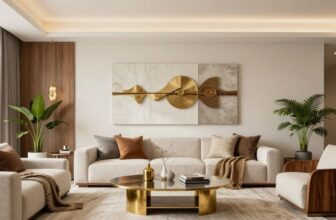
On a coffee table, a low bowl-shaped vase keeps the center open for conversation. A dining table can take a taller centerpiece if it does not block faces across the table. For a side table, one well-chosen vase may be enough, especially when the lamp already supplies height.
Keep sightlines and conversation areas clear
Test the arrangement from a seated position before you commit to it. If you have to look around a vase to see someone, lower the vessel or move it off-center. Dining arrangements should also be easy to lift away when the table is needed.
Use trays to organize smaller decorative objects
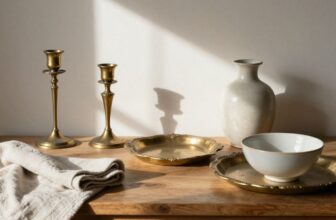
A tray creates a quiet boundary for a vase, candle, and a small dish, making a loose group feel deliberate. Choose a tray that leaves a visible margin around the objects; one that is completely packed will look heavy. This is also a convenient way to move a coffee-table arrangement in one piece.
Select arrangements for formal and casual settings
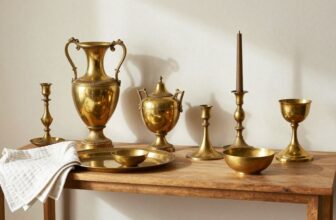
For a formal room, repeat a finish such as brass, ceramic, or smoked glass across two or three pieces. In a casual room, combine a handmade-looking vase with books, woven texture, or uncomplicated greenery. Promo Deals can help you find home and kitchen offers in one place when you are building a small collection gradually.
Combine vases with flowers, branches and greenery
Stems change the proportions of a vase, so choose them as carefully as the vessel itself. A narrow opening may need only a few branches, while a broad bowl can hold a fuller arrangement. You can also leave a beautiful vase empty when its shape already contributes enough interest.
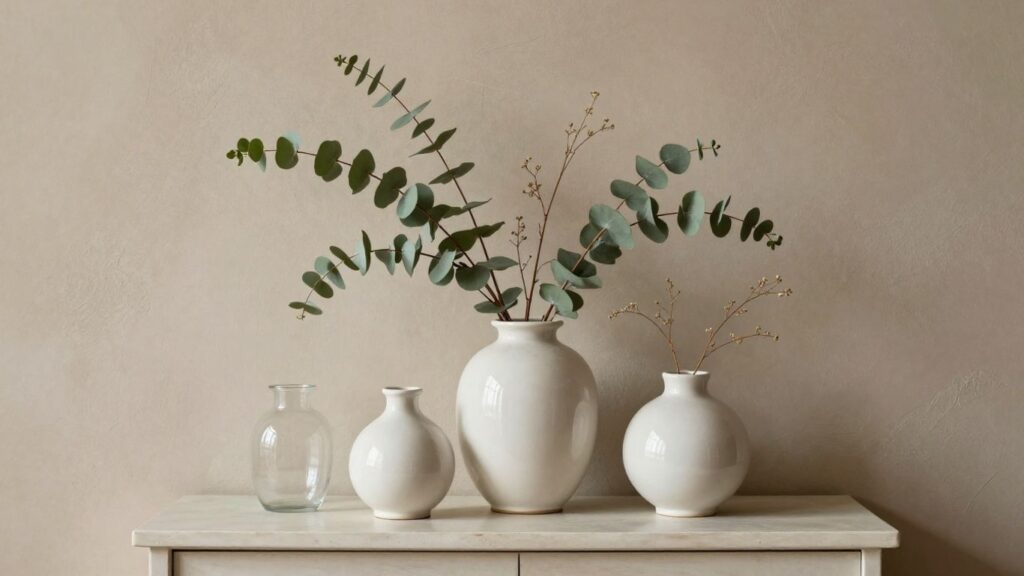
Choose stems that complement the vase shape
Tall, straight stems reinforce a narrow vase, while loose branches make a rounded vessel feel more organic. Keep the opening visible when the vase has a sculptural neck or unusual rim. The strongest arrangements usually have room between the stems rather than a tightly packed bundle.
Create height with branches and foliage
Branches add height quickly, but they should not overwhelm the furniture or wall art behind them. Trim the lowest leaves if they make the arrangement look heavy, and angle a few stems outward for a natural silhouette. Foliage can fill the middle ground while a small number of branches establish the top line.
Style empty vases as standalone decor
An empty vessel works when its profile, color, or texture is strong enough to hold attention. Place it where light can reveal its finish, such as beside a mirror or near a window. Pairing an empty vase with a low object can make the shape feel intentional rather than unfinished.
Keep fresh and faux arrangements looking intentional
Fresh stems should have enough water, clean lines, and a container suited to their weight. Faux branches look more convincing when you use fewer stems and vary their direction instead of making a perfectly even fan. Remove dusty leaves and replace tired pieces before they become the first thing you notice.
Use designer composition principles for a polished look
Good styling is less about buying more and more about creating relationships between objects. Repeated color, changing height, and carefully chosen gaps help a display feel finished. If you want to shop thoughtfully, compare materials and proportions rather than choosing an item only because it is on sale.
Apply the rule of three with varied forms
Three objects create an easy starting point, but they should not be identical. Try one tall vase, one rounded vessel, and one low object, or pair a vase with a book stack and a small bowl. The variation gives the eye a path through the arrangement.
Mix heights, silhouettes and visual weight
A tall, narrow vase may have less visual weight than a short, dark ceramic piece. Balance those differences instead of measuring height alone. These quick pairings can help you test a composition before moving anything permanently:
- Tall vase with a low bowl and a medium framed object
- Rounded vase with stacked books and a slender candlestick
- Dark vessel with pale ceramics and a light wood accent
- Wide vase with airy branches and one compact accessory
The list is a starting point, not a rulebook. Remove one object if the arrangement begins to feel crowded, then reassess the remaining shapes.
Repeat colors and materials throughout the room
A vase looks more integrated when its color or finish appears somewhere else nearby. Repeat a warm wood tone in a frame, echo a ceramic finish on a lamp base, or carry one muted accent color from the rug to the shelf. Repetition creates continuity without requiring a matching set.
Use negative space to create balance
Empty space gives the eye a place to rest and lets the strongest pieces remain visible. Leave gaps between grouped objects, along the edge of a console, and around the tallest part of a branch arrangement. A display often improves when you remove the piece that seemed least necessary.
Avoid common vase-styling mistakes
Most styling problems are really editing problems. A surface can contain lovely pieces and still feel unsettled if the scale, spacing, or color relationships are off. Walk around the room and view the arrangement from standing and seated heights before making a final decision.
Prevent arrangements from looking too symmetrical
Perfect pairs can feel formal, but repeated symmetry across an entire room becomes predictable. Offset one vase, vary the distance between pieces, or use a different shape on the opposite side. Balance the visual weight without mirroring every detail.
Keep scale consistent with the surrounding decor
A tiny vase may disappear beside oversized artwork, while a giant vessel can dominate a delicate side table. Compare the vase with the lamp, frame, furniture depth, and wall area around it. If one object is much stronger than everything else, either support it with a second substantial piece or move it to a more suitable location.
Avoid mixing too many colors and finishes
Choose two or three main finishes and let small variations add character. Too many glossy, metallic, colorful, and patterned pieces compete for attention. When in doubt, keep the vessels neutral and introduce color through flowers, books, or one smaller accent.
Secure fragile pieces and protect furniture surfaces
Use discreet felt pads beneath ceramic and stone vessels, particularly on wood or lacquer. Keep tall pieces away from edges and high-traffic paths, and check that branches cannot catch on clothing. A beautiful arrangement should remain safe, stable, and easy to live with.
Conclusion
When you style decorative vases, begin with proportion and purpose, then build a composition through height, texture, repetition, and empty space. Whether the vase sits on a console, shelf, coffee table, or dining table, a few thoughtful choices will make the whole room feel more settled.
Frequently Asked Questions
How many vases should you place on a console table?
One substantial vase can be enough, while two or three smaller vessels work well when their heights and shapes differ. Let the console’s width and the amount of nearby decor guide the number.
Should decorative vases match each other?
They do not need to match exactly. Repeating one color, material, or general shape is usually enough to make different vases feel connected.
How do you style a vase without flowers?
Place an empty vase where its silhouette and finish can be seen clearly. Pair it with a low object, books, or artwork, and give it enough surrounding space to function as a decorative focal point.
What vase height works best on a coffee table?
A low or medium-height vase is usually easiest to live with because it preserves sightlines. If you choose a taller vessel, place it toward one side and check the view from nearby seats.
How do you keep open shelves from looking cluttered?
Vary the arrangement from shelf to shelf, leave visible gaps, and combine larger anchors with only a few small accessories. Removing one or two pieces can restore a clear visual hierarchy.
What flowers look best in a narrow vase?
A small number of slender stems, delicate branches, or airy foliage often suits a narrow opening. Avoid forcing in a dense bouquet that hides the shape of the vessel.
How can you make vase arrangements look more expensive?
Focus on proportion, restrained color, and varied texture rather than quantity. A carefully edited arrangement with negative space usually looks more polished than a crowded display.