
Key Takeaways
Brass changes colour because its copper-and-zinc surface reacts with air, moisture, handling, and chemicals. The change is often cosmetic, but some forms of corrosion need more careful attention.
- Tarnish is usually a thin surface layer that can often be cleaned gently.
- Humidity, salt, skin oils, and pollutants can make discolouration happen faster.
- Green deposits, pitting, or pink areas may indicate corrosion rather than simple tarnish.
- Solid brass, plating, lacquer, and brushed finishes need different cleaning approaches.
- Gentle cleaning, dry handling, sensible storage, and protective coatings can slow future changes.
What brass is and why its surface changes
Brass is an alloy rather than a single pure metal, so its appearance depends on both its ingredients and its surroundings. When you ask, “Why Does Brass Tarnish and Change Colour?”, the short answer is that the exposed surface reacts gradually with substances around it. A bright new finish can become darker, softer, or more uneven without the underlying object being seriously damaged.
The copper and zinc composition of brass
Brass is made mainly from copper and zinc, although some grades contain small amounts of other elements. Copper gives the alloy much of its warm golden colour, while zinc affects its hardness, strength, and final shade. Since the proportions vary, two brass objects can age differently even when they look similar at first.
The surface you see is not chemically frozen. As the alloy meets air and moisture, its outermost atoms begin to change, which is why colour alone cannot always tell you what is happening beneath it.
How oxygen and moisture react with the surface
Oxygen in the air can react with copper and zinc at the surface, while a thin film of moisture helps those reactions proceed. The process is usually faster in bathrooms, kitchens, coastal homes, and other damp settings. Small amounts of airborne material can dissolve into that moisture and alter the resulting deposits.
You can think of humidity as making the surface more chemically active. Dry air does not stop change completely, but it often slows the process compared with repeated wetting and drying.
Why tarnish forms as a thin surface layer
Tarnish generally begins as a very shallow layer of reaction products on the outside of the brass. It may scatter light differently from polished metal, making the object look dull, brown, grey, or black. Because the layer is often thin, careful cleaning can restore much of the original appearance.
That does not mean every dark mark should be scrubbed away. A thin surface film may be harmless, and aggressive cleaning can remove detail, plating, or an intentionally aged finish.
How patina can develop over time
Patina is the broader, gradual change that develops as brass lives in its environment. It can be fairly even and mellow, giving an object a softer brown or muted golden appearance. Tarnish and patina overlap in everyday conversation, but patina often describes an accepted or even desirable aged look.
If you prefer that character, preserving the surface may be wiser than repeatedly polishing it bright. The useful distinction is whether the change is stable and cosmetic or actively damaging the metal.
What causes brass to change colour
Brass responds to its surroundings in several overlapping ways. Air, water vapour, residue from your hands, household chemicals, and heat can all influence the speed and colour of the change. The same object may stay bright in a dry room but darken quickly when used near a sink or handled constantly.
The role of humidity, air, and pollutants
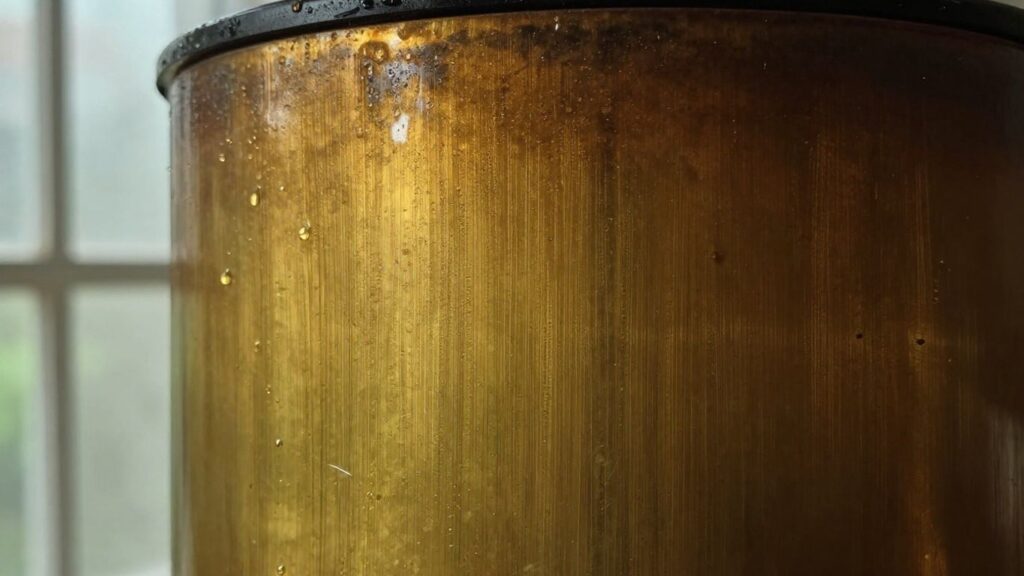
High humidity leaves more moisture available at the metal’s surface, and pollutants can dissolve into that film. Sulfur-containing compounds, dust, smoke, and urban air particles may contribute to darker or uneven deposits. If you live near the sea, airborne salt can make the environment more demanding still.
For broader household context, you may also find these water quality guides useful when moisture and mineral residue are recurring problems around fixtures. They do not replace brass-specific care, but they can help you think about the conditions surrounding the object.
How skin oils, sweat, and handling affect brass
Your skin leaves behind oils, sweat, salts, and traces of cosmetics. These residues can create small areas that react differently from untouched metal, producing fingerprints or patchy darkening. Jewelry and frequently used handles tend to show this pattern especially quickly.
A soft, dry wipe after handling removes much of the residue before it remains on the surface. It is a simple habit, but it can make the finish look more even between deeper cleanings.
Why salt, acids, and cleaning chemicals speed up discolouration
Salt and acidic substances can increase the conductivity of surface moisture, allowing reactions to proceed more readily. Citrus juice, vinegar, perspiration, chlorine products, and some bathroom cleaners may all affect brass if they remain in contact with it. Even a cleaner intended for another metal can leave an unwanted colour change.
The main risk is not just faster tarnishing. A strong or unsuitable chemical may attack a coating, leave residues, or alter the texture of the metal, so the gentlest effective method is usually the safest starting point.
How heat and sunlight influence surface appearance
Heat can speed up chemical reactions and can also soften or stress some protective coatings. Sunlight may warm an object and can gradually affect lacquer or nearby materials, although ordinary indoor light is not usually the main cause of brass tarnish. More often, heat and light reveal an existing difference between exposed and covered areas.
When you inspect a discoloured piece, compare the underside or a sheltered edge with the visible face. That comparison can show whether the colour shift comes from exposure, handling, or a failing finish.
How to distinguish tarnish from brass corrosion
Not every colour change has the same significance. Tarnish is generally superficial, while corrosion can involve ongoing chemical damage, material loss, or weakening. You can make a useful first assessment by looking at the colour, texture, location, and whether the surface changes when gently cleaned.
Recognising brown, black, green, and blue surface deposits
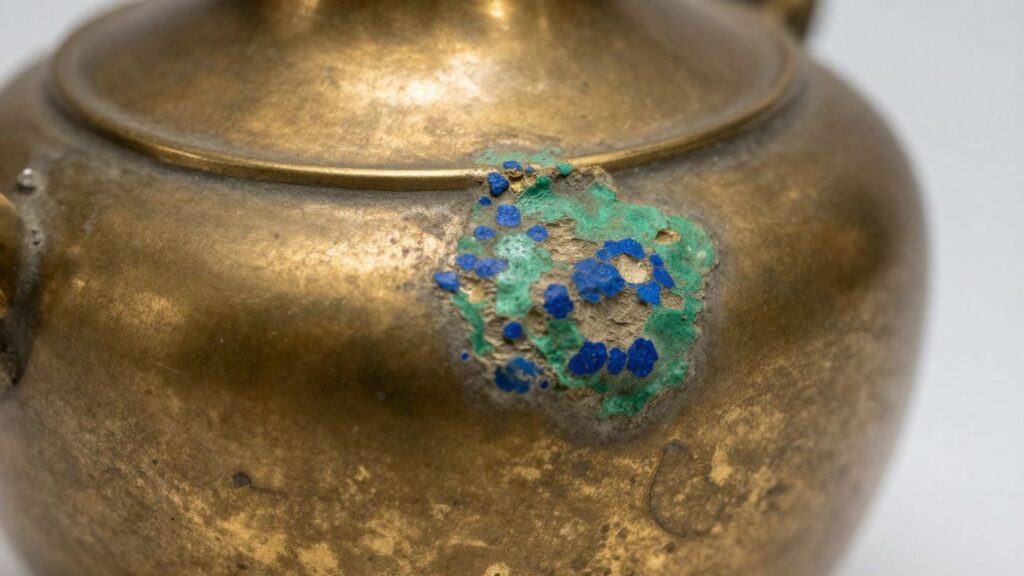
Brown or black films are common signs of surface oxidation and tarnish. Green or blue deposits may appear when copper-containing corrosion products develop, particularly in damp conditions or where residues remain trapped. Colour is a clue rather than a diagnosis, so texture and depth matter too.
A loose powder, crust, or raised deposit deserves more caution than a smooth change in tone. Photographing the object before cleaning can help you track whether the mark is spreading.
Tarnish versus active corrosion
Tarnish is often smooth, thin, and relatively stable. Active corrosion may look uneven, powdery, blistered, or wet, and it can continue beneath or around a coating. If gentle cleaning exposes a sound, even surface, the problem was likely superficial; if it reveals pits or crumbling edges, stop and reassess.
The brass tarnish guide offers another practical perspective on the difference between ordinary ageing and the effects of frequent exposure in places such as kitchens and bathrooms. Use that kind of guidance as a starting point, not as a substitute for inspecting a valuable object in person.
What dezincification looks like
Dezincification is a form of selective corrosion in which zinc is lost from the brass, leaving a copper-rich surface. A mild case may shift the colour from yellow toward pink or red. More serious damage can make the material porous, weak, or prone to perforation.
This is not the same as a removable dark film. The dezincification guidance explains why pink colour, porous texture, and structural weakening call for more than routine polishing.
When pitting or structural damage requires professional care
Pitting, cracks, perforations, loose sections, or a visibly weakened fitting should not be treated as an ordinary cleaning project. Scrubbing may remove evidence, enlarge a fragile area, or make a historic surface harder to conserve. Turn to a conservator, restorer, or suitably experienced metal specialist when the object is valuable or structurally compromised.
Even on a modern fitting, stop if the surface flakes, sheds powder, or changes rapidly after contact with water. Preservation is more useful than brightness when the metal itself is at risk.
How the brass finish affects tarnishing
The label “brass” does not tell you how thick the visible metal is or whether it has a protective layer. A solid brass object can tolerate different care from a thinly plated one, while lacquer may hide the metal’s natural changes until the coating fails. Before cleaning, identify the construction and finish as far as you can.
The difference between solid brass and brass plating
Solid brass is brass throughout the main body, though it may still have a lacquer or decorative topcoat. Brass-plated items have a thin brass layer over another material, so repeated polishing can eventually expose the base. A magnet test can sometimes offer a clue, but it is not definitive and should not replace manufacturer information.
Look closely at corners, edges, screw heads, and contact points. Those areas often reveal wear first and tell you whether a bright surface is a substantial metal layer or a delicate finish.
How lacquered brass behaves differently
Lacquer separates the brass from much of the surrounding air and moisture, so a sealed item may stay bright for longer. Its appearance can change when the lacquer becomes scratched, cloudy, yellowed, or detached. Cleaning tarnish through an intact lacquer layer is usually the wrong approach because the darkening may be in the coating rather than the metal.
If the coating is failing unevenly, local polishing can create a patchwork effect. In that situation, professional removal and refinishing may produce a better result than repeated spot treatment.
Why polished, brushed, and antiqued finishes age differently
A polished surface reflects light strongly, so even fingerprints and fine haze are easy to see. Brushed brass has directional texture that can hide small marks but can also be damaged by cross-grain scrubbing. Antiqued finishes are often designed to retain darker areas, so cleaning them as if they were mirror-bright may remove the intended contrast.
Before you work, decide whether your goal is to preserve the current character or return the item to a brighter state. Those are different projects and may require different products.
How coatings and sealants can fail over time
Coatings can break down through abrasion, moisture trapped at edges, heat, cleaning chemicals, and ordinary age. Failure may appear as cloudy patches, peeling, dark borders, or isolated tarnish where the metal has become exposed. Once a coating is compromised, moisture can move beneath it and make the damage look larger than a simple surface mark.
A failing sealant is a reason to clean gently and pause, not to apply more force. If the item matters, document the condition before deciding whether recoating is appropriate.
How to clean tarnished brass safely
Safe cleaning starts with identification rather than a favourite household recipe. Dust and loose residue should come away before you use any polish, and you should always consider whether the item is solid brass, plated, lacquered, or intentionally aged. Work slowly, use soft materials, and stop when the surface looks clean enough for its purpose.
When gentle soap and water are enough
For light grime, a small amount of mild dish soap in lukewarm water may be all you need. Dampen a soft cloth rather than soaking the object, wipe gently, then remove soap residue with a clean damp cloth. Dry every surface promptly, including seams and recessed areas.
This approach is especially sensible for lacquered pieces and objects with unknown construction. Water left sitting on brass can create the damp conditions you are trying to avoid.
Choosing a suitable brass polish
Use a polish labelled for brass and follow its directions, especially when the item has a coating or a mixed-metal construction. A polish can remove tarnish, but it can also reduce a brushed texture or take away a deliberately darkened finish. Choose the least aggressive product that can reasonably meet your goal.
If you are comparing products while shopping, Promo Deals gathers offers and price drops in one place, which can make it easier to compare the cost of suitable care supplies without searching across many sites.
Testing a cleaner on an inconspicuous area
Test first on the underside, inside edge, or another hidden spot. Apply a small amount, leave it only as directed, and wipe it away so you can check for colour loss, streaking, softened lacquer, or exposed base metal.
A useful test should answer more than “does it remove the mark?” It should also show whether the cleaner changes the surrounding finish or leaves a residue that becomes visible after drying.
Avoiding abrasive tools and harsh household chemicals
Steel wool, rough scouring pads, knives, and gritty powders can scratch brass or strip a thin plated layer. Strong acids, bleach, ammonia mixtures, and unlabelled industrial cleaners can produce rapid and uneven damage. Never mix cleaning chemicals, and keep ventilation adequate when a product calls for it.
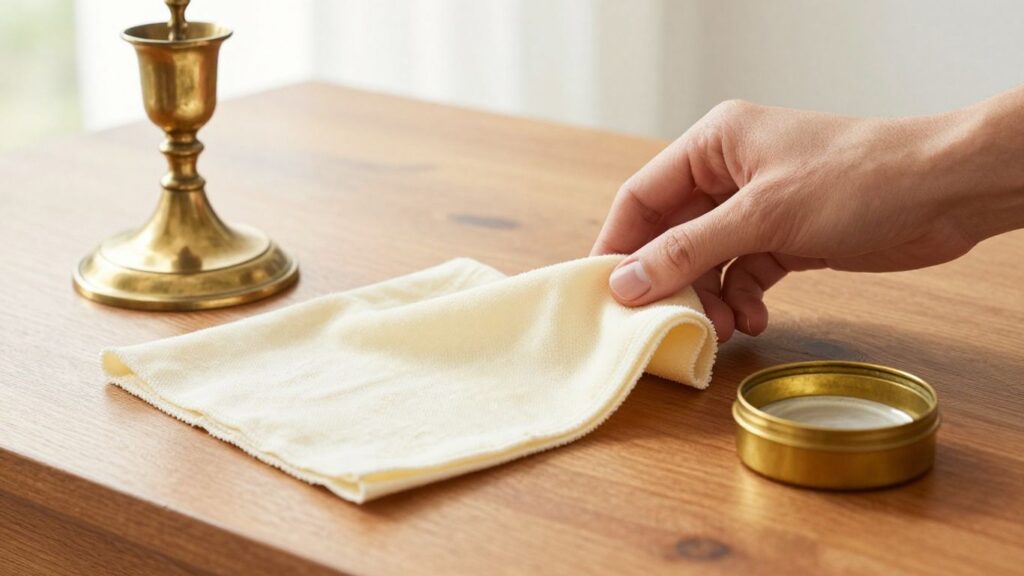
For routine care, a soft cotton or microfiber cloth is usually a better tool than extra pressure. The following simple sequence keeps the process controlled:
- Remove dust with a dry, soft cloth.
- Test the chosen cleaner on a hidden area.
- Work in small sections with light pressure.
- Wipe away residue and dry the object fully.
Afterward, inspect the piece in ordinary light rather than chasing every trace of age. A clean, stable surface is often preferable to a highly polished one that has lost its finish.
Cleaning brass-plated items without removing the finish
Brass plating needs especially light handling because the decorative layer may be very thin. Avoid repeated polishing, soaking, and vigorous rubbing on edges, corners, and raised details. Mild soapy water and a soft cloth are often safer than a metal polish unless the manufacturer specifically recommends one.
If the base metal is already showing, cleaning cannot restore the missing plating. At that point, a plating or restoration service may be more appropriate than further home treatment.
How to prevent brass from tarnishing quickly
You cannot stop brass from responding to its environment forever, but you can slow the process considerably. Prevention is mostly about reducing moisture, residue, pollutants, and unnecessary abrasion. It also means accepting that some finishes are meant to change rather than remain permanently bright.
Controlling moisture and indoor humidity
Keep brass away from repeated splashes and dry it after contact with water. In damp rooms, ventilation and reasonable humidity control can reduce the moisture film that supports surface reactions. Avoid storing brass in sealed packaging while it is still damp, since trapped moisture can create a small humid environment around the object.
Pay attention to bathrooms, kitchens, basements, and coastal storage areas. These locations often need more frequent inspection than a dry living room.
Handling brass with clean, dry hands
Wash and dry your hands before handling pieces that show fingerprints easily. Oils, sweat, and salt can remain in tiny grooves, so a quick wipe after use helps keep the surface more uniform. Gloves may be useful for valuable or freshly cleaned objects, provided they are clean and do not shed fibres.
For jewelry and frequently touched hardware, regular light wiping is usually kinder than occasional heavy polishing. It removes residue before it has much time to react.
Storing brass away from pollutants and salt
Store brass in a clean, dry place away from smoke, chemical fumes, food residues, and direct contact with salt-laden materials. Soft wrapping can protect against scratches, but the material should be clean and breathable rather than damp or chemically unstable. Keep pieces separated so tarnish or abrasion is not transferred through constant contact.
Inspect stored objects periodically. Early, gentle maintenance is easier than removing a thick deposit after months in poor conditions.
Applying protective coatings correctly
A suitable protective coating can reduce contact between brass and air, moisture, and handling residues. The surface must be clean, dry, and free of polish residue before application, and the product must be compatible with the finish. Uneven application can leave streaks or trap contamination beneath the coating.
Follow the manufacturer’s curing and reapplication instructions rather than adding layer after layer. If the object is historic, valuable, or already coated, professional advice is safer than experimentation.
Knowing when natural patina is worth preserving
A stable, even patina can be part of an object’s character and history. Removing it may make the surface brighter but less authentic, especially on antique hardware, sculpture, or decorative pieces. Ask whether the colour is damaging the metal or simply showing that the object has been used.
If you choose to preserve it, dust gently, avoid harsh cleaners, and control moisture. Promo Deals can help you find practical storage or care supplies, but the best preservation choice is still the one that respects the object’s material and finish.
Conclusion
Brass tarnishes because its copper-and-zinc surface reacts with oxygen, moisture, residues, and pollutants, and the visible result can range from a harmless dark film to serious corrosion. By identifying the finish, cleaning with restraint, reducing humidity and handling residue, and preserving stable patina when appropriate, you can keep brass attractive without wearing away the material that gives it character.
Frequently Asked Questions
Does brass always tarnish?
Most unprotected brass gradually changes when exposed to air and moisture, although the speed depends on the alloy, finish, environment, and amount of handling. Lacquer and other coatings can slow the visible change.
Is tarnish on brass harmful?
Ordinary tarnish is usually a superficial appearance change rather than a structural problem. Powdery deposits, pitting, cracks, perforation, or a porous pink surface may indicate corrosion and deserve more careful assessment.
Why does brass turn green?
Green deposits can form when copper-containing corrosion products develop in the presence of moisture and residues. They are more likely in damp areas or where salt, acids, or other contaminants remain on the surface.
Can vinegar clean tarnished brass?
Acidic substances such as vinegar may remove some deposits, but they can also affect lacquer, plating, polished texture, and the metal itself. A brass-specific cleaner or mild soap solution is often a safer first choice, followed by thorough rinsing and drying.
How can you tell if brass is solid or plated?
Check product information first, then inspect worn edges and hidden areas for a different base metal. A magnet can provide a clue on some objects, but it is not a reliable test for every construction or finish.
Should you polish antique brass?
Not necessarily. An even, stable patina may be part of the object’s value and appearance, while aggressive polishing can remove original surface detail. Clean only when needed and seek specialist advice for valuable or historic pieces.
How often should brass be cleaned?
Clean it when dirt or residue is visible rather than on a fixed schedule. Light dusting and drying after handling can reduce the need for deeper cleaning, while frequently touched or damp-area items may need more regular gentle attention.