
Key Takeaways
Brass can make a modern Indian living room feel warmer and more personal without turning it into a formal or heavily traditional space.
- Start by reading the room’s existing materials, colors, and proportions.
- Repeat brass in a few carefully chosen places rather than everywhere.
- Mix polished, antique, or unlacquered finishes with restraint.
- Use wall décor, lighting, and traditional accents to create a considered focal point.
- Keep the final arrangement practical, easy to clean, and comfortable to live with.
- Start with the room’s style, scale, and color palette
- Create a balanced brass color story
- Use brass to build a focal point
- Add brass wall décor with intention
- Layer traditional Indian accents into a modern setting
- Improve the room’s lighting and atmosphere
- Maintain brass décor and refine the final arrangement
- Conclusion
- Frequently Asked Questions
- How much brass should you use in a modern living room?
- Which brass finish looks most modern?
- Can brass décor work with cool-toned interiors?
- Where is the best place for a brass centerpiece?
- How can you mix brass with other metals?
- How do you prevent brass décor from looking cluttered?
- How often should brass décor be cleaned?
Start with the room’s style, scale, and color palette
Before you buy anything, study the room as it is. Notice the flooring, furniture silhouettes, wall color, natural light, and architectural details that already give the space its character. Brass should support those elements, not compete with them. If you are wondering How to Use Brass Décor in a Modern Indian Living Room, begin with observation rather than shopping.
Identify existing materials and architectural details
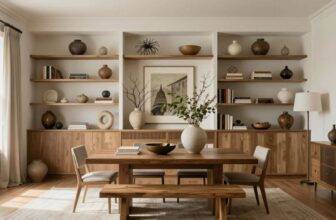
Look at the materials that appear more than once. Warm wood, woven upholstery, stone flooring, marble tabletops, cane, and matte-painted walls can all give brass a natural place to sit. Also note niches, columns, built-in shelving, arches, and window frames; these features can guide where a metal accent feels intentional.
A room with strong grain and texture usually needs fewer decorative objects. In a very clean-lined room, one sculptural brass piece may add needed softness. You are not trying to make every surface look Indian or ornate; you are adding a layer that feels connected to the home.
Choose brass tones that suit the room
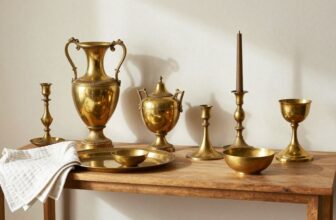
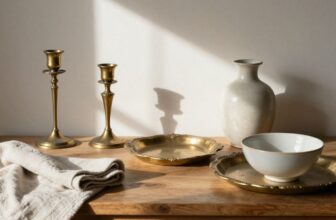
Brass ranges from bright yellow-gold to muted champagne and deep antique brown. Polished brass catches attention and works well when the rest of the room is restrained. Antique brass has more visual weight and pairs naturally with earthy colors, carved wood, and handwoven textiles.
If your room has cool gray stone or blue upholstery, a softer brushed or aged finish may feel more settled than highly reflective gold. In a warm beige room, either a darker patina or a restrained polished accent can create contrast without looking harsh.
Match décor scale to the furniture layout
Scale matters more than quantity. A tiny brass bowl can disappear on a large coffee table, while an oversized statue can make a compact seating area feel crowded. Measure the surface and leave enough clear space for drinks, books, and everyday movement.
Think in visual groups rather than isolated purchases. A low bowl beside a tall vase, or a small figurine next to a stack of books, creates a more relaxed arrangement than several objects of identical height.
Create a balanced brass color story
Brass looks most contemporary when it is allowed to relate to other finishes. Treat it as one color note in the room, not as a theme that every accessory must repeat. Two or three well-placed references often feel more polished than a collection of unrelated metallic objects.
Combine brass with wood, marble, glass, and stone
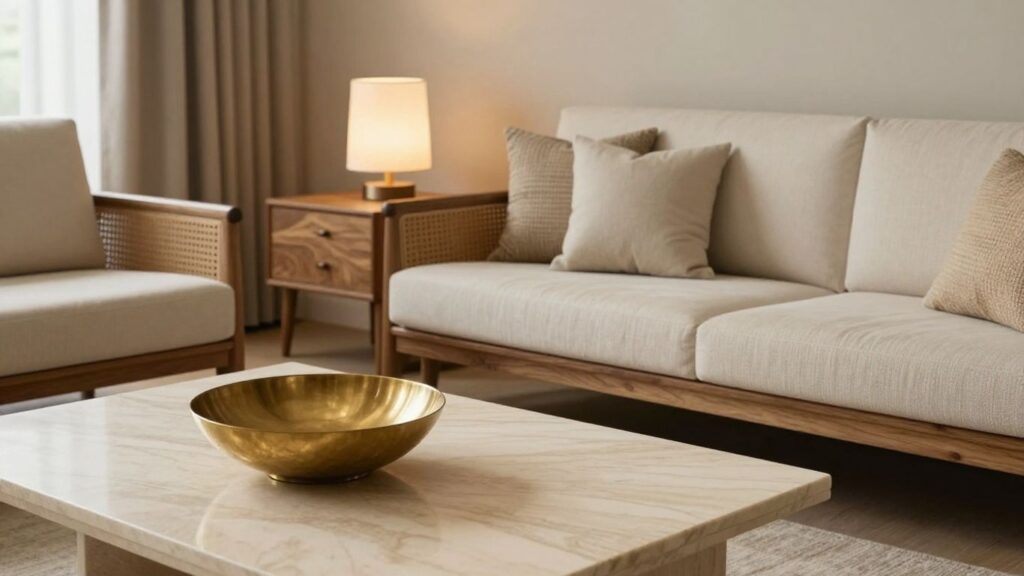
Use contrast to keep brass from appearing flat. Wood makes it feel grounded, marble gives it a crisp surface to play against, glass lets its color remain visible, and stone adds an earthy counterpoint. A brass bowl on a pale stone table can feel quiet; the same bowl on dark wood will look richer and more dramatic.
This is also a useful point to make a practical purchase plan. Promo Deals brings Home Decor Deals together in one place, which can help you browse accessories without treating every attractive item as essential. Compare the shape, material, finish, and dimensions before you add anything to your cart.
A simple finish guide can help you decide what belongs together:
| Existing room element | Brass treatment to try | Effect in the room |
|---|---|---|
| Pale marble or cream stone | Aged or brushed brass | Adds warmth without excessive shine |
| Dark wood furniture | Polished or medium antique brass | Creates a rich, defined contrast |
| Clear glass and mirrors | Soft satin brass | Keeps reflections controlled |
| Textured stone or concrete | Deep antique brass | Brings softness and visual depth |
After choosing a direction, repeat it lightly in another part of the room. The connection may be as small as a frame, lamp base, or tray, but it should feel deliberate rather than accidental.
Pair metallic accents with Indian textiles and patterns
Brass becomes more personal when it sits beside textiles with texture. Try block-printed cushions, ikat, kantha, handloom cotton, silk blends, or a dhurrie with a restrained geometric pattern. You do not need a bright palette; rust, indigo, olive, cream, charcoal, and muted pink can all work with warm metal.
Keep the pattern scale varied. A large patterned rug can support smaller cushions, while a quiet rug may allow one embroidered throw to carry more attention. Let brass echo a thread, border, or warm color rather than matching every textile exactly.
Limit finishes to avoid a visually cluttered room
A living room can handle more than one brass object, but it may not need several competing finishes. If you use a shiny lamp, consider choosing quieter aged pieces elsewhere. Mixing finishes is possible, though the shapes and placement should provide some consistency.
Restraint makes brass feel intentional. Step back from the room and ask whether your eye lands on one clear area first. If it does not, remove one or two small objects before adding another.
Use brass to build a focal point
A focal point gives the room a visual center and makes decorating decisions easier. It might be the coffee table, a console, a mantel, or a low cabinet near the entry. Choose one primary location, then use smaller echoes around the room instead of giving every surface equal importance.
Style a brass centerpiece on the coffee table
Start with a tray, shallow bowl, or low sculptural object. Add one natural element, such as flowers, leaves, or a small plant, and leave some of the tabletop visible. A centerpiece should support conversation and movement, not become an obstacle between people sitting across from one another.
For a rectangular table, an off-center arrangement often feels less rigid. For a round table, use a compact cluster with one dominant shape. Rotate the objects occasionally so the arrangement remains useful rather than becoming a display you stop noticing.
Highlight a console, mantel, or entry wall
A console is a good place for a taller brass object because it can be seen from across the room. Pair a vessel or figurine with a framed artwork, a lamp, or a small bowl for keys. On a mantel, keep the center or one side visually heavier, then balance it with a lower object rather than creating a perfectly symmetrical row.
If you are shopping across several categories, Promo Deals offers shopping guidance that can encourage you to compare practical fit and value before buying. For décor, that means checking measurements, materials, care instructions, and return terms along with the price.
Arrange décor in varied heights and shapes
A successful grouping usually has a low, medium, and tall element. Combine a round bowl with a vertical vessel and a flatter tray, or place a small figure beside stacked books and a lamp. This creates rhythm while allowing each piece to remain legible.
Avoid lining objects up like a showroom display. Overlap them slightly, leave breathing room between groups, and keep the tallest item away from sightlines where it could interrupt conversation or television viewing.
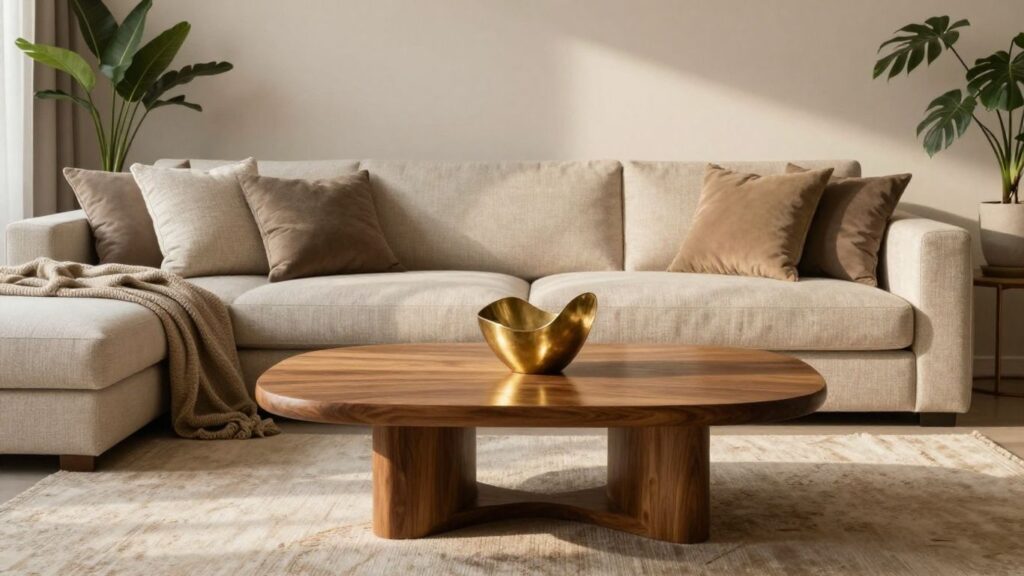
The arrangement should look good from more than one angle. Walk around it before you settle on the final position, especially if the seating is arranged in an open plan.
Add brass wall décor with intention
Wall décor can give brass a larger presence without using valuable tabletop space. The key is to treat the wall as part of the furniture plan. Consider viewing height, circulation, nearby windows, and the visual weight of the sofa or console before choosing a piece.
Select panels, mirrors, trays, or sculptural art
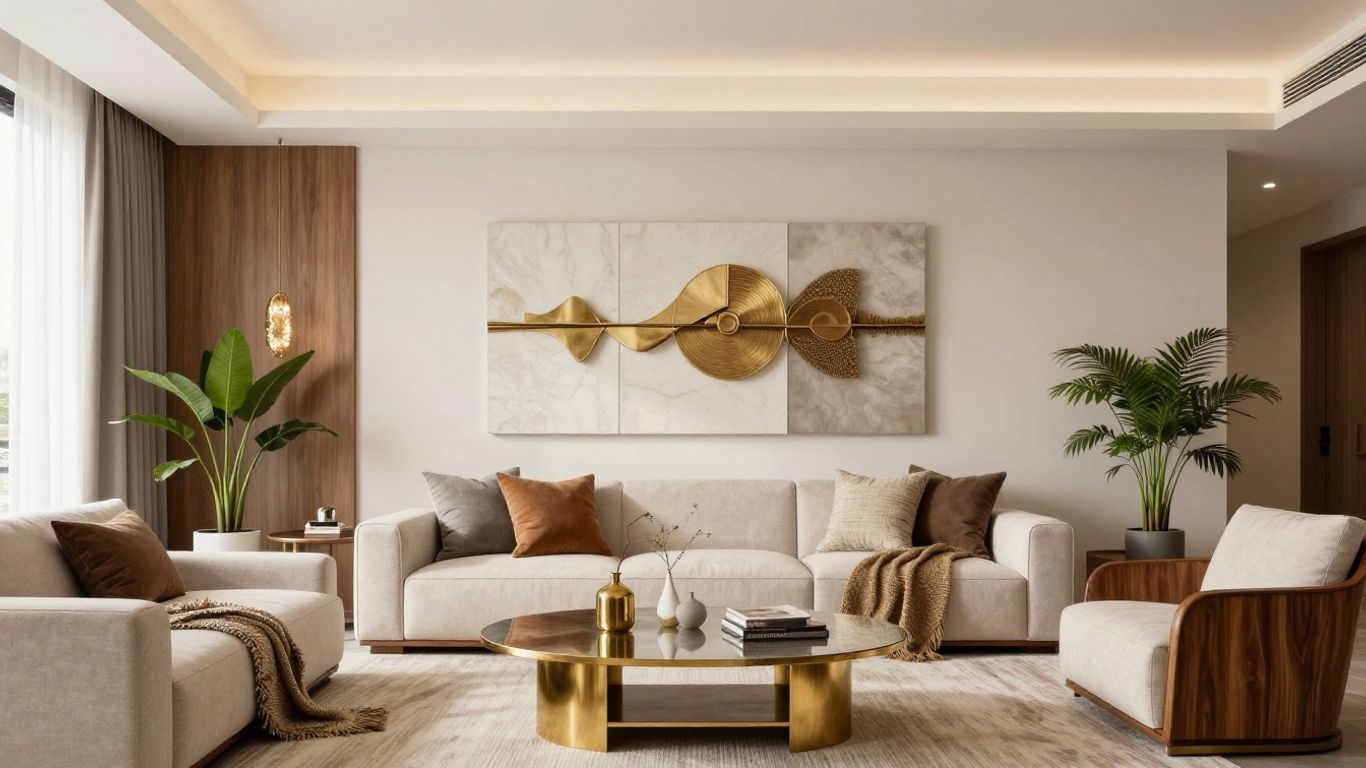
A brass mirror can brighten a darker wall, while a panel or sculptural artwork can add pattern and depth. Decorative trays may work when grouped in an informal composition, particularly above a console. If you choose a symbolic motif, make sure it feels meaningful to your household and suits the room’s overall language.
For more visual references, you can browse these brass wall décor ideas before deciding whether your wall needs a single statement piece or a small collection. Use inspiration for proportion and placement, not as a reason to copy every object in one example.
Plan proportions for large and small walls
On a broad wall, one small brass object may look lost. Consider a larger panel, a mirror with a substantial frame, or a balanced grouping with enough negative space around it. On a narrow wall, a vertical piece or a pair of compact objects may be more appropriate than a wide arrangement.
Use the sofa, console, or cabinet below as a visual anchor. Wall décor usually looks more connected when its width relates to the furniture beneath it, rather than floating independently.
Coordinate wall décor with lighting and furniture
Reflective pieces need careful placement near windows and lamps. A mirror opposite a bright window can create glare, while a textured panel may catch light in a softer way. Keep the surrounding furniture simple if the wall piece has elaborate detail.
The wall should add depth, not make the seating area feel busy. If the room already has patterned upholstery, layered art, and open shelving, a single brass accent may be enough.
Layer traditional Indian accents into a modern setting
Traditional pieces work beautifully in contemporary rooms when you give them space and context. You can include a diya, urli bowl, bell, or figurine without turning the entire living room into a themed set. The goal is to let craftsmanship and meaning sit comfortably alongside clean-lined furniture.
Use diyas, urli bowls, bells, and figurines selectively
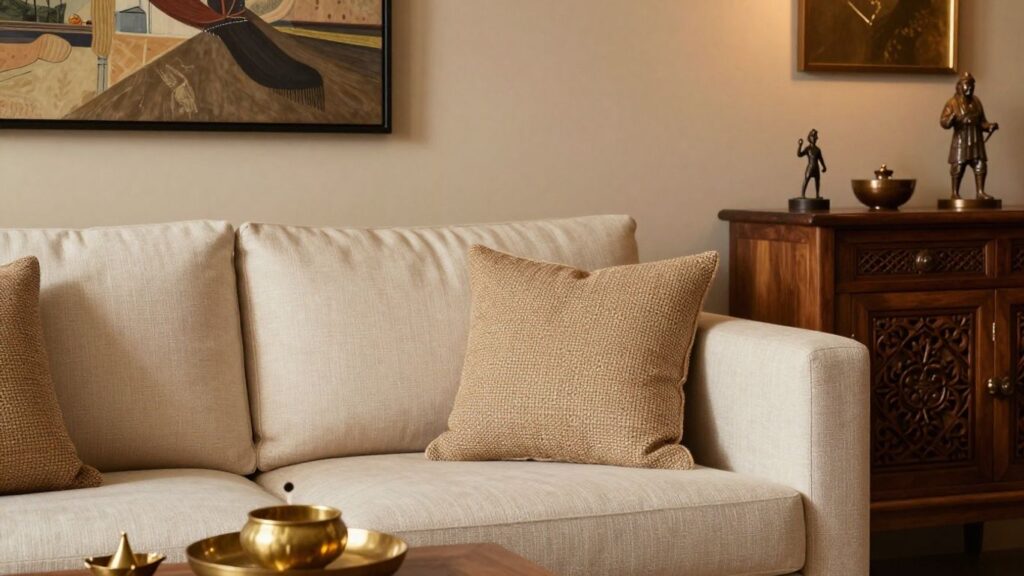
Choose one object with genuine visual or personal appeal, then decide where it will be seen and used. A diya can sit on a console or shelf, an urli bowl can anchor a low surface, and a small bell or figurine can bring detail to a quiet corner. Keep open flames away from curtains, children, pets, and unstable surfaces.
A pair can work when the objects are modest in size and placed with enough air around them. If the item is highly detailed, let it be the only ornate element in that immediate group.
Incorporate regional craft without making the room feel themed
Mix brass with natural fibers, ceramics, wood, cane, and handmade textiles from different visual traditions. This creates a collected feeling rather than a staged one. One craft object can be a conversation point; several unrelated motifs competing together may make the room feel crowded.
You can also use contemporary art or plain upholstery as a quiet backdrop. The contrast helps the traditional object feel current while preserving its character.
Balance ornate pieces with clean-lined contemporary décor
Place a detailed brass figurine on a simple plinth, a carved bowl beside a straight-edged sofa, or a traditional lamp on a minimal console. Clean geometry gives ornate pieces room to breathe. In return, the brass adds warmth to furniture that might otherwise feel too austere.
Use the same principle with color. If the accent is visually complex, keep nearby cushions, ceramics, and artwork calmer so the room remains easy to read.
Improve the room’s lighting and atmosphere
Lighting changes how brass looks throughout the day. Morning sun may make polished surfaces sparkle, while warm evening lamps can bring out antique tones and texture. Think of brass as part of the lighting plan, not only as an accessory placed after the room is finished.
Use brass lamps, sconces, and lanterns as functional accents
A brass lamp can add warmth while providing useful reading or ambient light. Choose the shade carefully: linen and cotton soften the glow, while clear glass exposes more of the bulb and can feel brighter. Wall sconces are useful beside artwork or on either side of a console when the wiring allows.
Lanterns and candleholders can create atmosphere, but they should sit on stable, heat-safe surfaces. Functional pieces often feel more natural than decorative objects because they earn their place in the room.
Position brass objects to catch natural and ambient light
Place a reflective object where it receives gentle daylight or the spill from a lamp, not a direct beam that makes it difficult to look at. A bowl on a side table may catch a soft highlight, while a wall piece can become a subtle evening backdrop when illuminated from an angle.
Test the placement at different times of day. The best location in afternoon sunlight may create too much reflection once overhead lighting is switched on.
Avoid glare through thoughtful placement and finish selection
Highly polished brass needs more care than satin or aged brass when it sits near windows. Turn the object slightly, lower the light source, or choose a less reflective finish if the surface continually catches your eye for the wrong reason.
You can also soften the reflection with nearby fabric, wood, or matte ceramics. A mix of surfaces creates atmosphere and keeps the room from feeling overly glossy.
Maintain brass décor and refine the final arrangement
Good styling includes the weeks after installation, when dust, fingerprints, and daily use begin to show. Choose pieces you can comfortably clean and move. A room that looks beautiful but makes ordinary living difficult will soon feel less successful.
Choose between polished, antique, and unlacquered brass
Polished brass is bright and noticeable, while antique brass has a darker, more settled appearance. Unlacquered brass can develop changes in tone as it is handled and exposed to air. None is automatically better; the right choice depends on how much variation and maintenance you enjoy.
Ask how the finish is made and whether the surface is sealed before purchasing. That information will affect both cleaning and how the piece changes over time.
Clean and protect brass without damaging its finish
Start with a soft, dry or slightly damp cloth and follow the maker’s care instructions. Avoid abrasive pads and strong household cleaners unless the product guidance specifically permits them. Different finishes respond differently, and aggressive polishing can remove the character you intended to keep.
Handle objects with clean hands when possible, especially if they are unlacquered. Keep moisture from sitting in bowls or under decorative pieces, and use coasters or discreet pads on furniture that could mark easily.
Edit the room for visual balance and everyday usability
Live with the arrangement for a few days before making a final judgment. Notice whether the coffee table still works, whether pathways remain clear, and whether the brass is visible from the places where you actually sit. Promo Deals can help you revisit home décor offers when you need one finishing piece, but a gap in the room does not always require a purchase.
Remove anything that feels repetitive, unstable, or difficult to maintain. A final edit often makes the metal feel more special because each remaining piece has a clear role.
Conclusion
Brass works best in a modern Indian living room when you balance warmth with space, tradition with simplicity, and beauty with everyday usefulness. Start with the room you already have, choose a small number of finishes, and let one focal point lead the arrangement. With thoughtful placement and regular care, even a few brass accents can give the room depth and a welcoming sense of identity.
Frequently Asked Questions
How much brass should you use in a modern living room?
Start with three to five related touches across the room, then adjust according to its size and visual activity. A large, detailed centerpiece may need fewer supporting accents than a small bowl or lamp.
Which brass finish looks most modern?
Brushed, satin, and softly antique finishes usually feel understated and contemporary. Polished brass can also look modern when it is used selectively against calm colors and simple furniture.
Can brass décor work with cool-toned interiors?
Yes. Brass can warm gray, blue, and green interiors, especially when you balance it with glass, stone, light wood, or textured fabrics. Choose a muted finish if bright gold feels too strong.
Where is the best place for a brass centerpiece?
A coffee table, console, mantel, or entry cabinet can work well. Choose a surface that is visible but still leaves enough room for practical activities and clear walkways.
How can you mix brass with other metals?
Repeat one metal as the main accent and use other metals sparingly. Similar shapes, shared undertones, or consistent levels of shine can make mixed finishes feel intentional.
How do you prevent brass décor from looking cluttered?
Limit the number of ornate objects, vary their heights, and leave visible empty space around each group. Removing one or two pieces is often more effective than rearranging everything.
How often should brass décor be cleaned?
Dust it whenever you clean nearby surfaces and address fingerprints or spills promptly. Follow the care instructions for the specific finish rather than using a strong polish automatically.