

Key Takeaways
AI features can make a premium refrigerator more useful, but their value depends on your habits, kitchen setup, and tolerance for connected services.
- AI refrigerators can combine cooling, food awareness, alerts, and household convenience in one appliance.
- Cameras and software may identify some foods, but recognition is not perfect.
- Temperature and energy features work best when sensors learn how your household actually uses the refrigerator.
- Connected features can involve accounts, cloud services, app permissions, and ongoing software support.
- Before buying, compare the useful daily functions with the added price, maintenance, and privacy trade-offs.
- How AI is changing the role of a premium refrigerator
- How AI recognizes and manages food
- How AI supports freshness and food preservation
- How AI helps reduce energy use
- How AI improves convenience and personalization
- How connected AI features affect privacy and security
- How to evaluate AI features before buying a premium refrigerator
- Conclusion
- Frequently Asked Questions
- What does AI do in a premium refrigerator?
- Can an AI refrigerator identify every food item?
- Do AI refrigerators keep food fresh indefinitely?
- Can AI refrigerator features reduce energy use?
- Do connected refrigerator features require the internet?
- Are smart refrigerator cameras a privacy concern?
- Are premium AI refrigerator features worth the price?
How AI is changing the role of a premium refrigerator
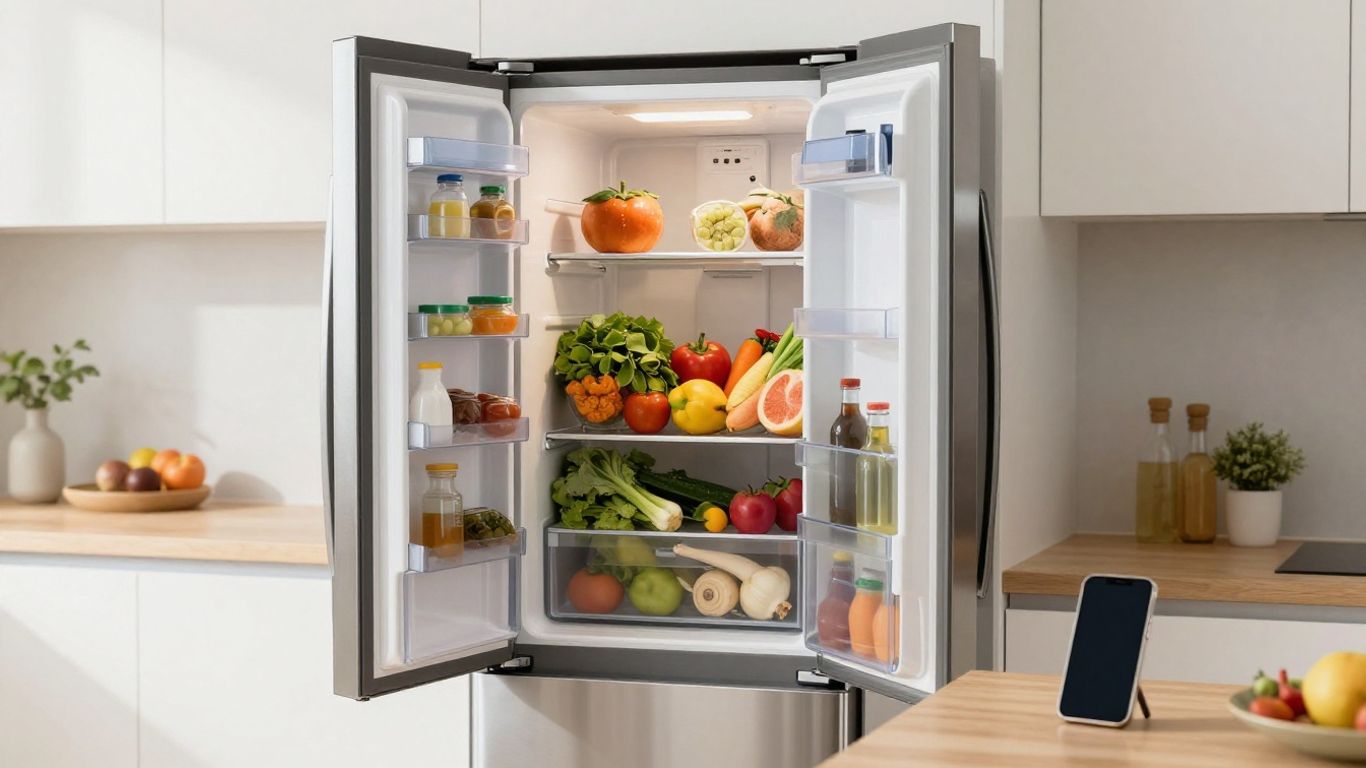
A premium refrigerator is no longer limited to keeping food cold and dispensing water. Depending on the model, it may use cameras, temperature sensors, software, touchscreens, and connected apps to help you manage everyday kitchen tasks. The practical question is not whether a refrigerator uses AI, but whether its specific capabilities solve problems you regularly have. This guide explains how AI features are being used in premium refrigerators without treating every promise as an automatic benefit.
From cold storage to an intelligent kitchen hub
A conventional refrigerator responds mainly to temperature settings and mechanical controls. An AI-enabled model may also help you see what is inside, manage information about food, recommend actions, or connect with other household devices. Some models add entertainment and communication functions, while others focus more narrowly on food recognition or cooling.
For example, the Bespoke AI Refrigerators range is described as offering features such as an AI Family Hub+ entertainment center with a 32-inch touchscreen, an AI Home 9-inch LCD touchscreen, personalized recipe recommendations, and hands-free Bixby control. Those capabilities can make the refrigerator part of your kitchen routine, although they do not remove the need to check labels, dates, and storage conditions yourself.
The sensors and software behind AI-enabled appliances
The hardware usually includes temperature sensors, door sensors, cameras, microphones, and control systems for cooling compartments. Software then interprets those signals, compares them with settings or learned patterns, and presents an alert, recommendation, or automated adjustment. The exact combination varies widely, so the phrase “AI refrigerator” should not be treated as a single technical standard.
Some processing may happen inside the appliance, while other functions can depend on a phone app or a remote service. That distinction affects response time, internet dependence, privacy, and what still works if a connected account is unavailable.
How AI differs from conventional smart refrigerator features
A smart refrigerator may let you change a setting from your phone or receive an open-door notification. AI features generally attempt to interpret information and act on patterns rather than simply relay a command. Food recognition, recipe suggestions, and adaptive cooling are examples of functions that require software to classify or predict something.
The boundary is not always clear in product listings. A touchscreen or Wi-Fi connection is not automatically an AI capability, and a feature labeled AI may still require considerable setup or correction from you. The useful distinction is practical, not just technical: ask what the appliance can recognize, decide, or adjust on your behalf.
What premium pricing typically adds
Higher pricing may pay for larger capacity, better materials, quieter operation, specialized storage, a more refined display, or additional connected functions. AI is only one part of that package. You should compare the refrigerator as a complete appliance rather than assuming the software alone explains the price.
A premium feature is more likely to feel worthwhile when it removes a repeated inconvenience. If you rarely use recipe suggestions, do not want cameras in the kitchen, or already manage shopping with your phone, the extra cost may have limited practical value.
How AI recognizes and manages food
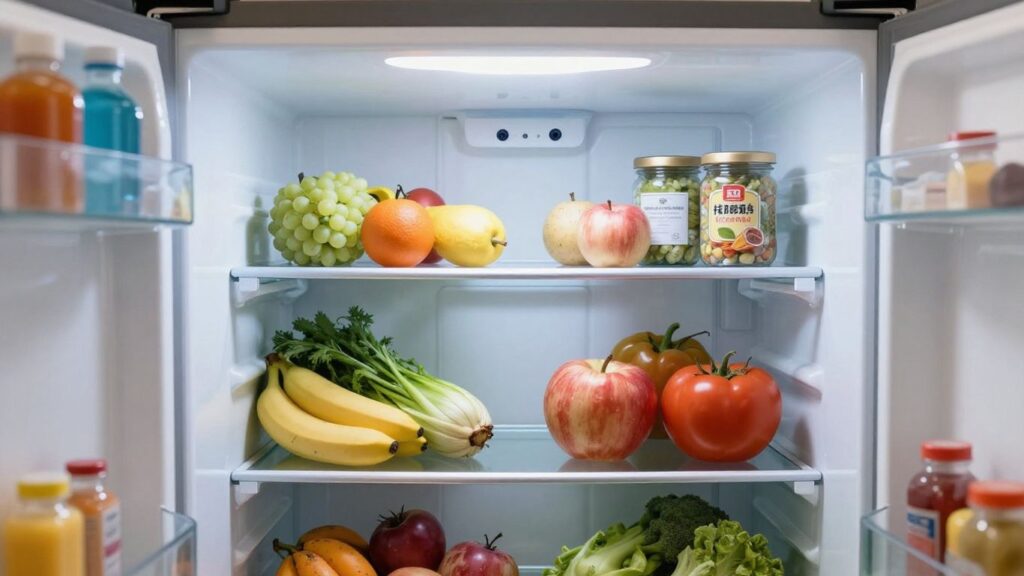
Food recognition is one of the most visible uses of AI in a refrigerator. Internal cameras can capture images, while software attempts to identify items, organize an inventory, or support suggestions based on what appears to be available. The result can be convenient, but it is better understood as an assisted estimate than a perfect digital pantry.
Camera-based food identification
A camera-based system examines images of shelves or compartments and uses visual patterns to classify food. It may recognize common produce or packaged goods when they are visible and positioned clearly. Lighting, blocked items, similar packaging, and crowded shelves can all affect the result.
You should also check which compartments the cameras cover. A system that sees the main refrigerator area may not see every door bin, drawer, or freezer section. That limitation matters if you expect a complete inventory without any manual input.
Automated inventory tracking and expiration estimates
Once an appliance has a probable list of foods, software may help you review what is present or create reminders. Expiration estimates are usually estimates rather than guarantees because the system may not know when an item was opened, how it was handled, or the exact date printed on its packaging.
The strongest use case is reducing simple forgetfulness. If an alert reminds you to check a container before your next grocery trip, it can prevent waste. You should still read dates and judge freshness using normal food-safety practices.
Recognizing packaged foods, produce, and leftovers
Produce often presents a visual challenge because size, ripeness, variety, and appearance differ from one item to another. Packaged foods may be easier when labels face the camera, but similar products can still be confused. Leftovers are harder because a container may conceal the food, and the system may not know when it was prepared.
A useful routine is to treat recognition as a first draft. Confirm uncertain items, correct the inventory when necessary, and avoid relying on an automated label for safety decisions.
Where food recognition can make mistakes
Recognition can fail when food is obscured, placed in the wrong area, turned away from the camera, or packaged in a way the software does not recognize. It may also struggle with partially used products and items moved between compartments. These errors do not necessarily make the feature useless, but they reduce the value of a promise that sounds fully automatic.
The Bespoke Fridge coverage describes food recognition and recipe suggestions connected with Google Gemini, while also noting that a smartphone can sometimes capture a wider view, including cupboards or areas a refrigerator camera may not cover. That comparison is a helpful reminder to test the actual coverage before paying for a dedicated appliance feature.
How AI supports freshness and food preservation
AI-assisted preservation is usually a combination of sensors, compartment controls, and software decisions. The refrigerator may monitor conditions and adjust cooling behavior, but it cannot control every factor that affects food quality. Your storage habits, loading pattern, container choice, and the condition of the food when you buy it still matter.
Adjusting temperature and humidity by compartment
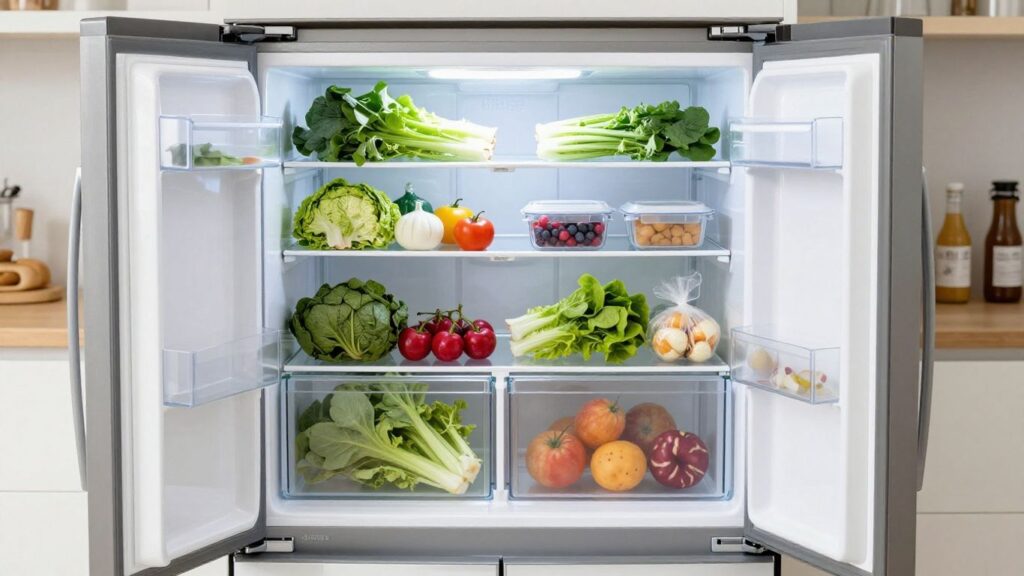
Different foods benefit from different storage conditions, which is why premium refrigerators may divide space into drawers or zones. Sensors can help maintain a target temperature, while software may coordinate cooling across compartments. Humidity controls can also support certain produce-storage designs, but the result depends on the refrigerator’s physical construction as well as its intelligence.
Look for specific information about which compartments have independent controls. A general claim about “freshness” tells you less than a clear explanation of temperature ranges, humidity management, and recommended food placement.
Detecting usage patterns and door-opening frequency
Door sensors can record how often the refrigerator is opened and how long it remains open. Over time, those signals may help the appliance respond to periods of heavier use or identify situations where cold air is being lost. The value is greatest when the adjustment happens quietly without requiring you to change your routine.
Frequent opening is not always wasteful; it may simply reflect a busy household. The system should respond to actual cooling demand rather than treating every opening as a problem.
Managing zones for meat, produce, beverages, and frozen foods
Dedicated zones can make storage more orderly and may offer settings suited to different categories. A beverage area, produce drawer, meat compartment, and freezer section each serve a physical storage purpose before any AI layer is added. Software can make those zones easier to monitor, but it cannot turn one compartment into every other type of storage.
Use the layout as a buying factor. A feature is more useful when the zone is large enough for your normal shopping pattern and easy to clean after spills.
Balancing freshness claims with real-world limitations
Freshness claims should be read as conditions-based guidance, not promises that food will last indefinitely. Cooling consistency, refrigerator loading, power interruptions, door seals, and cleaning all influence performance. Even an advanced system cannot repair food that was already old or poorly handled before it entered the refrigerator.
A sensible evaluation asks whether the appliance gives you better control and visibility. It should not encourage you to ignore food-safety guidance or assume that an alert replaces your judgment.
How AI helps reduce energy use
Energy-related AI features generally aim to reduce unnecessary cooling, improve temperature control, or alert you when cold air is escaping. The potential benefit depends on the appliance’s efficiency, your electricity use, and how often the feature changes real operating behavior. A complex refrigerator can also consume more energy than a simpler one, so the entire product label matters.
Learning household routines and cooling demand
A refrigerator can observe patterns such as busy meal periods, frequent door openings, or quieter stretches during the day. Software may use those patterns to anticipate demand instead of treating every moment identically. That approach is most useful when the system can make modest adjustments without compromising safe storage temperatures.
Patterns can change during holidays, travel, or a move. You should therefore view adaptive behavior as a convenience, not a permanent prediction of your household.
Optimizing compressor and defrost cycles
Compressors and defrost systems are central to refrigerator energy use. Software can coordinate their operation with sensor readings and cooling requirements, potentially avoiding unnecessary activity. However, product descriptions do not always explain the exact control logic or quantify savings under your conditions.
Compare the appliance’s published energy information with similar models. A sophisticated control system is not a substitute for checking annual consumption and the cost of replacement filters, repairs, or connected services.
Using alerts to prevent energy waste
Some of the simplest energy benefits come from reminders. An open-door alert can help you close the refrigerator sooner, while a temperature warning can draw attention to a seal problem, a power interruption, or an overloaded compartment. These alerts rely on you acting on them, but that is still useful when the problem would otherwise go unnoticed.
For quick buying research, a guide to energy efficiency ratings can help you separate a test-based efficiency label from claims about variable-speed compressor operation. The distinction is useful because both the rating and the technology affect how you should compare models.
Measuring whether efficiency gains justify the cost
Estimate your likely running cost before deciding that an AI feature will pay for itself. Start with the energy information for the model, then consider your local electricity rate, expected years of ownership, and any subscription or service costs. A small operating improvement may not offset a large purchase premium.
You should also account for convenience. Saving a little energy may not be your only reason to buy, but it should be clear which benefits are financial and which are about comfort or control.
How AI improves convenience and personalization
Convenience features are often the easiest to appreciate because they fit into tasks you already perform. A refrigerator might help you review ingredients, plan meals, use a mobile app, or control another connected device. Whether those functions become part of your routine depends on setup time and how much information you are willing to maintain.
Creating shopping lists from refrigerator data
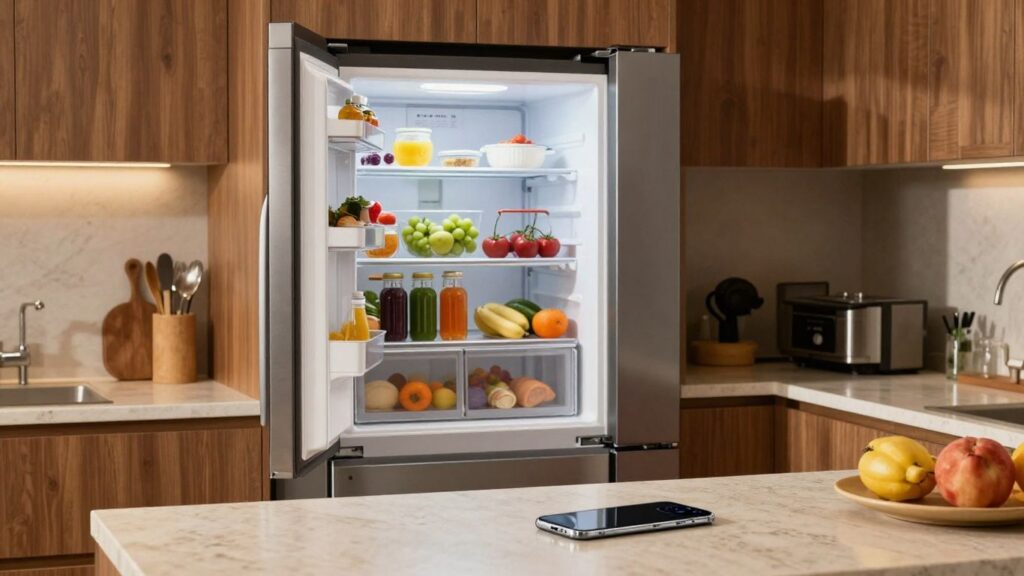
An inventory system can help you notice that an item is running low or missing. In theory, that makes a shopping list more accurate and reduces duplicate purchases. In practice, the list is only as reliable as the recognition, quantity estimates, and updates after someone removes or replaces food.
If several people use the kitchen, agree on a simple correction habit. Otherwise, an outdated list can create as much confusion as no list at all.
Suggesting recipes based on available ingredients
Recipe suggestions can turn inventory information into a meal idea. They are most useful when you want inspiration and are comfortable adjusting quantities or substituting ingredients. Suggestions should not be treated as proof that every listed item is still edible or that the recipe suits dietary, allergy, or nutritional needs.
The feature may also be less valuable if you already use a recipe app that accepts a photo or typed ingredient list. Compare the convenience of having the function built into the refrigerator with the flexibility of tools you already own.
Coordinating with mobile apps and voice assistants
A mobile app can extend the refrigerator’s controls beyond the kitchen, while a voice assistant may make hands-free commands more convenient. These functions usually require compatible accounts, a stable connection, and permission settings across more than one service.
The Bespoke AI Refrigerators information specifically describes hands-free Bixby control on an AI Home model. That is a documented example of voice interaction, but you should verify compatibility and supported commands for the exact model you are considering.
Supporting family profiles and personalized settings
Profiles can help a shared appliance serve different people, especially when recommendations, calendars, or preferred settings are involved. The benefit is smaller when one person manages the refrigerator or when family members do not want to sign in separately.
Before enabling profiles, check how accounts are created, what information is visible to other household members, and whether the refrigerator remains usable for guests. Personalization should simplify shared use rather than create another account-management chore.
How connected AI features affect privacy and security
A connected refrigerator can handle more information than you might first expect. Depending on the design, it may involve images, voice commands, usage patterns, account details, device identifiers, and app activity. The exact data practices are determined by the manufacturer’s settings and policies, so you should read the relevant privacy documentation before connecting the appliance.
What refrigerator data may be collected
Possible data categories include camera images, commands, interaction history, appliance diagnostics, household routines, and information you enter manually. A food inventory can also reveal patterns about shopping and meal preparation. Not every product collects every category, which is why a general privacy assumption is not enough.
Look for a clear explanation of collection, retention, deletion, and sharing. You should also check whether optional features require more data than basic cooling functions.
Cloud processing versus on-device intelligence
On-device processing can reduce the need to send certain information elsewhere, while cloud processing may support more complex services or updates. Cloud-dependent functions can be affected by internet outages, account problems, or changes in service availability. Neither approach is automatically perfect; the important point is knowing which functions depend on which system.
Ask whether cameras and microphones can be disabled independently. Also check whether disabling connectivity affects ordinary refrigeration or only optional smart functions.
Account security, software updates, and data sharing
A strong account password, multifactor authentication where available, and timely software updates can reduce avoidable risks. You should keep the refrigerator’s app and connected home devices updated as well. Sharing settings deserve equal attention, particularly if several household members or third-party services have access.
Treat a refrigerator account like any other connected-home account. Do not reuse a password, and remove access when a household member no longer needs it.
Options for disabling or limiting connected features
The best systems give you choices rather than forcing every connected feature on. You may be able to disable cameras, voice input, remote access, personalized recommendations, or data sharing separately. Some functions may require an account, while basic cooling should remain available without one.
Write down what still works offline before buying. A clear fallback is valuable if your internet service changes or you decide later that a connected feature is not worth the privacy trade-off.
How to evaluate AI features before buying a premium refrigerator
A premium refrigerator deserves the same careful comparison as any expensive household purchase. Start with your actual routines, then match them against documented capabilities, operating costs, and support terms. Promo Deals focuses on helping shoppers compare offers, but a low price is only useful when the appliance fits your needs and remains practical to own.
Buy from Flipkart

Samsung 467 L Frost Free Double Door Top Mount 3 Star Convertible Refrigerator(Luxe Black, RT80F51C3KHL)
Rs. 58,767 in stock
Highlights
- Reciprocating Compressor
- Built-in Stabilizer
Specifications
| Performance Features | |
| Air Flow Type | Twin Cooling Plus |
| Temperature Control | Internal |
| Express Freezing | Yes |
| Moisture Control | Yes |
| Convertible Refrigerator | Yes |
| Other Performance Features | Digital Inverter Compressor |
| Installation & Demo | |
| Installation & Demo | Authorised Service Engineer will install the Refrigerator, make it operational and explain the below details. 1. How to Use, 2. Features,3. Do's and Dont's. |
| Dimensions | |
| Net Height | 1825 mm (182.5 cm) |
| Net Depth | 787 mm (78.7 cm) |
| Net Width | 700 mm (70.0 cm) |
| Weight | 71 kg |
| Width | 700 mm (70.0 cm) |
| Height | 1825 mm (182.5 cm) |
| Depth | 787 mm (78.7 cm) |
| Net Width Without Handle | 700 mm (70.0 cm) |
| Net Height Without Handle | 1825 mm (182.5 cm) |
| Net Depth Without Handle | 787 mm (78.7 cm) |
| Important Note | |
| As a part of the "Energy Labelling Plan" of the Bureau of Energy Efficiency, the star rating of Refrigerators effective 1st January 2023 onwards will be one star less than its rating from 1st Jan 2020 to 31st December 2022. | |
| Power Features | |
| Power Consumption | 258 kWh |
| Power Requirement | 100 - 300 V |
| BEE Rating Year | 2025 |
| Stabilizer Required | No |
| Convenience Features | |
| Clock | No |
| Door Lock | No |
| Gasket Type | Anti Bacteria Door Gasket |
| Removable Gasket | Yes |
| Door Alarm | No |
| Deodorizer | Yes |
| Water & Ice Dispenser | No |
| Water Dispenser | No |
| Removable Rack | Yes |
| Flexible Rack | Yes |
| Other Convenience Features | Fresh Room & Anti-Fingerprint |
| Refrigerator Comparment Features | |
| Number of Refrigerator Shelves | 2 |
| Number of Refrigerator Door Bins | 4 |
| Refrigerator Interior Light | Yes |
| Egg Tray | Yes |
| Number of Crispers | 1 |
| Number of Refrigerator Drawers | 1 |
| Number of Refrigerator Bottle Racks | 4 |
| Body and Design Features | |
| Body Material | Steel |
| Shelf Material | Toughened Glass |
| Handle Type | Recess |
| Design | Solid |
| Display Type | Internal |
| Door Finish | Glossy |
| Interior Finish | Plastic with toughened glass |
| General | |
| Brand | Samsung |
| In The Box | 1 Unit Refrigerator , User Manual, Warranty Card, Egg Tray, Movable Ice Maker |
| Type | Double Door Top Mount |
| Refrigerator Type | Top Freezer Refrigerator |
| Defrosting Type | Frost Free |
| Compressor Type | Reciprocating Compressor |
| Capacity | 467 L |
| Number of Doors | 2 |
| BEE Star Rating | 3 |
| Coolpad | No |
| Toughened Glass | Yes |
| Built-in Stabilizer | Yes |
| Base Stand with Drawer | No |
| Brand Color | Luxe Black |
| Model Name | RT80F51C3KHL |
| Color | Black |
| Convertible Refrigerator Type | 5-in-1 Convertible |
| Additional Features | |
| Launch Year | 2025 |
| Net Total Capacity | 467 L |
| Child Lock | No |
| Wheel Support | No |
| Cooling Refrigerant | R - 600a |
| Insulation Type | Cyclopentane |
| Technology Used | AI Energy Mode, 5-in-1 Convertible, Energy Efficient Technology, Digital Inverter Technology, Twin Cooling Plus Technology, Frost Free |
| Other Features | Additional Features : Stabilizer Free Operation (100v - 300v) | Multi Flow | Up to 15 Days of Fresh Food | Flat Door Design | Recess Handle | Easy Clean Back | Veg Box | Big Bottle Guard (Deep Door Guard) | LED Light |
| Freezer Compartment Features | |
| Number of Freezer Shelves | 1 |
| Number of Freezer Drawers | 1 |
| Number of Freezer Door Bins | 2 |
| Number of Freezer Bottle Racks | 2 |
| Freezer Interior Light | No |
welcome to bespoke ai. introducing the bespoke ai range of samsung frost free 5 in 1 convertible refrigerator, the smart choice for smart customers. powered with ai, get upto 10% additional energy savings with ai energy mode. you can also monitor and control your refrigerator with the smartthings...

Godrej 472 L Frost Free Double Door 2 Star Refrigerator with AI Tech, Digital Inverter, And 95%+ Food Surface Disinfection(Champagne Gold, RF EON 474B RCI CH GD)
Rs. 49,990 in stock
Highlights
- inverter compressor
- Built-in Stabilizer
Specifications
| Body and Design Features | |
| Shelf Material | Toughened Glass |
| Installation & Demo | |
| Installation & Demo | Authorised Service Engineer will install the Washing Machine, make it operational and explain the below details. 1. How to Use, 2. Features,3. Do's and Dont's. Call us at Call 080-67436743 and 022-67965656 [ Mail [email protected]] assistance Or text "Hi" [Chat on WhatsApp at 9321665511 |
| General | |
| Brand | Godrej |
| In The Box | Refrigerator, User Manual, Warranty Card |
| Type | Double Door |
| Refrigerator Type | Top Mount |
| Defrosting Type | Frost Free |
| Compressor Type | inverter compressor |
| Capacity | 472 L |
| Number of Doors | 2 |
| BEE Star Rating | 2 |
| Coolpad | No |
| Toughened Glass | Yes |
| Built-in Stabilizer | Yes |
| Brand Color | Champagne Gold |
| Model Name | RF EON 474B RCI CH GD |
| Color | Gold |
| Additional Features | |
| Launch Year | 2024 |
| Cooling Refrigerant | R600A |
| Dimensions | |
| Net Height | 1850 mm (185.0 cm) |
| Net Depth | 739 mm (73.9 cm) |
| Net Width | 737 mm (73.7 cm) |
| Weight | 72 kg |
| Important Note | |
| As a part of the "Energy Labelling Plan" of the Bureau of Energy Efficiency, the star rating of Refrigerators effective 1st January 2023 onwards will be one star less than its rating from 1st Jan 2020 to 31st December 2022. | |
| Power Features | |
| BEE Rating Year | 2024 |
This Godrej 472 L Refrigerator offers smart storage with a 96 L freezer, a 60.96 cm (24) wide shelf, and spacious vegetable and bottle compartments. AI-powered cooling adapts to your habits, while the 6-in-1 convertible freezer provides flexible options for every need. An intuitive control panel...
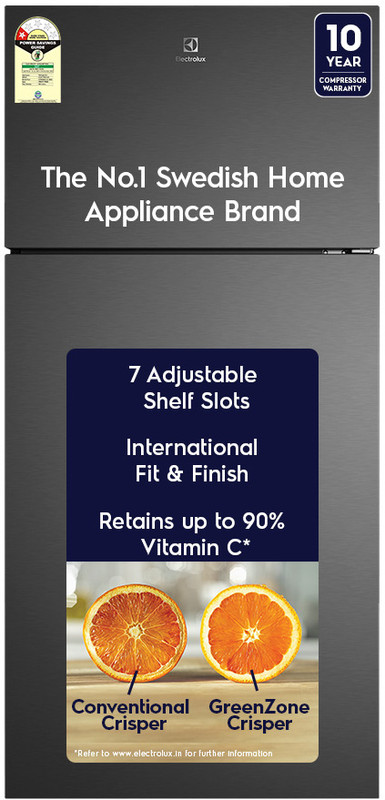
Electrolux 503 L Frost Free Double Door 1 Star Refrigerator with �Inverter Refrigerator with AI AutoSense, GreenZone Technology, UltimateTaste 700(Charcoal Black, ETM5002C-B)
Rs. 61,990 in stock
Highlights
- Hermetic Reciprocating Compressor
Specifications
| Performance Features | |
| Air Flow Type | 360 Cooling |
| Temperature Control | Yes |
| Moisture Control | Yes |
| Convertible Refrigerator | No |
| Other Performance Features | Frost Free Defrost System, Inverter, Cooling 360 System, FreshAir Filter, GreenZone with Auto Humidity Control |
| Installation & Demo | |
| Installation & Demo | Authorised Service Engineer will install the Refrigerator, make it operational and explain the below details. 1. How to Use, 2. Features,3. Do's and Dont's. |
| Dimensions | |
| Net Height | 1725 mm (172.5 cm) |
| Net Depth | 723 mm (72.3 cm) |
| Net Width | 796 mm (79.6 cm) |
| Weight | 81 kg |
| Width | 830 mm (83.0 cm) |
| Height | 1770 mm (177.0 cm) |
| Depth | 767 mm (76.7 cm) |
| Net Width Without Handle | 790 mm (79.0 cm) |
| Net Height Without Handle | 1705 mm (170.5 cm) |
| Net Depth Without Handle | 641 mm (64.1 cm) |
| Important Note | |
| As a part of the "Energy Labelling Plan" of the Bureau of Energy Efficiency, the star rating of Refrigerators effective 1st January 2023 onwards will be one star less than its rating from 1st Jan 2020 to 31st December 2022. | |
| Power Features | |
| Power Consumption | 325 kWh |
| Power Requirement | 220-240V/50Hz |
| BEE Rating Year | 2025 |
| Stabilizer Required | Yes |
| Convenience Features | |
| Removable Gasket | Yes |
| Door Alarm | Yes |
| Deodorizer | Yes |
| Removable Rack | Yes |
| Flexible Rack | Yes |
| Other Convenience Features | 2 Wheels at the back, Glass Shelves, Adjustable Temperature Control, Adjustable Door Shelves (FlexStor), ExtraChill Chiller Tray, Door Alarm, Twist & Serve Ice Tray, Egg Tray, LED Lighting |
| Refrigerator Comparment Features | |
| Number of Refrigerator Shelves | 3 |
| Number of Refrigerator Door Bins | 6 |
| Can Rack | Yes |
| Refrigerator Interior Light | Yes |
| Egg Tray | Yes |
| Number of Crispers | 1 |
| Number of Refrigerator Drawers | 1 |
| Number of Refrigerator Bottle Racks | 2 |
| Body and Design Features | |
| Body Material | Coated Steel |
| Handle Material | Plastic |
| Shelf Material | Toughened Glass |
| Handle Type | Recessed |
| Design | Solid |
| Door Finish | Matte |
| Interior Finish | High Gloss |
| General | |
| Brand | Electrolux |
| In The Box | 1 N Refrigerator; User Manual; Warranty Card |
| Series | UltimateTaste 700 |
| Type | Double Door |
| Refrigerator Type | Top Freezer Refrigerator |
| Defrosting Type | Frost Free |
| Compressor Type | Hermetic Reciprocating Compressor |
| Capacity | 503 L |
| Number of Doors | 2 |
| BEE Star Rating | 1 |
| Toughened Glass | Yes |
| Built-in Stabilizer | No |
| Brand Color | Charcoal Black |
| Gross Refrigerator Capacity | 395 L |
| Model Name | ETM5002C-B |
| Color | Black |
| Additional Features | |
| Launch Year | 2025 |
| Net Total Capacity | 503 L |
| Child Lock | No |
| Wheel Support | Yes |
| Cooling Refrigerant | R-600a |
| Insulation Type | Cyclopentane |
| Freezer Compartment Features | |
| Gross Freezer Capacity | 141 L |
| Number of Freezer Shelves | 1 |
| Number of Freezer Door Bins | 1 |
| Number of Freezer Bottle Racks | 1 |
| Freezer Tray Type | Twist & Serve Ice Maker, Chiller Tray |
| Ice Cube Tray Type | Double Twist |
With a legacy spanning over a century across more than 100 global markets, and a reputation built on award-winning sustainability, Electrolux is a name the world trusts. Using Artificial Intelligence, AI AutoSense optimises double door refrigerator operation and saves up to 10% more energy*. It...
Separating useful capabilities from marketing language
Read the specification and support pages for the exact model, not just the family name. Look for concrete details: which cameras cover which compartments, what the app can do, whether recipes use recognized ingredients, and what requires an account. Broad phrases such as “smart food management” should prompt more questions rather than settle the decision.
A practical product buying guide can help you organize those questions around needs, specifications, reviews, budget, and long-term cost. The same approach works well here because AI features are only one part of the buying decision.
Checking compatibility with existing smart-home systems
Compatibility can affect whether a feature feels seamless or isolated. Check your phone’s operating system, home platform, voice assistant, Wi-Fi requirements, and any supported account integrations. Do not assume that a refrigerator’s touchscreen means it will control every device in your home.
Also consider who will use the system. A feature that works well for one technically confident user may be less convenient for a household that prefers physical controls.
Comparing subscription requirements and long-term support
Some connected features may be included, while others may depend on a service plan or a third-party account. Ask whether recipe services, cloud storage, advanced recognition, or remote controls can change after a trial period. You should also find out how long software support is expected to continue.
Put recurring costs beside the purchase price when comparing deals. A discount can look attractive initially but become less compelling if the functions you value require a continuing payment.
Assessing reliability, maintenance, and repairability
More cameras, displays, sensors, and connectivity can mean more parts to maintain. Check filter access, cleaning requirements, warranty coverage, service availability, and the cost of common repairs. A refrigerator that is easy to use but difficult to service may not be a good long-term bargain.
Before checkout, decide which features you would still value if the screen, app, or internet connection stopped working. The appliance should remain a dependable refrigerator first and a connected device second.
Conclusion
AI can make a premium refrigerator more aware, more convenient, and potentially more efficient, but the best choice is the one whose documented features match your daily habits. Compare recognition limits, cooling controls, energy information, privacy settings, support, and total ownership cost before you focus on the headline feature or the discount.
Frequently Asked Questions
What does AI do in a premium refrigerator?
AI may interpret camera images, learn usage patterns, support food inventories, recommend recipes, manage alerts, or adjust certain cooling behaviors. The available functions differ by model, so the product documentation matters.
Can an AI refrigerator identify every food item?
No. Recognition can be affected by lighting, packaging, blocked views, similar products, leftovers, and compartments outside the camera’s coverage. You should treat the inventory as an aid that may need correction.
Do AI refrigerators keep food fresh indefinitely?
No. Temperature and humidity controls can support appropriate storage, but food quality also depends on freshness at purchase, handling, loading, door openings, power, and safe storage practices.
Can AI refrigerator features reduce energy use?
They may help by coordinating cooling, responding to usage patterns, or warning about an open door. Actual savings depend on the model, your household behavior, electricity rate, and the appliance’s published efficiency.
Do connected refrigerator features require the internet?
Some functions may work locally, while others depend on an app, cloud processing, or an online account. Check which features remain available during an internet outage before buying.
Are smart refrigerator cameras a privacy concern?
They can be, particularly when images, voice commands, household routines, or account information are collected. Review privacy settings, data policies, retention practices, and options for disabling optional functions.
Are premium AI refrigerator features worth the price?
They can be worthwhile if they solve frequent problems and remain affordable to operate and maintain. Compare the exact capabilities with your habits rather than paying for a broad AI label alone.