

Key Takeaways
Salt-based and salt-free systems address hard-water problems in different ways. The right choice depends on whether you want to remove hardness minerals or mainly reduce scale.
- Salt-based softeners remove calcium and magnesium through ion exchange.
- Salt-free conditioners alter how minerals behave rather than removing them.
- Salt-based systems can help with a wider range of hard-water effects.
- Salt-free systems avoid salt refills and regeneration wastewater.
- Water hardness, household priorities, space, and local rules should guide the decision.
Understanding Hard Water and Its Effects
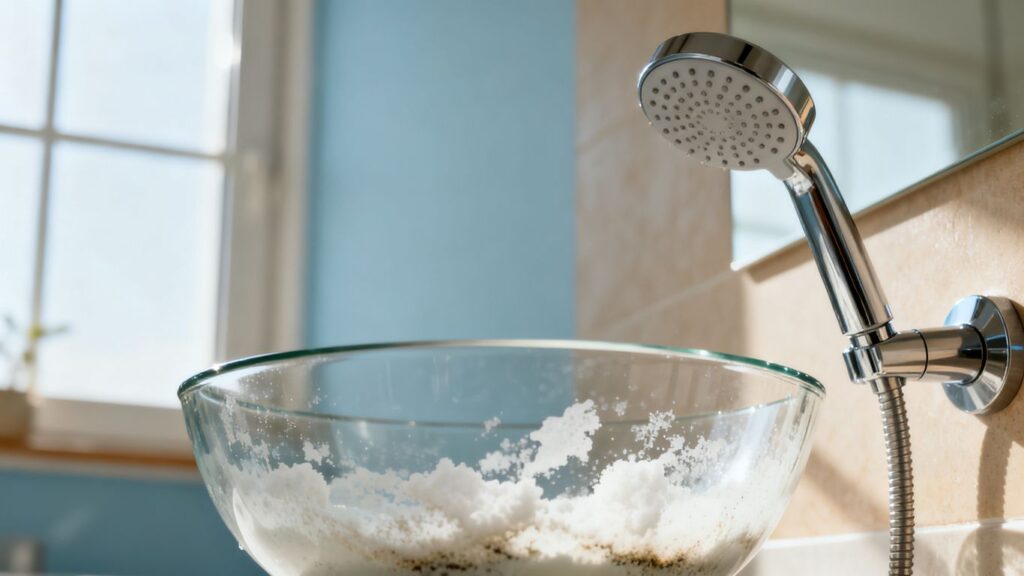
Hard water contains dissolved minerals, mainly calcium and magnesium. Those minerals are not usually a health concern, but they can leave scale on faucets, showerheads, dishes, and the inside of water-using appliances. The more practical question is not whether hard water exists, but which effects matter most in your home.
Over time, mineral deposits can make fixtures look dull and can reduce the efficiency of appliances that heat water. Hard water can also make soap less effective, leaving residue on bathroom surfaces and a different feel on skin and hair. A useful hard water guide can help you identify these signs before comparing equipment.
The phrase actual treatment goal is worth keeping in mind. If your priority is softer-feeling water and fewer mineral spots, removing hardness is a different objective from simply reducing scale on plumbing. Compare salt-based vs salt-free water conditioning systems with that distinction in view, rather than treating “softener” and “conditioner” as interchangeable terms.
How Salt-Based Water Softeners Work
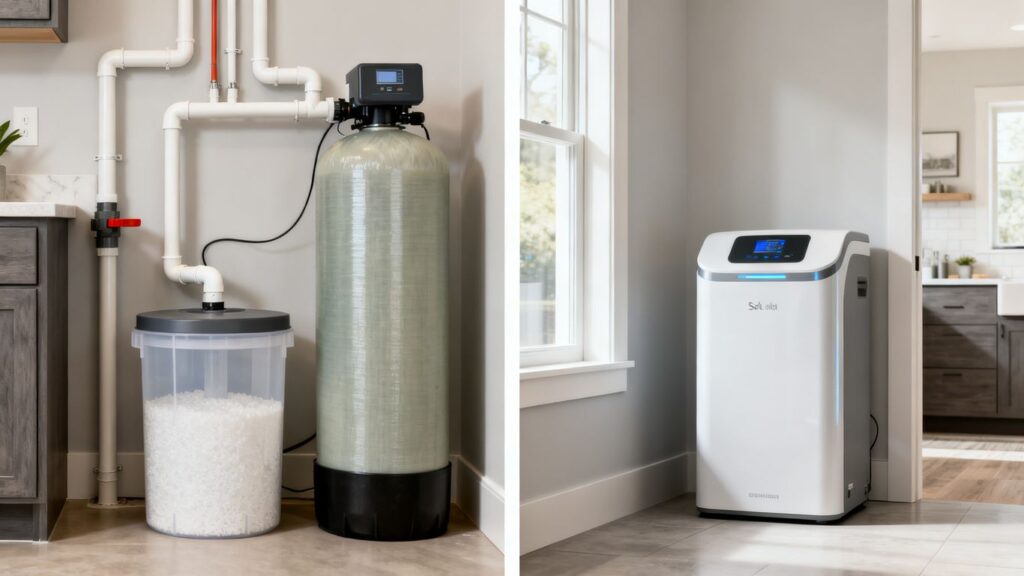
Salt-based softeners are commonly called ion-exchange systems. Water passes through a tank containing resin beads that attract hardness minerals, and the treated water continues into the home. When the resin becomes loaded, the system regenerates with a brine solution and sends the released minerals and wastewater to a drain.
The Ion Exchange Process
During normal operation, calcium and magnesium in incoming water bind to the resin beads. The exchange allows the system to remove those hardness minerals from the water as it flows through the tank. A regeneration cycle restores the resin so it can continue treating water, which is why these systems need access to salt, water, and a suitable drain.
The process is relatively direct: hardness is removed rather than merely rearranged. That makes ion exchange relevant when a household wants to address several familiar effects of hard water at once, including mineral spots and the feel of water during washing.
Pros of Salt-Based Systems
A salt-based unit may be a strong fit when measured water hardness is high or when the household wants softened water throughout the home. Because the system removes calcium and magnesium, it addresses the underlying mineral content instead of only changing how those minerals attach to surfaces.
For many buyers, the main advantages are practical:
- It physically removes calcium and magnesium from the treated water.
- It can address more than scale on plumbing and fixtures.
- It is a familiar approach with established operating principles.
- It may suit homes with substantial hardness and broad treatment needs.
Those benefits come with operating requirements, though. The system needs periodic regeneration and a plan for replenishing salt, so the owner should consider installation conditions as well as the treatment result.
Cons of Salt-Based Systems
Regeneration uses a brine solution and sends wastewater to a drain. Salt purchases become a recurring expense, and the system requires enough room for its tanks, plumbing connections, and maintenance access. Local rules may also affect whether brine discharge is permitted or practical.
Salt-based equipment is therefore less convenient for someone who wants minimal ongoing attention. It also uses water during regeneration, so the household should include that usage when considering operating costs rather than looking only at the initial purchase price.
How Salt-Free Water Conditioners Work
Salt-free systems are more accurately described as water conditioners. They do not use salt or a traditional regeneration cycle to remove calcium and magnesium. Instead, several technologies aim to change how those minerals form or adhere, helping reduce scale while leaving the minerals in the water.
Common Salt-Free Technologies (TAC, Nucleation)
Template-assisted crystallization, often shortened to TAC, uses media intended to encourage hardness minerals to form crystals that are less likely to stick to surfaces. Nucleation-assisted approaches use a related idea: small crystals provide a starting point for mineral formation as water moves through the treatment media. The details vary by product, so buyers should read the technical specifications rather than assume every salt-free unit works identically.
This salt-free conditioner overview is useful for separating scale control from true softening. A conditioner can reduce deposits in some applications, but it does not remove the dissolved hardness minerals that remain in the water.
Pros of Salt-Free Systems
The appeal of salt-free conditioning is largely operational. Without salt-based regeneration, there are no regular salt bags to carry and no brine cycle that sends wastewater to a drain. That can make these systems attractive where space, maintenance simplicity, or discharge restrictions are major considerations.
Salt-free systems can also preserve the water’s mineral content while focusing on scale reduction. For a household with moderate hardness and a specific concern about deposits, that narrower approach may be perfectly reasonable.
Cons of Salt-Free Systems
A salt-free conditioner does not create softened water in the ion-exchange sense. Since the minerals remain present, it may not deliver the same results for spots on glassware, soap performance, or the feel of water on skin and hair. Its performance can also depend on incoming water conditions and the particular technology used.
The central limitation is easy to overlook when products are marketed with the word “softener.” If removing hardness is the goal, a salt-free conditioner may not meet it, even if it helps control scale on certain surfaces.
Key Differences: Salt vs. Salt-Free
The simplest distinction is removal versus conditioning. Salt-based systems exchange calcium and magnesium for other ions and regenerate the resin with brine. Salt-free systems leave the hardness minerals in place while treating them to make scale less likely under suitable conditions.
The day-to-day experience differs as well. Salt-based equipment asks the owner to manage salt, regeneration, and drain connections. Salt-free equipment generally has fewer consumables, but the trade-off is that it targets scale rather than every effect associated with dissolved hardness.
The comparison becomes clearer when the main factors are placed side by side. This water softener comparison offers another way to think about the balance between mineral removal, scale control, maintenance, and wastewater.
| Factor | Salt-based system | Salt-free conditioner |
|---|---|---|
| Main action | Removes hardness minerals | Conditions minerals to reduce scale |
| Salt use | Requires salt for regeneration | Does not require salt |
| Regeneration wastewater | Yes | No traditional regeneration cycle |
| Water feel and mineral content | Changes hardness content | Leaves hardness minerals in the water |
The table is not a ranking. It shows why two systems can both be useful while solving different problems: one changes the water’s hardness, and the other concentrates on reducing mineral attachment.
Which System is Right for You?
Start with the water, not the equipment brochure. A water test can establish hardness and reveal other conditions that affect treatment, while your household routine shows whether you care most about scale, soap performance, spots, water feel, or avoiding regular maintenance. A home water treatment guide can help organize those questions before you request estimates.
A salt-based system is generally the more direct choice when the goal is to remove hardness minerals and address a broad set of hard-water effects. A salt-free conditioner may be a better match when scale reduction is the main concern and the household prefers no salt refills or regeneration wastewater. Neither label alone tells you whether the system will suit your water supply.
Installation constraints matter, too. Check available space, drainage, local discharge requirements, expected household water use, and the manufacturer’s stated operating limits. Taking those details seriously usually produces a better buying decision than choosing solely on upfront price or the promise of “soft” water.
Maintenance and Long-Term Costs
The purchase price is only one part of the comparison. Salt-based systems involve ongoing salt costs, regeneration, and periodic checks of the tank, brine components, and connections. Salt-free conditioners usually avoid salt purchases and regeneration, although their media or cartridges still need replacement according to the product’s instructions.
Long-term cost also includes water use, installation complexity, service, and the consequences of choosing a system that does not match the problem. A lower upfront price may be less appealing if the household dislikes carrying salt, while a salt-free unit may be poor value if the real need is mineral removal.
A detailed softener cost breakdown can help frame those expenses over time. Compare like with like: installation, consumables, replacement media, wastewater, maintenance, and expected service life should all be part of the calculation. The cheapest system on day one is not automatically the least expensive system to live with.
Conclusion
Salt-based softeners remove hardness minerals and offer broader treatment for hard-water effects, while salt-free conditioners focus on reducing scale without salt or traditional regeneration. Once you identify the result you want, test the water, and account for maintenance and local installation conditions, the choice becomes much less confusing.
Frequently Asked Questions
Is a salt-free conditioner the same as a water softener?
No. A salt-free conditioner generally treats hardness minerals to reduce scale, while a salt-based softener removes calcium and magnesium through ion exchange.
Do salt-free systems remove calcium and magnesium?
Typically, no. The minerals remain in the water, although the treatment may change how readily they form deposits on surfaces.
Do salt-based softeners require regular maintenance?
Yes. Owners usually need to replenish salt and monitor regeneration, connections, and the brine-related components according to the system’s instructions.
Do salt-free conditioners use wastewater?
They do not use a traditional salt-based regeneration cycle, so they generally do not produce regeneration brine wastewater. Installation may still involve other plumbing considerations.
Which system is better for high water hardness?
A salt-based softener is often the more suitable option when the objective is to remove a high level of hardness minerals. A water test should guide the final decision.
Can either system prevent all hard-water spots?
No system should be assumed to prevent every spot in every application. Results depend on water chemistry, the technology, installation, and the surfaces being treated.
What should I check before buying a system?
Check water hardness, the treatment goal, available space, drain access, local rules, maintenance requirements, consumable costs, and the manufacturer’s stated operating conditions.