
Key Takeaways
Hard water is mainly a mineral problem, and water softeners address it through ion exchange. Knowing the process, system types, and upkeep involved makes it easier to decide whether softening belongs in your home.
- Calcium and magnesium are the main minerals behind hard water.
- Ion exchange replaces hardness minerals with sodium or potassium ions.
- Salt-based softeners remove hardness; salt-free conditioners treat its effects differently.
- Regular regeneration, salt checks, and occasional servicing help maintain performance.
- A water test and household needs should guide your buying decision.
Understanding Hard Water
Hard water is water that contains noticeable amounts of dissolved calcium and magnesium. It is common, generally safe for ordinary household use, and often goes unnoticed until deposits begin to appear. The effects can range from spotted glassware to reduced soap performance and mineral buildup around fixtures. Understanding the source of the problem is the first step toward understanding how water softener works.
What Causes Hard Water?
As rainwater moves through soil and rock, it can collect dissolved minerals along the way. Calcium and magnesium are the minerals most closely associated with water hardness, although the exact level varies from one water supply to another. Homes using well water often notice hardness more clearly, but municipal water can also contain enough minerals to leave deposits.
Hardness is usually measured through a water test, commonly in grains per gallon or milligrams per liter. The result helps indicate whether a softener may be useful and how much capacity a system needs. Since water chemistry differs by location, testing is more reliable than judging hardness from a single spot on a faucet.
The Problems with Hard Water
The trouble begins when dissolved minerals react with soap or settle onto surfaces. A chalky film can form on shower doors, faucets, and dishes, while laundry may feel stiff after washing. Over time, scale can also accumulate inside pipes, water heaters, dishwashers, and other equipment that regularly handles heated water.
These effects are usually gradual rather than dramatic. You may find yourself using more detergent, scrubbing fixtures more often, or replacing an appliance sooner than expected. A useful hard water guide can help connect those everyday symptoms with the mineral buildup causing them.
How Water Softeners Tackle Hard Water
A conventional water softener treats water as it enters the home, before it reaches most taps and appliances. Its central job is to reduce the concentration of calcium and magnesium rather than merely hide the visible residue. The process is mechanical and chemical, but the basic idea is fairly straightforward. The ion exchange process is the key to understanding how water softener works.
The Ion Exchange Process Explained
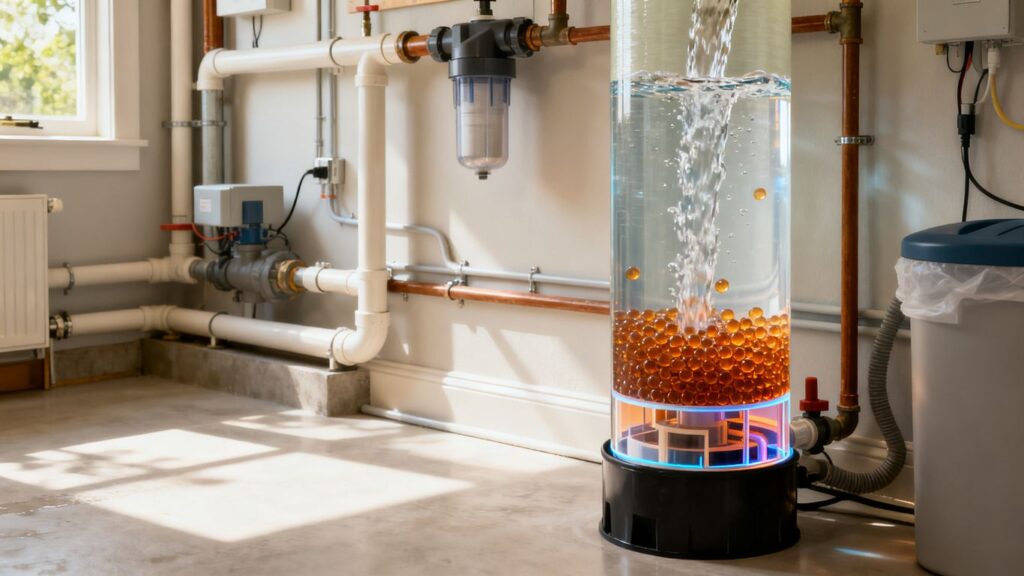
Inside the resin tank are small beads that hold positively charged ions. As hard water passes through, the beads attract and hold calcium and magnesium, releasing sodium or potassium ions in exchange. The treated water then continues through the plumbing with fewer hardness minerals available to form scale.
Eventually, the resin beads become loaded with calcium and magnesium. During regeneration, a brine solution passes through the resin, carrying the collected hardness minerals toward the drain and restoring the beads’ ability to exchange ions. Evolve water softeners are described as using this ion-exchange process, with proper salt levels in the brine tank supporting operation.
Key Components of a Water Softener
Most salt-based systems combine several parts that work in sequence. The resin tank performs the exchange, while a separate brine tank stores the salt solution used during regeneration. A control valve manages water flow and cycles, and a drain connection carries away the wastewater produced during cleaning.
The parts have different jobs, so a fault in one area can affect the whole cycle. This simple overview shows what each component generally contributes:
| Component | Main role | What to watch for |
|---|---|---|
| Resin tank | Holds the exchange resin | Resin age and water flow |
| Brine tank | Makes and stores brine | Salt level and bridging |
| Control valve | Directs treatment and regeneration cycles | Settings and leaks |
| Drain line | Removes regeneration wastewater | Kinks or blockages |
Together, these components let the softener treat water repeatedly instead of requiring a new filter each time. The system still needs correct sizing and installation, since an undersized unit may regenerate too often or fail to keep up with household demand.
Types of Water Softeners
The phrase “water softener” is sometimes used for several different kinds of treatment equipment. Salt-based softeners remove hardness minerals through ion exchange, while salt-free conditioners generally leave those minerals in the water. That difference affects what each system can reasonably accomplish. Comparing the treatment method, not just the product label, helps avoid buying the wrong type.
Salt-Based Water Softeners
Salt-based softeners use a resin tank and a brine-based regeneration cycle. They are designed to remove calcium and magnesium from the treated water, which can reduce the minerals responsible for scale and soap-related residue. Because the resin eventually fills with hardness minerals, the system must regenerate on a schedule or when its capacity is used.
Salt use, water use during regeneration, installation space, and drainage requirements all belong in the buying decision. Evolve water softeners are presented as using ion exchange and requiring appropriate salt levels in the brine tank, details that illustrate the routine involved with this category.
Salt-Free Water Conditioners (and why they’re different)
Salt-free conditioners do not operate like ion-exchange softeners. They are generally intended to alter how hardness minerals behave or deposit, while leaving calcium and magnesium in the water. That means they may suit households that want to avoid salt handling, but they should not be described as removing hardness in the same way as a salt-based unit.
The best choice depends on the water test, the severity of the scale problem, household preferences, and local installation constraints. If the goal is specifically to reduce hardness minerals, a salt-based softener is the more direct match; if the goal is scale management without salt, a conditioner may be worth investigating.
Benefits of Using a Water Softener
A water softener can affect several ordinary household routines at once. With fewer hardness minerals in the water, dishes may show less spotting, fixtures may collect less scale, and soap can work more effectively. The improvements are practical rather than flashy, which is why many people notice them first in cleaning and laundry.
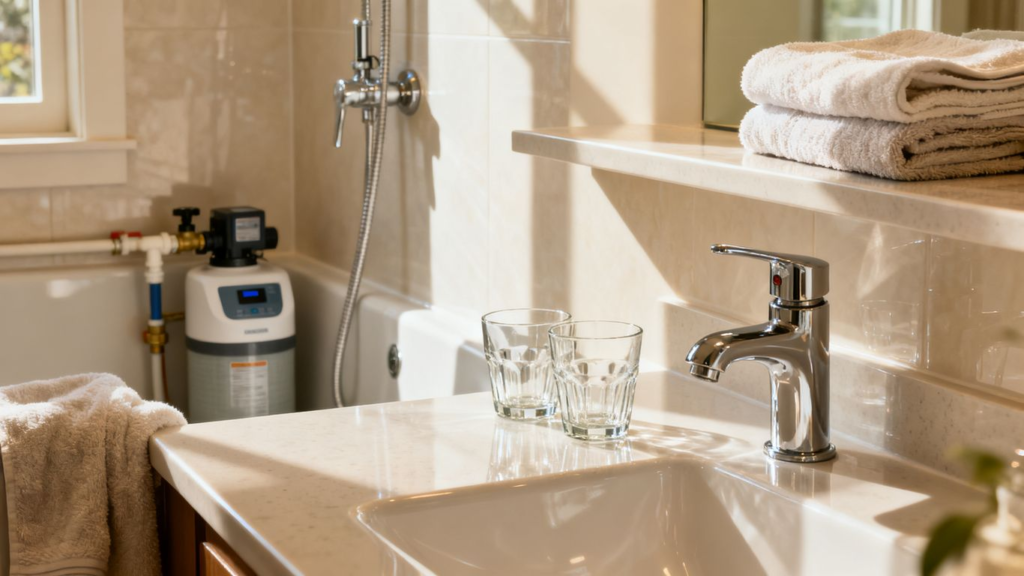
Softened water may also reduce the mineral load reaching water heaters and other appliances. That does not guarantee a particular lifespan or eliminate all maintenance, but it can help limit one source of buildup. The results depend on water hardness, system sizing, installation quality, and whether the unit is maintained properly.
There can be tradeoffs as well. Salt-based systems use salt and discharge wastewater during regeneration, and some households may need to consider sodium or potassium added through the exchange process. A balanced decision weighs those factors against the comfort, cleaning, and scale concerns present in the home.
Maintenance and Considerations
Water softeners are not install-and-forget appliances. Salt-based models need regular attention to the brine tank, and the control settings should reflect household water use and hardness. A system that is too small, poorly adjusted, or allowed to run out of salt may provide inconsistent results.
A basic maintenance routine usually includes several simple checks:
- Check the salt level before the brine tank runs empty.
- Look for salt bridging or hardened salt near the tank walls.
- Inspect the brine and drain lines for kinks, leaks, or blockages.
- Keep the control settings aligned with current water hardness and household use.
These checks do not replace professional service when a valve, resin bed, or connection needs attention. Evolve water softeners are specifically discussed with proper brine-tank salt levels as part of effective operation, a reminder that consumables and routine checks matter.
Water and salt consumption are also worth considering before installation. Regeneration sends water to a drain and uses brine to clean the resin, so local rules, available drainage, and environmental preferences may influence the decision. Ask an installer about bypass plumbing, power needs, placement, and what happens during a service interruption.
Is a Water Softener Right for You?
The most useful starting point is a water hardness test. Look for visible scale, recurring spots on dishes, soap that struggles to lather, or laundry that feels rough, but treat these signs as clues rather than proof. Testing can confirm the hardness level and reveal other water-quality issues that a softener will not address.
Household habits matter too. A larger family with frequent hot-water use may place more demand on a system than a one-person household, while renters may not be able to modify the plumbing. Consider the available installation space, drain access, salt handling, ongoing costs, and whether everyone in the home is comfortable with the chosen treatment method.
A softener is most compelling when hardness is high enough to create persistent scale or cleaning problems and the household is willing to maintain the equipment. It may be less appealing when symptoms are mild, space is limited, or the main concern is a contaminant that requires filtration rather than softening. Comparing test results with those practical constraints leads to a more useful purchase than choosing by appearance or marketing language alone.
Conclusion
Water softeners reduce hard-water problems by using ion exchange to remove calcium and magnesium, while salt-free conditioners take a different approach. Once you understand the treatment method, maintenance demands, and needs of your household, you can decide whether softening is a sensible investment rather than simply another appliance to add.
Frequently Asked Questions
What is hard water?
Hard water contains dissolved minerals, especially calcium and magnesium, picked up as water moves through soil and rock. The minerals are usually not a safety concern for ordinary use, but they can create scale and soap residue.
How does a water softener work?
A conventional softener passes hard water through resin beads that hold calcium and magnesium and exchange them for sodium or potassium ions. The resin is later cleaned during a regeneration cycle.
Does a water softener remove all contaminants?
No. A softener is designed to address hardness minerals, not every possible substance in a water supply. A water test can help identify whether additional treatment is needed.
What is regeneration?
Regeneration is the cleaning cycle that restores the resin’s exchange capacity. A brine solution flushes collected hardness minerals from the resin, and the wastewater is sent to a drain.
Do salt-free conditioners soften water?
Salt-free conditioners generally do not remove calcium and magnesium through ion exchange. They are intended to manage the way hardness minerals behave, so their results differ from those of a conventional softener.
How often does a water softener need maintenance?
Maintenance depends on the system, water hardness, and household use. Common tasks include checking salt, watching for bridging, inspecting lines, and arranging service when performance changes.
How can I tell whether my home needs a water softener?
Start with a water hardness test, then consider scale, spotting, soap performance, household size, installation space, and ongoing maintenance costs. Those details provide a clearer answer than any single symptom.