
Key Takeaways
Choosing a water softener starts with understanding your water, not with picking the most feature-heavy device.
- Hard water can leave scale on plumbing, heating elements, taps, skin, and hair.
- Ion exchange systems genuinely reduce hardness minerals, while conditioners mainly address scale behaviour.
- Dual tank systems can maintain softened water during regeneration.
- Magnetic and electronic descalers are different from systems that remove hardness minerals.
- Water testing, household usage, maintenance, and installation space should guide the final choice.
Why Consider a Water Softener in India?
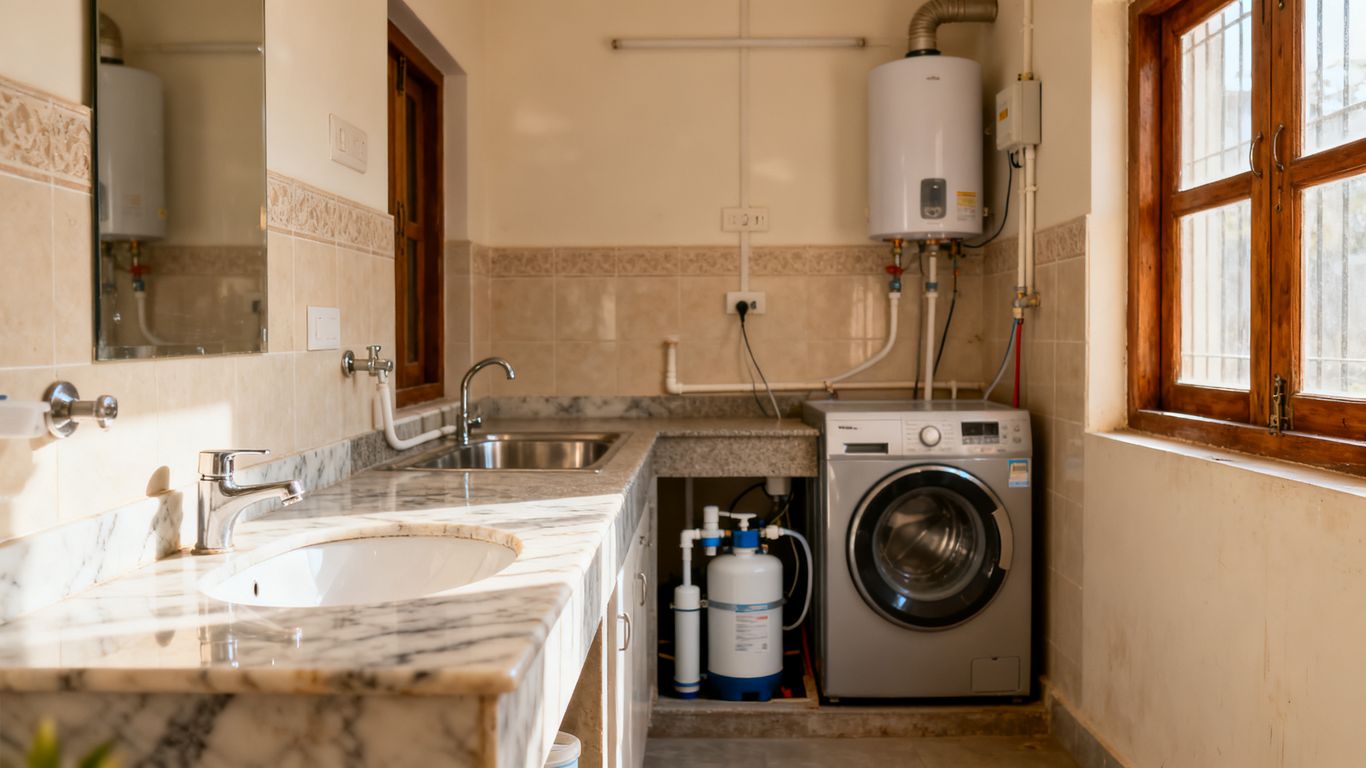
Hard water is common in many Indian homes, particularly where the supply comes from borewells or mineral-rich local sources. You may notice white deposits around taps, soap that struggles to lather, or a rough feeling after bathing. These signs do not necessarily mean the water is unsafe to drink, but they can make everyday cleaning and maintenance more difficult.
A softener can help manage the effects of calcium and magnesium in household water. The right system may reduce scale in plumbing and appliances, make washing more convenient, and improve the feel of bathwater. However, a water softener is not automatically a purifier, filter, or disinfecting system, so its purpose should be clear before you buy.
The focus keyword for this guide is Types of residential water softeners available in India. If you are comparing options, Promo Deals buying advice can help you separate the basic technologies and ask more useful questions about fit, upkeep, and running cost. A hard water guide can also provide useful background before you arrange a water test.
Understanding Hard Water and Its Effects
Hard water contains dissolved minerals that can react with soap and form deposits on surfaces. The effect varies by location and supply source, so a home connected to municipal water may face a different level of hardness from one using a borewell. Testing is more reliable than judging the water by appearance alone.
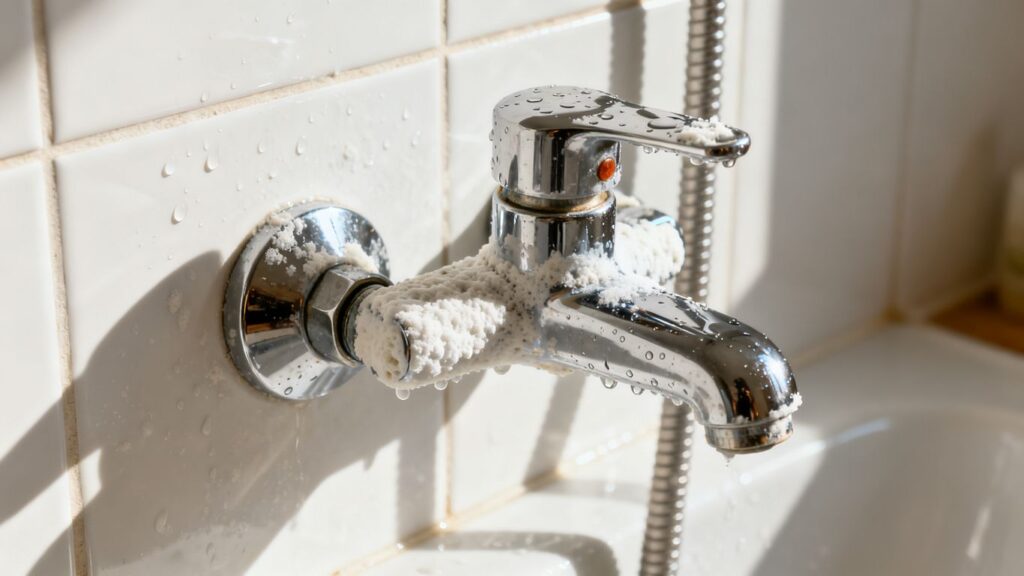
The consequences usually appear gradually rather than all at once. Scale can collect inside pipes and heating appliances, while soap residue may remain on bathroom surfaces and fabrics. The following sections separate the main household concerns so you can decide which ones matter most in your home.
Impact on Plumbing and Appliances
Mineral scale can accumulate on tap aerators, shower fittings, pipe interiors, geyser heating elements, washing machines, and dishwashers. Over time, deposits may restrict water flow or make heating and cleaning appliances work less efficiently. Regular descaling can help, but it treats the symptom after buildup has already occurred.
Before choosing equipment, consider the appliances that use the most hot water and the fixtures where deposits are most visible. Whole-house options are designed to treat incoming household water, while point-of-use systems focus on a particular bathroom, appliance, or outlet. Promo Deals whole-house softener guide is a useful comparison point when deciding how broad the installation needs to be.
Effects on Skin and Hair
Hard water can leave mineral residue and soap film on the skin and hair. Some people experience a dry or coated feeling after a shower, while hair may feel less smooth after washing. These effects differ from person to person and can also be influenced by soaps, shampoos, water temperature, and existing skin sensitivity.
A softener may make bathing and laundry feel more comfortable, but it should not be treated as a medical solution for skin or scalp conditions. If irritation persists, review personal-care products and speak with a qualified healthcare professional. The practical question for a buyer is whether the system addresses hardness at the point where the problem is being noticed.
Key Types of Residential Water Softeners
The types of residential water softeners available in India differ mainly in how they handle hardness minerals and scale. Some systems remove minerals from the water; others alter how deposits form without producing conventionally softened water. Capacity, regeneration, salt use, drainage, and installation space can matter as much as the headline technology.
No single type suits every Indian home. A small apartment with intermittent municipal supply has different needs from a large house using hard borewell water throughout the day. Promo Deals water softener options can sit alongside your own water report and installation assessment as you narrow the field.
Ion Exchange Water Softeners
Ion exchange softeners pass water through resin that exchanges hardness ions for sodium or another ion. This is the conventional approach when the goal is to reduce hardness minerals rather than simply manage visible scale. The resin eventually needs regeneration, which usually involves a salt solution, water, and a suitable drain connection.
These systems can be effective, but they require ongoing attention. Buyers should check salt consumption, regeneration frequency, control settings, resin capacity, wastewater handling, and the availability of local service. If sodium in softened water is a concern, ask whether the system is intended for all household outlets or only for bathing and cleaning.
Salt-Free Water Conditioners (Salt-Based Alternatives)
Salt-free conditioners are generally designed to reduce the tendency of minerals to form hard scale on surfaces rather than remove those minerals from the water. They may suit households that want less maintenance associated with salt handling or regeneration. Their performance can depend on water chemistry, flow rate, and the condition of existing plumbing.
The distinction between conditioning and softening deserves careful attention. A conditioner may not deliver the same change in hardness measurement as an ion exchange system. When comparing products, ask what the device changes, what it does not remove, and which test results the manufacturer uses to support its description.
Dual Tank Water Softeners
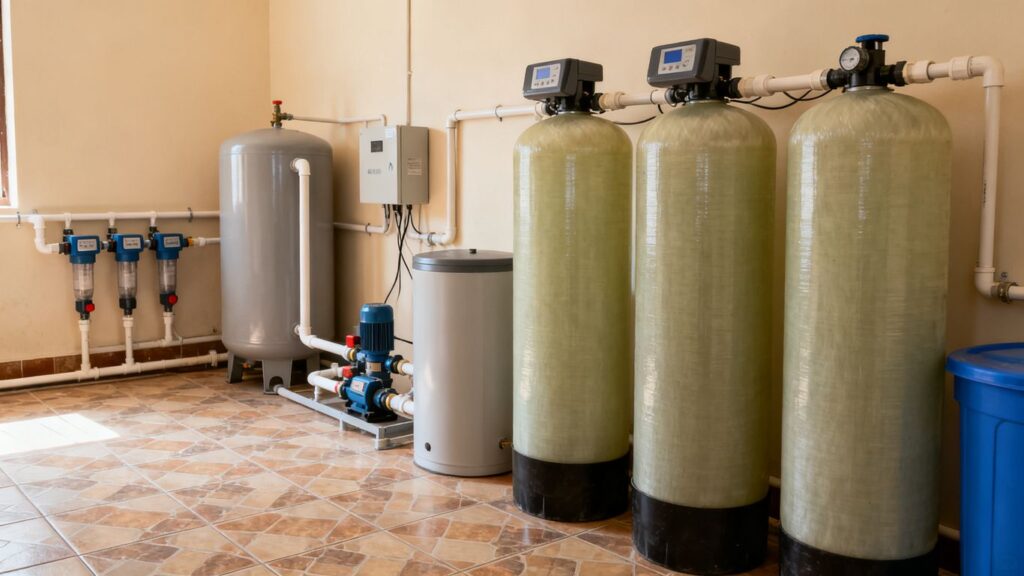
Dual tank softeners use two resin tanks so one can continue supplying treated water while the other regenerates. This arrangement is useful for homes that need softened water at different times of day and cannot easily pause usage during a regeneration cycle. It generally requires more space and a larger installation budget than a single-tank arrangement.
The value of a dual tank depends on demand rather than on the number of people alone. A large family with frequent washing, bathing, and cleaning may benefit more than a small household with modest consumption. Check the tank dimensions, control method, drain requirements, and service access before assuming that continuous availability is necessary.
Magnetic and Electronic Water Descalers
Magnetic and electronic descalers are intended to influence how mineral deposits behave as water passes through a treatment point. They do not work in the same way as ion exchange systems, and they generally do not remove hardness minerals from the water. Their appeal often lies in simpler installation and the absence of salt tanks or regeneration wastewater.
Because these devices are not equivalent to mineral-removing softeners, buyers should set expectations carefully. Look for clear information about the water conditions tested, the installation position, and the evidence behind the claimed result. For a broader comparison of softener system types, read the explanation alongside your own hardness test rather than relying on a device label alone.
Factors to Consider When Choosing a Water Softener in India
The best choice depends on the water entering your home, how much water the household uses, and what you want the system to accomplish. A device that is adequate for one bathroom may be undersized for a whole house. Installation constraints also matter, especially in apartments or utility areas with limited drainage and storage.
Start with measurable information and then compare the technologies. Promo Deals selection guide highlights the value of assessing hardness and usage before choosing capacity. That approach is more dependable than selecting a model solely because it has automatic controls or a compact cabinet.
Water Hardness Levels in Your Area
Arrange a water test or obtain a recent report from the relevant supplier. Hardness is commonly reported in mg/L as calcium carbonate, though sellers may use grains or other measures. Confirm the unit before comparing specifications, and check whether iron, sediment, or other water-quality issues could affect the equipment.
A practical assessment should include these checks:
- Test the actual supply used by the household.
- Record whether the source is municipal, borewell, tanker, or mixed.
- Check for iron, sediment, odour, or other issues beyond hardness.
- Ask how the chosen system handles regeneration and discharge.
These details help determine whether you need a hardness-removing softener, a scale conditioner, pre-filtration, or more than one treatment stage. They also give an installer enough information to recommend a sensible capacity instead of guessing from the neighbourhood alone.
Household Size and Water Consumption
Household size provides a starting point, but daily water use is the more useful measure. Count regular showers, laundry cycles, kitchen use, cleaning, and the number of occupants who may use water at the same time. A system that regenerates too frequently can waste resources, while one that is too small may allow hardness to pass through before its cycle is complete.
Use this comparison to frame the initial discussion with a supplier:
| Household pattern | Likely planning concern | Questions to ask |
|---|---|---|
| Small apartment | Limited space and modest demand | Can the unit fit and drain safely? |
| Medium family home | Variable daily consumption | What capacity and regeneration schedule are suitable? |
| Large household | High or overlapping demand | Is continuous softened water necessary? |
| Borewell-fed home | Higher or changing mineral load | Is pre-filtration or additional testing needed? |
The table is only a starting framework, not a substitute for sizing calculations. Compare rated capacity, peak flow, regeneration settings, salt or power requirements, warranty terms, and service availability. A realistic estimate of consumption will usually lead to a better long-term decision than choosing the largest unit available.
Conclusion
A water softener should match your water chemistry, household demand, available space, and willingness to maintain it. Ion exchange, salt-free conditioning, dual tank systems, and magnetic or electronic descalers serve different purposes, so the most suitable option is the one whose operation and limits fit your home. Test the water first, compare the total upkeep, and treat product claims as something to verify rather than assume.
Frequently Asked Questions
What is hard water?
Hard water contains dissolved minerals, mainly calcium and magnesium, that can leave scale and soap residue on household surfaces and fixtures.
Does a water softener purify drinking water?
Not necessarily. A softener is designed to address hardness, while purification, filtration, and disinfection require equipment intended for those specific purposes.
Which type removes hardness minerals?
Ion exchange systems are designed to reduce hardness minerals through an exchange process. Salt-free conditioners and descalers generally address scale behaviour rather than removing hardness in the same way.
Is a salt-free conditioner the same as a softener?
No. A salt-free conditioner may reduce the tendency for scale to form, but it may not produce the same reduction in measured hardness as an ion exchange softener.
Do all homes need a whole-house system?
No. The right coverage depends on where hard water causes problems and how much water the household uses. Some homes may need treatment at selected outlets instead.
How often does a softener need maintenance?
Maintenance depends on the technology, water chemistry, usage, and manufacturer instructions. It may include replenishing consumables, cleaning components, checking settings, and servicing the unit.
Should I test my water before buying a softener?
Yes. A water test helps identify hardness levels and other conditions that can affect sizing, treatment choice, installation, and ongoing performance.