
Key Takeaways
Buying online can make it easier to compare water softener types, capacity, pricing, and service terms before you commit.
- Test or confirm your local water hardness before choosing a system.
- Match the unit’s capacity and flow rate to your household needs.
- Compare ion exchange, salt-free conditioning, and RO-based options carefully.
- Read installation, regeneration, warranty, and maintenance details.
- Check seller credibility, reviews, delivery terms, and after-sales support.
Why Buy a Water Softener Online in India?
Online shopping gives you time to compare water softeners across specifications, prices, photographs, and customer feedback without visiting several stores. It is also a practical way to understand whether you need a point-of-use unit, a bathroom solution, or a system designed for broader household use. If you are searching for where to buy water softeners online in India, begin by identifying the water problem you want to address.
Hard water can leave mineral deposits on taps, shower fittings, bathroom surfaces, and heating appliances. A suitable softener may reduce the effects of hardness, but the right choice depends on the water entering your home, the number of users, and the amount of water used each day. Online product pages often make these details easier to place side by side.
There is also value in checking service coverage before ordering. Installation requirements, regeneration or replacement schedules, salt use, and warranty exclusions can affect the real cost over time. A lower purchase price is not always the lowest ownership cost, so treat delivery, setup, consumables, and support as part of the same buying decision.
Types of Water Softeners Available Online
Water softeners sold online are not all designed to work in the same way. Some reduce hardness minerals, while others condition water or combine softening with broader treatment. Knowing the basic categories will help you read product descriptions without relying only on marketing terms.
Ion Exchange Water Softeners
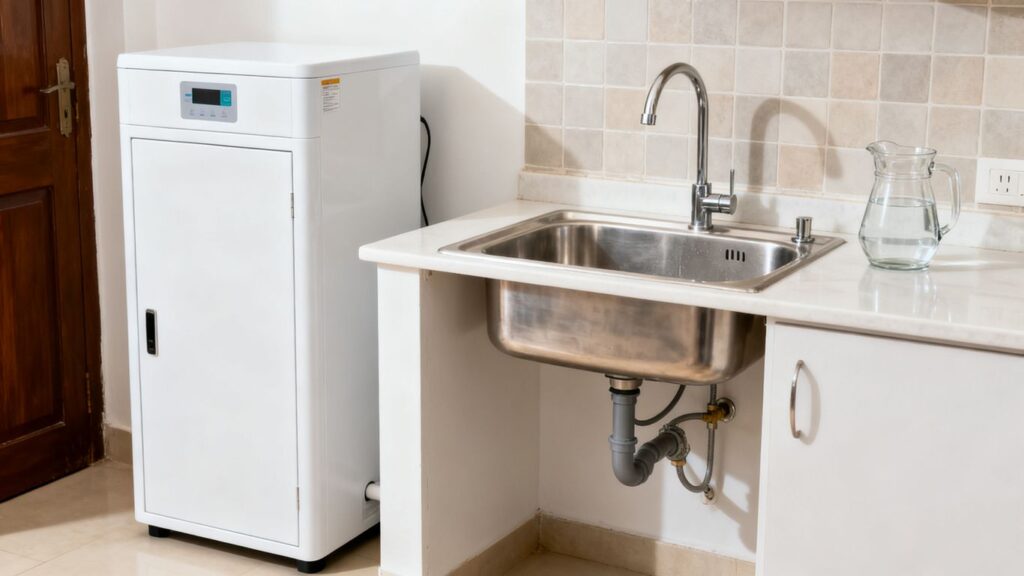
Ion exchange systems use a resin medium to exchange hardness minerals such as calcium and magnesium for other ions. They are commonly considered when the main concern is scale caused by hard water, particularly for homes with several bathrooms or appliances that heat water. These units generally require a regeneration process, so check how often regeneration occurs and what it uses.
A product page should clearly explain the resin capacity, regeneration method, salt requirements, and expected flow. Do not assume that a compact cabinet unit can serve an entire home simply because it is described as a water softener. The plumbing arrangement and daily demand matter just as much as the headline specification.
Salt-Free Water Conditioners
Salt-free conditioners are intended to condition hardness rather than remove hardness minerals in the same way as an ion exchange softener. They may suit shoppers who want to avoid adding salt or managing a brine cycle, but their performance and purpose should be understood before purchase. Read the technical description carefully instead of treating “salt-free” as a universal substitute for softening.
These products can be relevant where scale management is the priority and the household does not need a conventional softened-water output. Ask whether the unit is suitable for your water source, plumbing layout, and intended point of installation. If the listing is vague about operating conditions, contact the seller before placing the order.
Reverse Osmosis (RO) Systems with Softening Capabilities
Some RO systems include softening capabilities as part of a wider water-treatment arrangement. They should be assessed differently from whole-house softeners because an RO unit may be designed for a particular outlet or use rather than every water line in the home. Look for clear information about treated-water output, installation point, storage, and filter replacement.
A short demonstration can help explain the difference between softening and filtration, especially when a listing combines several treatment stages.
Use the video as a supplement, not a replacement for the specification sheet. The product’s stated capacity, flow, maintenance needs, and suitability for your water should remain the deciding factors.
Key Factors to Consider When Buying Online
A water softener should be sized around the water entering your home and the way your household uses it. Product photographs and discounts can be useful, but they do not tell you whether the unit will fit your plumbing or deliver enough treated water. Make a short checklist before comparing listings.
Water Hardness Level in Your Area
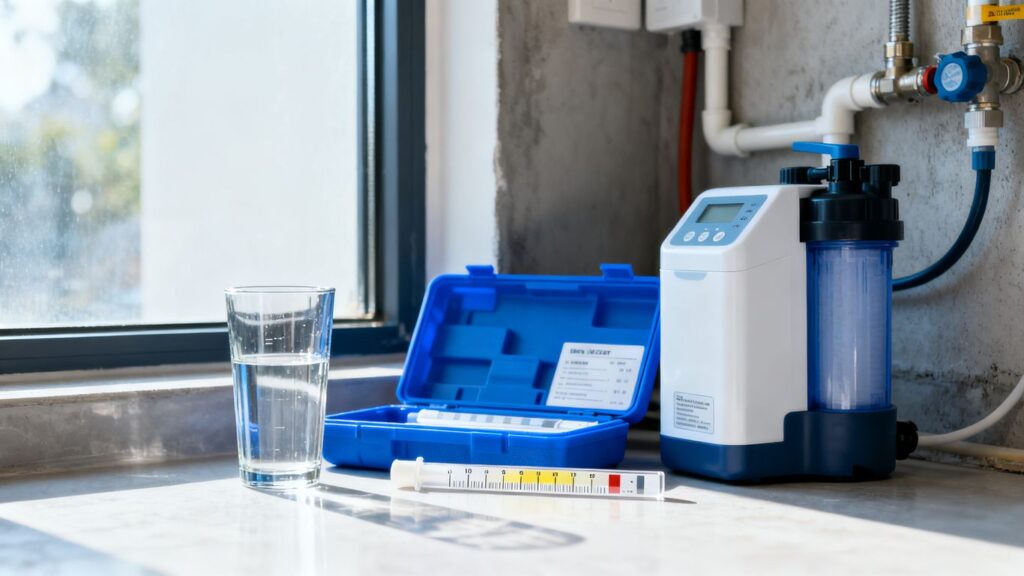
Start by finding out how hard your water is. You can use a home test kit, ask your local supplier, or review a recent water report when one is available. Borewell water and municipal supplies can vary considerably, even between nearby homes, so do not choose a capacity based only on a neighbour’s recommendation.
Once you have a hardness reading, record the number of residents and the approximate daily water use. These details will help you compare the seller’s stated treatment capacity with your actual needs.
- Test water from the inlet that the softener will actually serve.
- Record the number of people and bathrooms in the home.
- Check whether the unit is intended for a single outlet or multiple fixtures.
- Ask how hardness affects regeneration frequency and running costs.
This simple list prevents a common mistake: buying a unit for an imagined average household rather than your own water conditions. If the listing does not explain how its capacity relates to hardness, request clarification before ordering.
Capacity and Flow Rate
Capacity indicates how much water a system can treat between regeneration cycles or servicing intervals, while flow rate indicates how quickly water can pass through it. Both figures matter. A unit with adequate capacity but a weak flow rate may feel inadequate when several fixtures operate together.
Compare the seller’s figures with peak use, not just average use. The Whole House Water Softener collection, for example, is presented as a whole-home approach for addressing mineral buildup and protecting plumbing and appliances; that makes installation scope and household demand especially relevant when assessing a listing.
| Specification | What it helps you assess | What to verify online |
|---|---|---|
| Treatment capacity | How much water can be handled between cycles | Stated capacity and test conditions |
| Flow rate | Whether several outlets can run comfortably | Service flow and peak flow figures |
| Connection size | Whether the unit suits existing plumbing | Inlet, outlet, and drain requirements |
| Physical dimensions | Whether the installation area is practical | Height, width, depth, and access space |
The table is a starting point rather than a substitute for sizing advice. Confirm the figures with the seller, particularly if the unit will serve a large home, multiple bathrooms, or appliances with high water demand.
Brand Reputation and Reviews
Reviews are most useful when they describe installation, noise, regeneration, delivery, and service rather than simply repeating that the water feels better. Look for patterns across several buyers and give more weight to reviews that explain the home size and water source. A single enthusiastic comment cannot establish suitability for every household.
The Eureka Forbes Aquaguard range is described as using ion-exchange and ionic-transfer technologies, with features such as certified resins and high-grade regeneration media. Those are the kinds of documented details worth comparing with other listings, alongside independent feedback about installation and support.
Be cautious with unexplained performance promises. Check whether a claim applies to a particular model, a specific customer’s experience, or the range as a whole. The seller should be able to provide a model number, technical sheet, and clear terms rather than relying on a generic product photograph.
Warranty and After-Sales Service
A water softener is connected to plumbing and may need periodic attention, so after-sales support deserves the same scrutiny as the purchase price. Confirm who installs the unit, whether installation is included, what the warranty covers, and which parts or consumables are excluded. Also check whether service is available in your city.
Read the return policy for damaged packages, incorrect models, and installation-related concerns. Keep the invoice, serial number, installation record, and service contacts together after delivery. These small steps make future support much less frustrating.
Top Online Platforms to Buy Water Softeners in India
The best place to buy depends on the kind of comparison you need. A manufacturer or specialist seller may provide more detailed specifications and installation guidance, while a broad marketplace may make price and review comparisons simpler. In either case, read the full listing rather than relying on the product title.
Specialist water-treatment sellers can be useful when you need advice on hardness, plumbing, or whole-home sizing. For example, Pearl Water presents industrial and domestic water softeners with automatic control and regeneration, so shoppers considering those features should still confirm the exact model and its installation requirements before ordering.
A sensible online comparison should include at least three listings with similar capacity and intended use. Check shipping, installation, taxes, consumables, and service terms together; otherwise, two apparently similar prices may conceal very different ownership costs. Where possible, speak with the seller about your water test result and inlet arrangement before checkout.
Installation and Maintenance Tips
Installation is not merely a matter of placing the cabinet beside a tap. The unit may need an inlet and outlet connection, a drain line, an electrical point, or space for salt and service access, depending on its design. Confirm the requirements before delivery so the installation area is ready.
If the product is intended for a single bathroom or appliance, ensure it is connected to the correct line. A whole-home unit requires a different plumbing plan and may need professional installation. Do not modify the connections yourself if doing so could affect safety, water pressure, or the warranty.
After installation, follow the manual for regeneration, salt replenishment, filter changes, and cleaning. Keep a simple record of service dates and watch for changes in flow, taste, leaks, or visible scale. Regular checks are usually easier and cheaper than waiting for a performance problem to become obvious.
Conclusion
Choosing where to buy water softeners online in India becomes easier when you begin with water hardness, household demand, installation scope, and long-term service rather than price alone. Compare the technology and specifications carefully, verify the seller’s support, and select a system that fits your actual plumbing and usage.
Frequently Asked Questions
What is a water softener?
A water softener is a treatment device designed to address hardness in water, commonly associated with minerals such as calcium and magnesium. Different systems use different processes, so the product description should explain what the unit treats and where it should be installed.
How do I know if my home has hard water?
Common signs include scale on taps and shower fittings, deposits on bathroom surfaces, and changes in how soap lathers. A water-hardness test provides a more reliable basis for choosing equipment than visual signs alone.
Should I choose an ion exchange softener or a salt-free conditioner?
Choose based on whether you need hardness reduction or primarily want scale conditioning without a salt-based regeneration process. Compare the stated purpose, operating requirements, and suitability for your water before deciding.
What capacity should a household water softener have?
Capacity depends on water hardness, the number of people, daily consumption, and the number of outlets served. Use the manufacturer’s sizing guidance and ask the seller to confirm the model against your household details.
Can a water softener be installed in an apartment?
It can be possible, but the answer depends on available plumbing, drainage, space, electrical access, and permission from the building or housing association. A site assessment is sensible before ordering a larger unit.
How often does a water softener need maintenance?
Maintenance varies by technology and water quality. Salt-based systems may need salt replenishment and regeneration-related attention, while other systems may require filter or media replacement. Follow the model-specific manual.
What should I check before ordering online?
Confirm the model, treatment scope, capacity, flow rate, dimensions, installation requirements, warranty, return policy, delivery terms, and service availability. Also check whether salt, filters, or other recurring supplies are included or sold separately.