
Key Takeaways
A whole house water treatment system works at the point where water enters the home, treating it before it reaches individual fixtures. The right setup depends on the source water, the contaminants present, household demand, and the maintenance you are prepared to handle.
- Whole house systems treat water at the main entry point.
- Different stages target sediment, chlorine, hardness, metals, or microorganisms.
- A water test should guide equipment selection.
- Flow rate and pressure matter as much as filter type.
- Point-of-use treatment may still be useful for specific drinking water concerns.
- How a whole house water treatment system works
- The main stages of whole house water treatment
- Types of whole house water systems
- How to choose a system for your home
- How whole house systems are installed
- How to maintain a whole house water treatment system
- Benefits and limitations of whole house water treatment
- Conclusion
- Frequently Asked Questions
How a whole house water treatment system works
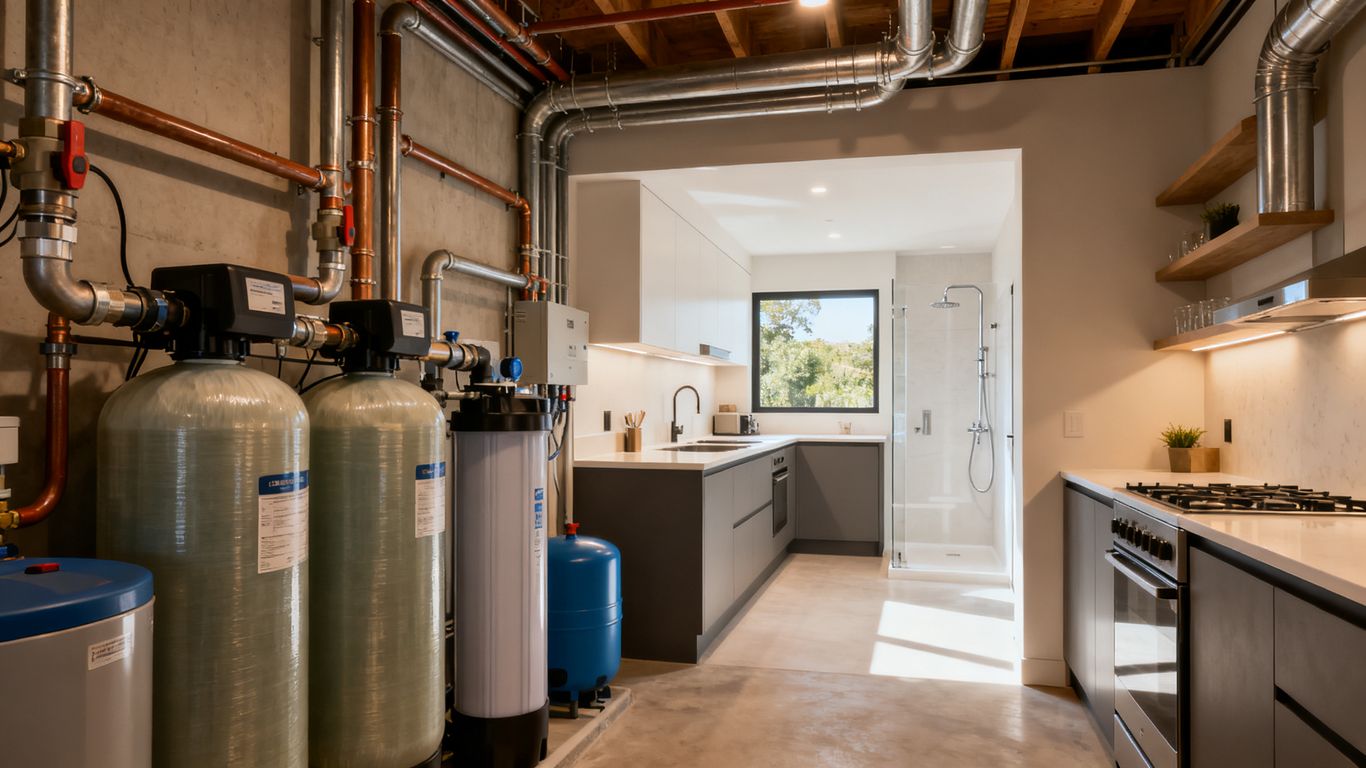
A whole house water treatment system is installed on the incoming water line so treated water can travel throughout the house. Rather than filtering only one faucet, it addresses water before it reaches showers, sinks, washing machines, and appliances. If you have been asking, “How does a whole house water treatment system work?”, the short answer is that water passes through one or more treatment stages at the point of entry.
Where whole house treatment begins in the plumbing system
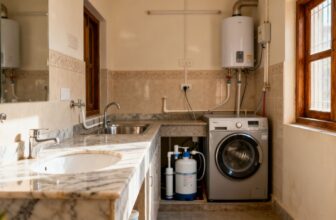
Treatment normally begins after the main supply line enters the property and before the plumbing branches toward individual fixtures. On a municipal supply, this is usually near the point where the service line reaches the house. For a private well, the system is typically positioned after the pressure tank and related well equipment, subject to the plumbing layout.
The location needs enough room for the tanks, cartridges, connections, and future servicing. A nearby shutoff is useful because it allows the water supply to be isolated without turning off water to the entire neighborhood or troubleshooting an inaccessible valve.
How water moves through the filtration stages
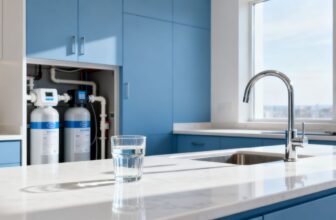
Water pressure pushes the supply through the treatment equipment in a planned sequence. A sediment stage may come first to catch larger particles, while carbon, softening, specialty media, or ultraviolet treatment follows according to the water test and system design.
Each stage has a particular job. A prefilter can protect later media from clogging, while a final treatment stage may address a concern that earlier filters cannot handle. The system should be sized so normal household use does not cause a sharp pressure drop when several fixtures run at once.
The difference between point-of-entry and point-of-use treatment
Point-of-entry treatment works on the water entering the home, so it can affect every connected fixture. Point-of-use treatment is installed at one location, such as a kitchen faucet, and is often chosen when only drinking or cooking water needs additional treatment.
A whole house setup makes sense when the concern involves bathing, laundry, odors, staining, or plumbing throughout the property. A kitchen filter may be more practical when the concern is limited to one tap or when a particular drinking water standard calls for a separate final stage.
What happens after treated water reaches your fixtures
Once water leaves the treatment equipment, it flows through the existing household plumbing just as untreated water would. The system does not usually change how fixtures operate, although pressure, flow, taste, odor, and visible staining may change when the targeted issue is reduced.
Keep expectations tied to the equipment’s tested purpose. A filter aimed at sediment is not automatically a solution for dissolved minerals, and a carbon stage is not a substitute for disinfection when microorganisms are the concern. Those distinctions make a water test first a sensible starting point.
The main stages of whole house water treatment
Whole house treatment is not one universal process. Some homes need a single filter, while others need several stages arranged to address different conditions in sequence. The following stages are common examples, but not every home needs every one.
Sediment filtration for sand, dirt, and rust
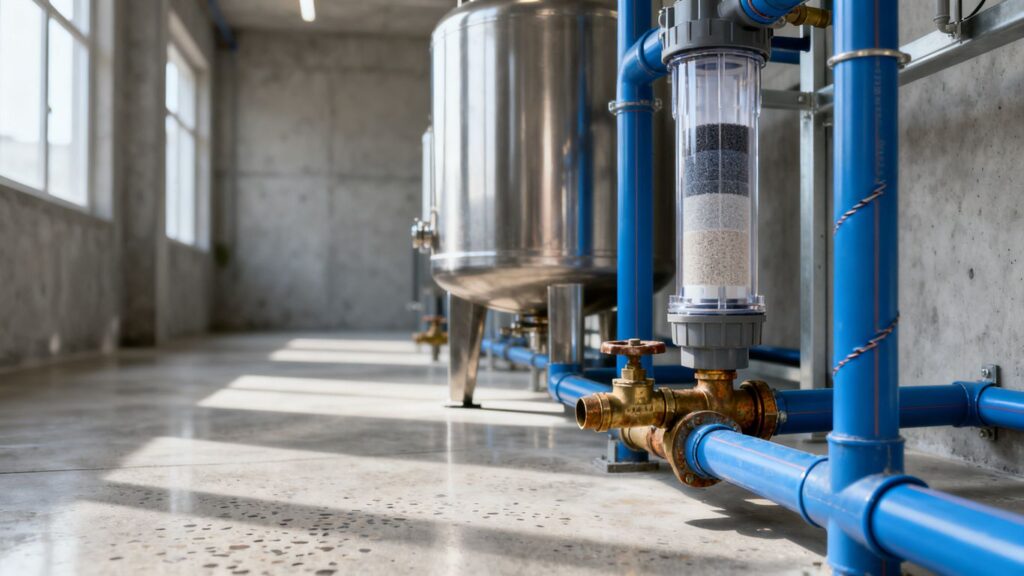
Sediment filters capture suspended particles such as sand, dirt, silt, and rust flakes. They are especially useful when incoming water is visibly cloudy or when debris could clog valves and downstream cartridges.
These filters have a finite capacity. As particles accumulate, pressure may fall and water flow can become less consistent. A transparent housing or pressure gauge can make changes easier to notice, although replacement timing still depends on the water source and the filter’s design.
Carbon filtration for chlorine, odors, and organic compounds
Activated carbon is commonly used to reduce chlorine and improve taste and odor. Depending on the media and its certification, it may also target certain organic compounds. The exact contaminants addressed should be confirmed in the product documentation rather than assumed from the word “carbon.”
The Aquasana Whole House Filters page describes systems installed at the main water line and lists sediment prefiltration and activated carbon as parts of its multi-stage approach. That is a useful illustration of how separate media can perform different jobs without treating all filtration as interchangeable.
Water softening for hardness minerals
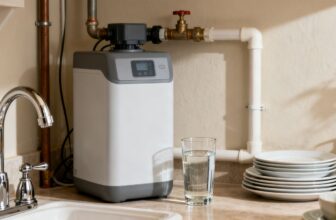
Water softeners are designed for hardness minerals, mainly calcium and magnesium, which can contribute to scale on fixtures, heaters, and appliances. They generally use an exchange process and require a regeneration cycle to restore the treatment media.
Hard water is not the same as every kind of cloudy water or residue. Testing helps distinguish hardness from sediment, iron, or other dissolved substances before a homeowner commits to a softener. Salt use, regeneration frequency, and drain requirements should be part of the comparison.
Specialty filters for iron, sulfur, and other contaminants
Specialty media may be selected for iron, manganese, sulfur odors, pH conditions, or other water-quality problems. The correct choice depends on the contaminant’s concentration and chemical form, as well as the flow rate and contact time the treatment requires.
A system built for one problem should not be presented as a universal purifier. For example, equipment that addresses iron staining may not address microorganisms or every dissolved chemical. Laboratory results and manufacturer performance data provide a more reliable basis for matching media to the water.
Ultraviolet disinfection for microorganisms
Ultraviolet systems expose flowing water to UV light to help control certain microorganisms. They are often considered for private well supplies, where water quality can change and routine testing is especially important.
UV treatment does not remove sediment or dissolved chemicals, and cloudy water can interfere with its performance. That is why a sediment prefilter is commonly used ahead of the UV chamber. The lamp and sleeve also need regular attention so the system can deliver the intended exposure.
Types of whole house water systems
The phrase “whole house system” describes where treatment occurs, not one particular technology. A filter, softener, reverse osmosis unit, UV chamber, or combination of stages can all be part of a whole-home setup. Choosing among them starts with the problem you are trying to solve.
Whole house filter systems for particulate and taste concerns
A whole house filter is often selected when the main concerns are suspended particles, chlorine taste, or household odors. These systems can be compact compared with larger treatment trains, but cartridge life and contaminant claims vary considerably.
Read the performance data carefully. A filter may reduce a named contaminant under specified conditions without removing every substance in the water. The home water filtration guide offers a broader way to compare whole-home and point-of-use approaches before narrowing down equipment.
Water softeners for hard water problems
A water softener is the more direct choice when a test confirms hardness and scale is affecting fixtures or appliances. It is not generally a sediment filter, disinfectant, or catch-all chemical treatment system.
Softener sizing should reflect both hardness and household water use. An undersized unit may regenerate too often, while an oversized unit can add unnecessary expense. Consider the resin capacity, salt consumption, regeneration controls, and available drain connection together.
Reverse osmosis and when it is used
Reverse osmosis uses a membrane and pressure to treat water, most commonly at a drinking water tap rather than at every fixture. It can be useful when a household wants a more targeted treatment step for specific dissolved contaminants supported by the unit’s documentation.
Because reverse osmosis produces a treated stream and a reject stream, it can require more water and storage space than a simple cartridge filter. A point-of-use installation may therefore be a better fit when the concern is limited to drinking and cooking water.
Ultraviolet systems for private well water
UV systems are a common consideration for private wells when testing indicates a microorganism concern. They work without adding a disinfectant, but they depend on clear water, adequate flow control, and a lamp that is operating within its service life.
Well owners should continue periodic testing even after installing treatment. A UV lamp cannot correct a failed pressure switch, a dirty sleeve, or a separate chemical problem. It is one component in a water management plan, not a replacement for checking the source.
Combination systems for multiple water quality issues
Combination systems place different treatments in sequence to address more than one confirmed issue. A home might need sediment filtration followed by carbon, softening, specialty media, or UV treatment, depending on its source and test results.
The Express Water Whole House Systems page describes systems using specialized cartridges for concerns including heavy metals, chlorine, odors, and sediment, with options intended for different treatment needs. The practical lesson is to compare the specified target contaminants rather than choosing by the number of stages alone.
How to choose a system for your home
Selecting equipment is less about finding the longest filter list and more about matching treatment to actual water conditions. Municipal water can change when a utility adjusts its treatment, while well water can vary with weather, seasons, and groundwater conditions. Start with evidence, then consider the home’s plumbing and daily habits.
Testing municipal or well water before buying equipment
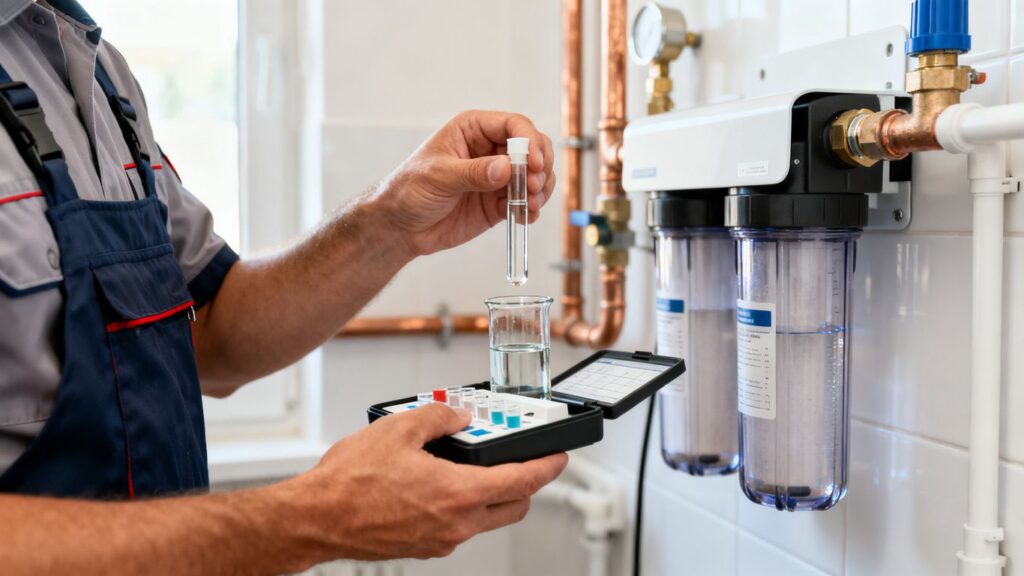
A current water test identifies what is present and gives you a baseline for judging later performance. Municipal customers can begin with the utility’s annual water quality report, but a home test may still be useful because conditions can change between the treatment plant and the tap.
Private well owners should use a qualified laboratory and follow local recommendations for routine testing. Test results should include the contaminants relevant to the household’s concerns, not just a general hardness reading. Sampling instructions matter because a contaminated container or poor collection method can distort the result.
Matching treatment methods to specific contaminants
Different contaminants call for different technologies, and some require pretreatment before the main stage can work properly. This simple comparison helps show why a single “best” system does not exist:
| Water concern | Common treatment category | Selection detail |
|---|---|---|
| Sand, dirt, or rust particles | Sediment filtration | Check micron rating and cartridge capacity |
| Chlorine taste or odor | Activated carbon | Confirm the named contaminant and rated capacity |
| Calcium and magnesium hardness | Water softening | Compare resin capacity and regeneration needs |
| Certain well-water microorganisms | Ultraviolet disinfection | Provide clear water and maintain the lamp |
The table is a starting point, not a substitute for test results. Concentration, pH, flow rate, and certification can change which equipment is appropriate, so match the treatment claim to the actual report.
Comparing flow rate, pressure, and household demand
A system must supply enough water when the household is busy. Count the fixtures that may run together, including showers, toilets refilling, washing machines, dishwashers, and outdoor taps. Then compare the system’s service flow rate with that likely demand.
Pressure loss is another practical concern. A filter that performs well at a low flow may feel restrictive when several fixtures operate at once. Ask how pressure drop changes as media loads with sediment, and make sure the home’s incoming pressure falls within the equipment’s operating range.
Evaluating system capacity and water usage
Capacity can refer to gallons treated, contaminant-loading capacity, softener resin capacity, or the service life of a component. These measures are not interchangeable. A large headline capacity does not tell you how often a cartridge will need replacement under your household’s specific water conditions.
Softener regeneration and reverse osmosis reject water also affect consumption. A system with a lower purchase price may cost more over time if it uses more salt, electricity, replacement media, or water. Calculate recurring costs using realistic household demand rather than an idealized estimate.
Considering installation space and ongoing operating costs
Measure the available area before buying tanks or housings. Leave room to remove cartridges, add salt, access electrical components, and operate bypass valves. A floor drain or suitable drain route may also be required for regeneration, backwashing, or reverse osmosis reject water.
The water filtration science overview is helpful when comparing concepts such as pore size and certification. Those details do not replace a site assessment, but they can make product specifications easier to interpret and reduce the chance of buying equipment for a problem it was not designed to address.
How whole house systems are installed
Installation changes the home’s main water path, so the sequence and location deserve careful planning. The equipment needs to be accessible, protected from freezing, and connected in a direction that follows the manufacturer’s instructions. Before cutting pipe, map the incoming line, existing shutoffs, drain points, and electrical outlets.
Choosing the best location near the main water line
The best location is usually close to the incoming supply and before the line branches to the home’s fixtures. It should have a stable, level base and enough clearance for filter changes or tank servicing. Avoid placing equipment where a small leak could damage finished flooring or stored belongings.
For well systems, the order relative to the pressure tank, pump controls, and other treatment equipment matters. The installer should verify the plumbing arrangement rather than assuming every well house follows the same layout.
Adding prefilters, bypass valves, and shutoff valves
A prefilter can protect sensitive downstream equipment from larger particles. Shutoff valves make maintenance safer, while a bypass valve lets the household use water temporarily if the treatment equipment needs service or develops a problem.
Valves should be labeled clearly for anyone who may need to operate them. The arrangement should also allow the filter housing or tank to be isolated without shutting down unrelated plumbing. Good access often saves more frustration than a small amount of additional installation space.
Connecting the system to plumbing and drainage
The incoming line is cut and routed through the treatment stages before returning to the home’s distribution plumbing. Connections must match the pipe size, flow direction, pressure rating, and local code requirements. Softener and backwash systems may need an air-gapped drain connection, while reverse osmosis units have their own reject-water requirements.
After installation, the system should be flushed according to its instructions. Check every joint while the line is pressurized, then inspect again after the equipment has operated through its first cycle. A slow leak can be easy to miss during a quick start-up.
Managing electrical requirements for advanced equipment
Some systems need electricity for controls, pumps, alarms, or UV lamps. The outlet should be appropriately located and protected from water exposure. Extension cords are generally a poor substitute for a properly planned connection in a damp utility area.
Electrical work may fall under local rules that differ from ordinary plumbing repairs. Confirm the equipment’s voltage and installation requirements before work begins, and use a qualified electrician when the project involves new wiring or circuit changes.
When professional installation is the safer option
Professional installation is sensible when the main line is difficult to access, the system requires drainage or electrical work, or local plumbing codes are complicated. It is also the safer choice when the home has unusual pressure conditions, older piping, or several treatment devices that must work in a precise order.
A qualified installer can verify flow direction, test for leaks, and explain the bypass and maintenance routine. Even when a homeowner handles a simple cartridge filter, professional advice can prevent an incorrectly sized or poorly supported system from becoming a recurring plumbing problem.
How to maintain a whole house water treatment system
Maintenance keeps treatment performance predictable and helps reveal problems before they affect the whole home. The schedule depends on water quality, water use, equipment type, and the manufacturer’s instructions. Keep a simple record of cartridge changes, salt additions, lamp replacements, pressure readings, and water tests.
Replacing sediment and carbon filter cartridges
Sediment and carbon cartridges should be replaced when their service interval ends, pressure drops, flow weakens, or taste and odor return. Waiting until a cartridge is completely blocked can put extra strain on the plumbing and may reduce the performance of later stages.
Turn off the supply and relieve pressure before opening a housing. Clean and inspect the O-ring, seat the replacement cartridge correctly, and flush the new media as directed. If the housing is difficult to open or shows damage, replacing the housing may be safer than forcing it.
Regenerating and replenishing water softener media
A softener regenerates its exchange media on a schedule controlled by time, water use, or measured capacity. The brine tank needs the correct salt or regeneration material, and the unit must have a working drain connection for the regeneration cycle.
Check for bridging or hardened salt, and do not assume an empty-looking area means the tank needs to be filled immediately. Follow the equipment’s fill level guidance. If hardness returns despite regular regeneration, the cause may be incorrect programming, depleted media, a valve problem, or a change in the source water.
Cleaning ultraviolet lamps and treatment chambers
UV lamps usually need periodic replacement even when they still appear to be lit. Mineral deposits on the quartz sleeve can block UV transmission, so the sleeve and chamber require cleaning at the recommended interval.
Disconnect power before servicing the lamp. Use the correct replacement parts and avoid touching the lamp surface with bare hands when the instructions warn against it. A UV system’s indicator light alone does not confirm that the water has received the intended dose.
Checking water pressure, leaks, and performance
Routine checks should include pressure before and after treatment, visible leaks, unusual sounds, and changes in taste, smell, staining, or flow. A pressure gauge can reveal a clogged prefilter before the problem becomes obvious at a shower or faucet.
A useful maintenance check can be organized around a few recurring observations:
- Inspect housings, tanks, valves, and connections for leaks.
- Compare current pressure with the normal household reading.
- Confirm that automatic cycles, alarms, and indicator lights operate.
- Look for changes in color, odor, taste, or fixture staining.
These checks are quick, but they are not a replacement for laboratory testing or professional service. A new odor or sudden pressure change deserves attention even if the scheduled maintenance date has not arrived.
Knowing when to retest water and replace filter media
Retest when the source changes, a well is repaired, flooding occurs, a treatment stage is altered, or the water’s appearance and taste change unexpectedly. Retesting is also useful when a cartridge or media bed reaches its rated capacity rather than relying only on calendar intervals.
Replacement timing should follow the equipment’s instructions and actual household conditions. Keep records so you can see whether a filter is lasting as expected. An unexpectedly short service life may signal unusually high sediment, a source-water change, or a system that is too small for the home.
Benefits and limitations of whole house water treatment
Whole house treatment can make water quality more consistent across the property, but it is not automatically the right answer to every concern. Its benefits are strongest when the system is matched to a confirmed problem and maintained on schedule. Its limitations become clearer when homeowners expect one device to remove every possible contaminant.
Improving water quality at every tap
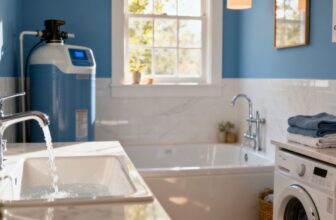
Because treatment occurs before the plumbing branches, a correctly selected system can affect water used for drinking, cooking, bathing, laundry, and cleaning. That can make chlorine odor, sediment, or hardness less noticeable throughout the home instead of at only one faucet.
The result depends on the treatment stage and the incoming water. A whole house filter designed for taste and odor will not necessarily address a dissolved contaminant or a microorganism concern. Product labels and performance data should define the expected improvement.
Protecting plumbing, appliances, and fixtures
Reducing sediment can help limit clogging, while reducing hardness can help control scale on fixtures and water-using appliances. Cleaner incoming water may also reduce the visible residue that makes showers, sinks, and glassware harder to maintain.
Protection is not absolute. Existing scale does not always disappear, and equipment itself can create a pressure or leak issue when neglected. Regular inspection and timely media replacement are part of the benefit, not separate from it.
Understanding what a system cannot remove
No single whole house system removes every contaminant. Carbon, softening, specialty media, UV, and reverse osmosis each have defined purposes and operating limits. Some concerns require a certified treatment method, a different installation point, or ongoing source control.
Ask whether the system has been tested for the exact contaminant, concentration, and operating conditions involved. A broad phrase such as “clean water” is not enough to establish a performance claim. If health-related contaminants are present, consult qualified water professionals and use reliable laboratory testing.
Balancing treatment performance with water waste
Most filtration stages produce little or no reject water, but softener regeneration, backwashing, and reverse osmosis can send water to a drain. Electricity, salt, replacement cartridges, and disposal also contribute to the system’s operating footprint.
Compare those costs with the treatment need and household demand. Efficient controls, appropriate sizing, and regular maintenance can reduce unnecessary cycles. The least wasteful system is not always the one with the fewest stages; it is the one that treats the actual problem without adding unneeded processes.
Recognizing when additional under-sink treatment is needed
A whole house system may improve general water quality while leaving one drinking water concern that calls for a final point-of-use stage. This is common when the household wants highly targeted treatment at the kitchen tap rather than applying that process to every gallon used for bathing or laundry.
Under-sink treatment also provides a useful option when the main system’s certified scope does not include a particular contaminant. Keep the two systems coordinated, replace both sets of media on schedule, and avoid assuming that whole-home treatment makes every additional filter unnecessary.
Conclusion
A whole house water treatment system works by treating incoming water before it travels through the home, but the equipment should be chosen from test results, flow requirements, installation conditions, and realistic maintenance needs. Understanding those factors makes it easier to separate a useful treatment plan from an oversized system that promises more than it can deliver.
Frequently Asked Questions
What is a whole house water treatment system?
It is equipment installed on the home’s incoming water line to treat water before it reaches connected fixtures. The treatment may involve filtration, softening, specialty media, ultraviolet disinfection, or a combination of technologies.
Does a whole house filter treat every faucet?
Generally, yes, when it is installed at the point of entry for the home’s water supply. Separate plumbing branches or untreated outdoor lines may not be included, so the installation layout should be checked.
Do I need a water test before choosing a system?
A water test is strongly recommended because treatment methods target different contaminants. Testing can prevent you from buying a softener for a sediment problem or a carbon filter for a concern it is not designed to address.
Can a whole house system remove hard water?
A water softener is commonly used to reduce hardness minerals such as calcium and magnesium. Standard sediment or carbon filters generally do not perform the same function, so equipment type matters.
Are whole house systems suitable for well water?
They can be, but private well water should be tested because it may contain sediment, hardness, iron, sulfur, or microorganisms. The treatment sequence should be selected from those results and maintained as source conditions change.
How often do whole house filters need maintenance?
There is no single interval for every home. Cartridge life and service needs depend on water quality, household use, filter capacity, regeneration cycles, and the manufacturer’s instructions.
Is under-sink filtration still useful with whole house treatment?
It can be useful when drinking water needs a specific additional treatment that the whole house equipment does not provide. Point-of-use treatment also avoids applying a specialized process to water used for bathing, laundry, or cleaning.