
Key Takeaways
Drip coffee and French press brewing can both make excellent coffee, but they suit different routines and preferences.
- Drip coffee is convenient for repeatable, larger batches.
- French press coffee offers a fuller body and more hands-on control.
- Paper filters usually produce a cleaner cup with less sediment.
- French press brewing needs attention to grind, timing, and pressing.
- Your ideal choice depends on taste, schedule, serving size, and budget.
Understanding the Basics: How Each Brewer Works
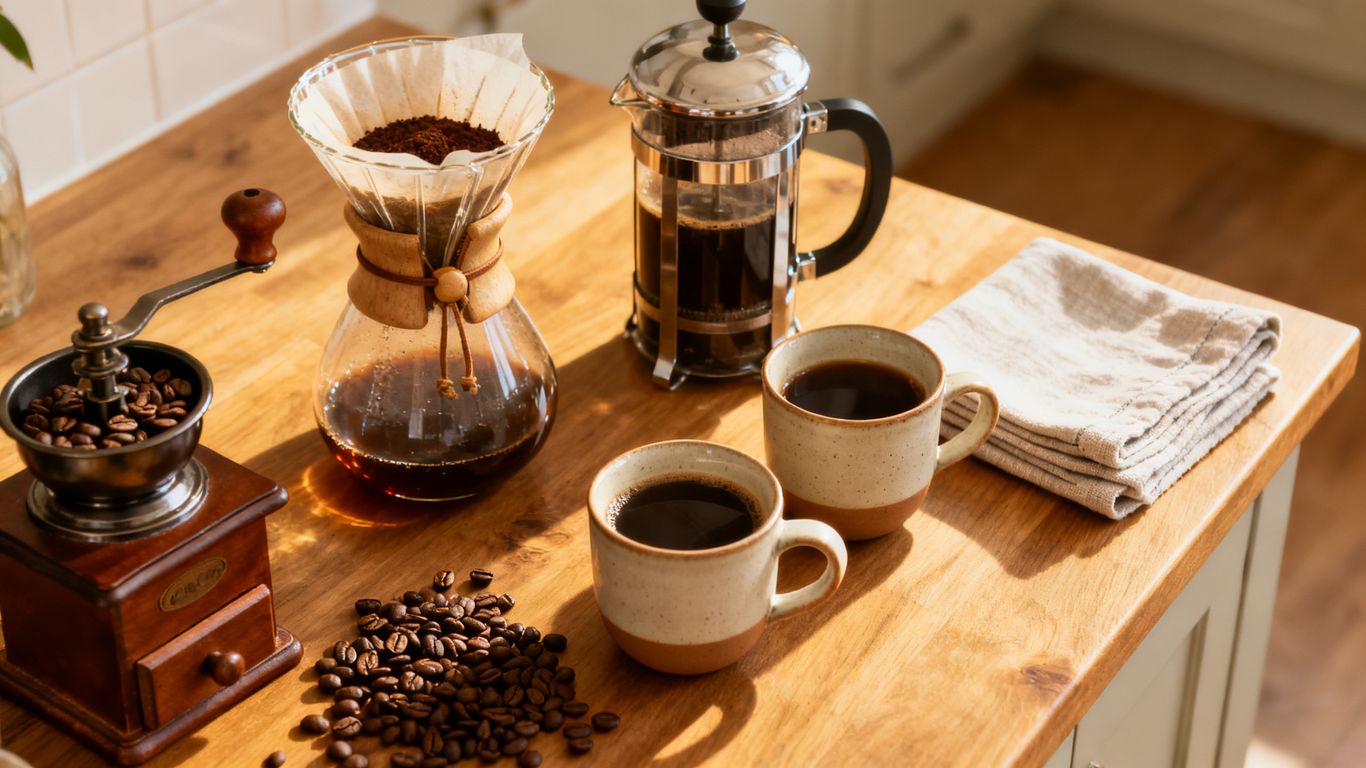
The comparison of drip coffee versus French press machines starts with how water meets the grounds. One method uses gravity and automation, while the other relies on immersion and manual timing. Neither approach is inherently better; each gives you a different level of control over the brewing process.
Drip Coffee Makers: The Automated Approach
A drip coffee maker heats water and releases it over ground coffee in a brew basket. Gravity draws the water through the grounds and into a carafe, while a paper or reusable filter holds back much of the fine material. Once the water and coffee are measured, the machine handles most of the process.
That routine makes drip coffee especially practical when several people want coffee at once. It also makes repeatability easier, since the water flow and timing are less dependent on the person brewing. For a broader overview of extraction, filters, and convenience, this drip coffee and French press guide offers a useful companion read.
French Press: The Manual Immersion Method
A French press steeps coffee grounds directly in hot water inside a carafe. After the grounds have had time to infuse, a plunger fitted with a mesh filter is pressed down to separate most of them from the brewed coffee. The brewer controls the water, grind, steep time, and pace of the plunge.
That hands-on process can be rewarding, but small changes matter. A finer grind, longer steep, or hurried plunge can change the texture and intensity of the cup. It is a simple method, though it asks you to stay involved from start to finish.
Taste and Flavor Profile: What to Expect
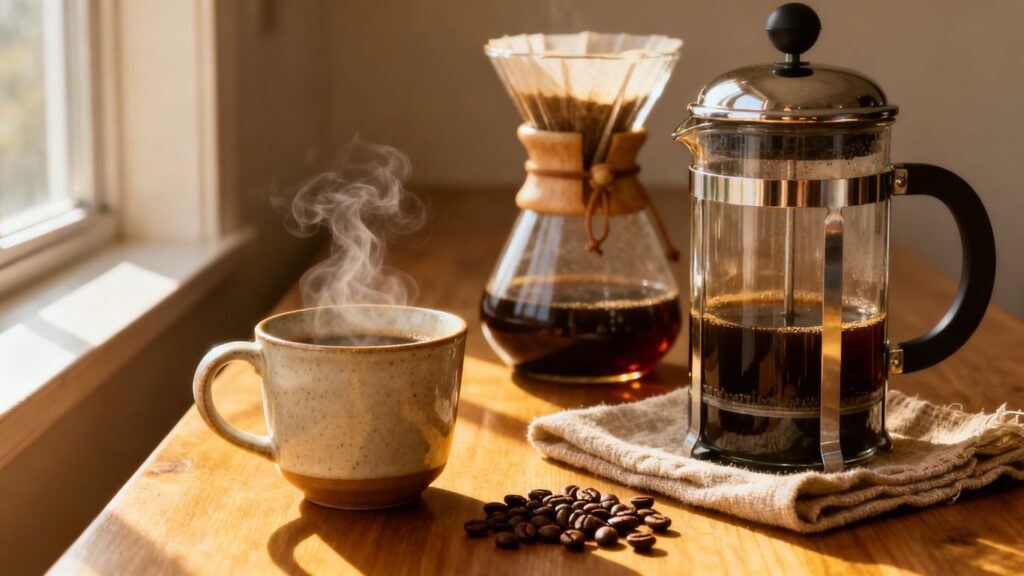
The brewing method affects more than convenience. Filtration, contact time, and the amount of coffee sediment that reaches the mug all shape the final experience. Beans and roast still matter greatly, but the brewer can make the same coffee seem lighter, cleaner, heavier, or more textured.
Drip Coffee: Clean and Consistent
Drip coffee is commonly associated with a clean, balanced cup because a paper filter catches fine particles and some oils. The result often feels lighter on the palate, with distinct flavor notes that are easy to appreciate without much sediment. That clarity also makes drip coffee a comfortable everyday choice for people who prefer a familiar, steady profile.
The exact result depends on the coffee, grind, water, and machine, so “clean” does not have to mean bland. A well-prepared batch can still have plenty of sweetness and aroma. The main difference is that the texture tends to be less dense than coffee made through a mesh filter.
French Press: Rich and Full-Bodied
French press coffee leaves more of the coffee’s oils and tiny particles in the cup. That gives it a fuller body and a deeper, sometimes more rustic texture. Drinkers who enjoy a weightier mouthfeel may find this style more satisfying, especially when the coffee is freshly ground.
The trade-off is visible sediment and a less polished finish. That is not a flaw for everyone; it is part of the method’s character. Just Picked’s coffee reviews and buying advice are designed to help readers compare those practical differences before choosing a product or brewing style.
Ease of Use and Convenience
Convenience depends on what you want your morning to feel like. Drip coffee reduces the number of decisions after setup, while a French press turns brewing into a short ritual. Serving size matters too, since making several mugs can change which method feels easiest.
Drip Coffee: Set It and Forget It
After adding water and grounds, you can generally start a drip machine and turn to another task while it brews. That is useful on busy mornings or when coffee needs to be ready for a group. Many machines also brew directly into a carafe, making it simple to serve more than one person.
The convenience comes from giving up some direct control. You are working within the machine’s water flow and brew cycle rather than adjusting every stage yourself. For shoppers comparing ease, these are the factors that usually matter most:
- How many cups the brewer makes in one cycle.
- Whether the carafe keeps coffee warm.
- How simple the controls are to understand.
- Whether the machine fits beneath your cabinets.
These details may sound ordinary, but they determine whether a brewer remains pleasant to use after the novelty wears off. A smaller household may not need a large carafe, while a busy family may value batch brewing more than fine adjustments.
French Press: Requires More Attention
A French press takes only a few basic tools, but the brewer must heat the water, add the grounds, wait through the steep, and press at the right moment. That sequence is not difficult, yet it is less forgiving when you are rushing. It can also be enjoyable for people who like to make coffee slowly and adjust each batch.
Cleanup and serving require a little planning as well. You need to pour the coffee soon after pressing if you want to avoid continued contact with the grounds. For one or two drinkers, that extra attention may feel manageable; for a crowd, it can become less convenient.
Cleaning and Maintenance
Cleaning is part of the daily cost of either brewing method, even when it is easy to overlook during the first few uses. Drip machines have a basket, filter area, and carafe that need regular rinsing, while French presses require the grounds to be emptied and the mesh filter washed. The simpler-looking brewer is not always the one that creates the least mess.
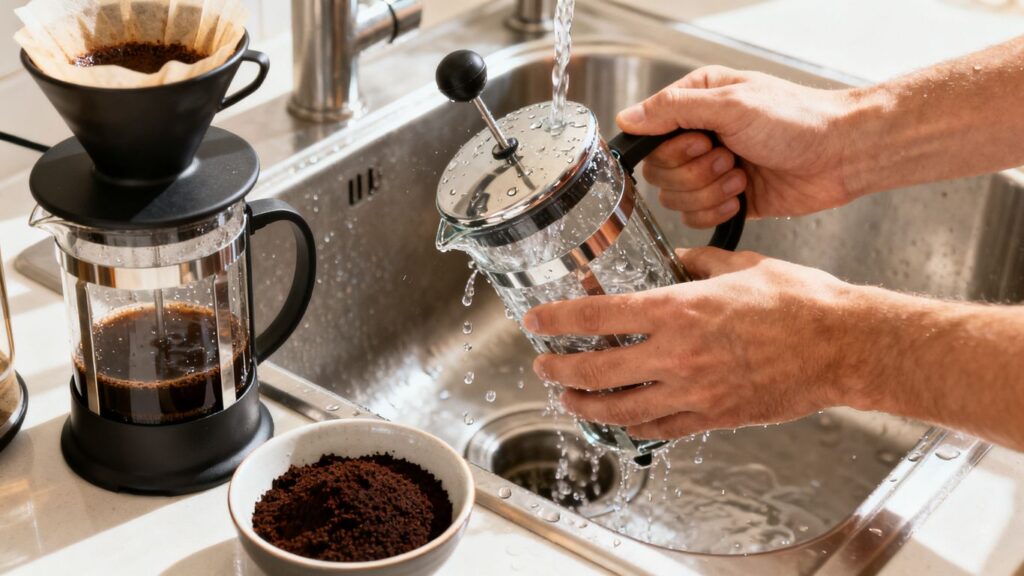
A French press usually needs to be emptied soon after brewing so the grounds do not dry onto the mesh and base. Rinsing the carafe and plunger immediately makes the task much easier. Avoid forcing grounds down a sink drain; scooping them into the trash or compost is a cleaner habit where appropriate.
Drip coffee makers involve disposable or reusable filters, plus a carafe and brew basket. Reusable parts should be rinsed after each batch, and the machine itself benefits from periodic descaling according to its instructions. Just Picked’s practical buying advice can be useful here because removable parts and accessible surfaces often matter as much as brewing features.
Cost and Affordability
Both methods are available across a wide range of prices, so the cheapest purchase is not automatically the cheapest experience. A French press generally has a low entry cost and few required accessories beyond coffee, water, and a grinder if you choose whole beans. Drip coffee makers vary more because carafe design, controls, capacity, and construction can all affect the price.
Ongoing expenses are also worth considering. Paper filters add a small recurring cost to drip brewing, while a French press avoids that particular purchase but may eventually need a replacement mesh assembly or carafe. Coffee itself remains the largest recurring expense for most households, and waste matters if a brewer makes more than you can drink.
When comparing products, Just Picked brings together buying advice and deals to help readers weigh the upfront price against daily usefulness. A modest brewer that fits your routine can be better value than a feature-heavy model you rarely use. Think about capacity, durability, cleanup, and replacement parts alongside the shelf price.
| Consideration | Drip coffee maker | French press |
|---|---|---|
| Initial purchase | Broad range of prices | Often lower entry cost |
| Recurring supplies | May require paper filters | No paper filters required |
| Batch size | Convenient for multiple cups | Best suited to smaller batches |
| Control | More automated | More hands-on |
The table captures the broad trade-off rather than a promise about every model. Prices and designs differ, but the pattern is useful: drip favors routine and batch brewing, while French press favors simplicity and control.
The Verdict: Which Brew is Best for You?
Choose drip coffee if you want a dependable routine, a cleaner cup, or enough coffee for several people. It is a natural fit for households that value pressing a button and getting on with the morning. It also makes sense when repeatability matters more than adjusting every variable by hand.
Choose a French press if you prefer a richer texture and enjoy being involved in the process. It is appealing for small servings, relaxed mornings, and coffee drinkers who want direct control over steeping. The sediment and cleanup are part of the bargain, but many people consider them worthwhile.
Just Picked provides reviews, buying advice, and deals for consumers comparing everyday products, so the best decision is the one that matches your actual habits. If you drink one mug slowly, French press may feel more personal; if several people need coffee before work, drip may be the calmer choice. There is no universal winner—only the brewer you will use gladly and clean consistently.
Conclusion
Drip coffee wins on convenience, consistency, and larger batches, while French press coffee stands out for its fuller body and hands-on character. Consider flavor, time, cleanup, serving size, and total cost together, then choose the method that fits your mornings rather than chasing a single “best” brew.
Frequently Asked Questions
Is drip coffee stronger than French press coffee?
Not automatically. Strength depends on the coffee-to-water ratio, grind, brew time, and serving size, while French press often tastes heavier because more oils and fine particles remain in the cup.
Which method makes cleaner coffee?
Drip coffee made with a paper filter usually has less sediment and a lighter texture. French press coffee uses a mesh filter, so more oils and small particles typically reach the mug.
Is a French press difficult to use?
No, but it requires more attention than an automatic drip maker. You must heat the water, measure the grounds, wait for the steep, and press before serving.
Which brewer is better for a large household?
A drip coffee maker is often more convenient for larger households because it can brew a batch into a carafe. A French press may require multiple rounds, depending on its capacity.
Does French press coffee require a special grind?
A coarse grind is commonly used because it is easier to separate from the coffee and can reduce excessive sediment. The ideal setting may vary with the brewer and beans.
Are drip coffee makers expensive to maintain?
Maintenance is usually manageable, but drip brewers may require paper filters and periodic descaling. Costs depend on the machine, water quality, and replacement parts.
Which method is better for beginners?
Drip coffee is often easier for beginners who want a repeatable routine. French press is also approachable, especially for people who enjoy learning how timing and grind affect flavor.