


Finding a mid-range phone that doesn’t cut corners feels impossible. Mostly speaking, the Redmi Note 13 Pro tries to work out that: it packs a 200MP camera and 120Hz AMOLED display into a phone that costs around 25,000 on the street. That’s a significant gap. Not exactly what you’d expect.
This redmi note 13 pro review breaks down whether it actually delivers or. Plus, if the spec sheet hides some real compromises.
The short version
- The Redmi Note 13 Pro offers a bright 120Hz AMOLED display and 67W fast charging, making it a strong value pick at around 25000.
- The 200MP main camera takes solid stills, but video capture and secondary lenses fall short of the headline spec.
- Software remains the biggest drawback, with bloatware and unreliable notifications marring the experience.
Main points
If you’re skimming.
- Display quality is genuinely top-tier for the price segment.
- The 5100 mAh battery with 67W charging hits 49% in 15 minutes, which is fast enough to change how you top up during a busy day.
- Software bloat and push notification bugs are the real dealbreakers here, not the hardware.
- Video performance lags behind the impressive still photo capabilities.
Display Quality and Design: Where the Money Went
The 6.67-inch AMOLED panel with 120Hz refresh rate and FHD+ 2400×1080 resolution is one of the best displays you can get in this price range, offering deep blacks and noticeable brightness that makes outdoor visibility a non-issue.
When you pick up the Redmi Note; well, actually, 13 Pro, the screen immediately justifies the price. That’s a major gap. Not exactly what you’d expect. Reviewers again and again highlight it as the phone’s strongest asset.
The 120Hz AMOLED panel is noticeably brighter than its predecessor. Which matters more than you might expect. If you’ve ever tried to read a text message in direct sunlight.
Colors pop without looking oversaturated, and touch response feels snappy whether you’re scrolling social media or typing a long email.
The build quality reinforces that premium-on-a-budget feel. It doesn’t creak when you twist it, and the glass back gives it a weight that feels more expensive than it’s. However, the design isn’t perfect: the camera module protrudes bigly, causing the phone to wobble on a flat desk. When you type, so you’ll want a case to level it.
At this point, the Coral Purple finish looks great, but the glossy surface attracts fingerprints within minutes of holding it.
Charging Speed Breakdown (Minutes to Percentage)
15 Minutes, 49%
30 Minutes, 83%
42 Minutes, 100%
How does the screen hold up against pricier phones?
Then again, it holds up surprisingly well, and compared side-by-side with the Apple iPhone 16 Pro Max 256GB, the iPhone has better peak brightness for HDR content, but the Redmi’s display isn’t out of place.
Zooming out a bit, the 120Hz refresh rate keeps scrolling smooth, and the contrast ratio is excellent for media consumption. You’re getting about 85% of a flagship display deal with for roughly a third of the price.
Pro Tip
If you watch a lot of video on your phone, turn on the system-wide dark mode. The AMOLED panel saves significant battery power by turning off individual black pixels entirely.
Performance: Good Enough, Not Great
Powered by the Qualcomm Snapdragon 7s Gen 2, the Redmi Note 13 Pro handles daily tasks like browsing and social media without breaking a sweat, but it struggles with heavy gaming and demanding multitasking under sustained load.
In real-world terms, the Snapdragon 7s Gen 2 sits in an awkward middle ground: not slow, but not boundary-pushing. For the majority who check email, watch YouTube, and scroll through Instagram, the phone feels blazing. Here’s the other side of it. Apps open quickly, and the 120Hz display makes everything seem more responsive than the processor alone suggests.
Push it harder and the limits appear. For illustration; graphic-intensive games like Genshin Impact will run, but there’s a catch.
You’ll need to dial graphics down to medium for a stable frame rate. The phone warms noticeably during extended sessions. Which can cause the processor to throttle and drop frames. After about 20 minutes of heavy use. If you’re a serious mobile gamer, consider alternatives like the OnePlus Nord CE4 5G.
Which handles thermal management better in the same price bracket.
Is the Snapdragon 7s Gen 2 a bottleneck for daily use?
For most people, no. The chip handles everyday workloads fine.
Where it becomes a bottleneck is in sustained performance scenarios. If you’re editing a 4K video in a mobile editor or running multiple heavy apps in split-screen, you’ll feel the phone hesitate.
The 8GB of RAM (in the 128GB variant) helps with app switching, but the processor itself isn’t built for power most of us, so the real issue isn’t speed; it’s consistency under pressure.
Warning
Don’t buy this phone if your primary use case is competitive gaming. The thermal throttling will cost you frames in crucial moments, and the chip simply isn’t built for that workload.
Camera System: 200MP Marketing vs Reality
The 200MP main camera captures sharp, detailed still photos in good lighting, but the video recording quality and secondary ultrawide lens fall short of what the headline megapixel count suggests.
What does that mean in practice? The 200MP main sensor isn’t a gimmick, so in daylight, its photos are genuinely impressive for this price.
Detail retention is high, and the color science leans toward natural rather than the over-sharpened look some competitors favour. The camera app includes an in-sensor zoom mode that makes use of the high resolution to crop without losing too much quality, delivering a decent 2x or 4x telephoto effect without a dedicated lens.
In practical terms, pivoting slightly, marketing hides real compromises: the secondary cameras reveal the budget. The ultrawide lens is enough at best, with softer edges and noticeable color shifting compared to the main sensor. In low light the ultrawide struggles to focus and produces noisy, flat images. Video capture is the weakest area.
From a practical standpoint, while the main camera can shoot up to 2160p/30fps, testing showed the ultrawide is limited to 1080p, and stabilization is jittery compared with a Google Pixel or a Samsung Galaxy A-series phone. If you’re buying this phone overall for video content creation, you’ll be disappointed.
“The 200MP sensor is great for stills, but if you care about video, this phone will let you down.”
Can the 200MP camera replace a dedicated point-and-shoot?
This is where it gets practical. In good lighting, it comes close. Detail retention and active range exceed what many expect from a phone. But a dedicated camera still wins in low light and for moving subjects.
The phone’s shutter speed isn’t blazing enough to freeze action reliably, and the night mode. While decent, introduces a multi-second capture delay that makes shooting anything moving in the dark a blurry mess.
Battery and Charging: The Real Winners
The 5100 mAh battery paired with 67W wired fast charging delivers exceptional real-world results, hitting nearly 49% charge in 15 minutes and a full charge in 42 minutes, which fundamentally changes how you interact with the device.
That’s where the Redmi Note 13 Pro shines. The 5100 mAh battery easily lasts a full day of moderate to heavy use.
With about 6 hours of screen-on time, you’ll still have 15-20% left. Kind of surprising, right? When you plug it in at night. Not exactly what you’d expect. The real magic is the charging speed: testing suggests the phone hits give or take 49% in 15 minutes, somewhere around 83% in 30 minutes, and a full charge in 42 minutes.
Battery Life vs Charging Speed Comparison
Battery Capacity, 5100 mAh
Charging Speed (W), 67W
Full Charge Time, 42 min
That speed changes charging habits. You no longer need to charge overnight; plug it in. While you shower and leave the house with plenty of power.
Xiaomi doesn’t include wireless charging. More importantly, which is expected at this price. Perhaps. 5mm headphone jack.
Key Point
The charging speed is the single most practical feature of this phone. It eliminates battery anxiety entirely if you have access to a wall outlet for short bursts throughout the day.
Software Experience: The Dealbreaker
The software experience is the most big drawback of the Redmi Note 13 Pro, with widespread complaints about pre-installed bloatware, unreliable push notifications, and long-term update support concerns.
If the hardware is the highlight. MIUI (or Xiaomi’s HyperOS, depending on the region) ships with a bunch of pre-installed apps that can’t be easily removed. This bloatware clutters the app drawer and, more concerningly, runs background processes that reduce battery life and performance over time.
In most cases, multiple user reviews and expert assessments report that push notifications for some apps fail to arrive in instant.
Xiaomi’s aggressive battery management kills background apps, which can cause you to miss a message from a colleague or a delivery update. Because the system decided that app didn’t need to run. For a phone that does everything else well, no, scratch that, this is a frustrating flaw that affects daily usability.
How bad is the bloatware really?
Annoying but not unusable. Plus, out of the box, you’ll find around 10–15 pre-installed apps that range from games to shopping platforms. Weird, right? Some can be uninstalled, but others are locked to the system.
The real frustration is that these apps sometimes reappear after a system update. It becomes a whack-a-mole game you shouldn’t have to play on a device you paid for.
Pros & Cons
Pros:
- The 6.67-inch 120Hz AMOLED display is genuinely one of the best screens in this price segment.
- 67W fast charging delivers 49% battery in 15 minutes, which is exceptionally quick.
- The 200MP main camera takes sharp, detailed still photos in good lighting conditions.
- The 5100 mAh battery provides all-day endurance for moderate to heavy users.
- The phone retains a 3.5mm headphone jack, which is increasingly rare.
Cons:
- Software is loaded with bloatware that clutters the experience and can’t be fully removed.
- Push notification reliability is poor, with some apps failing to deliver real-time alerts.
- Video recording quality is weak, with jittery stabilization and limited ultrawide resolution.
- The Snapdragon 7s Gen 2 struggles with sustained heavy gaming and thermal throttling.
- Secondary cameras (ultrawide, macro) are noticeably inferior to the main sensor.
Real-World Performance: Living With It Daily
Using the Redmi Note 13 Pro as a daily driver reveals a phone that’s excellent at the basics but frustrating at the margins. The screen makes reading and media consumption a joy, and the battery and charging speed mean you rarely worry about power. The main camera performs admirably in daylight.
On the surface, probably time-sensitive notifications can be missed. Because the system is too aggressive with power saving. These aren’t dealbreakers for everyone, but they’re persistent papercuts that add up. The phone works well about 85% of the time and frustrates you the other roughly 15%.
People Also Ask
Does the Redmi Note 13 Pro support 5G?
As far as I know, the Snapdragon 7s Gen 2 includes a 5G modem, making it future-proof for network upgrades in most regions.
Is the Redmi Note 13 Pro good for gaming?
And sure enough, it’s good enough for casual gaming but not for heavy, graphic-intensive titles. The processor throttles under sustained load, and the phone warms up during long sessions, causing frame drops in demanding games.
Does it have a headphone jack?
In many cases, this is a notable advantage for most of us who prefer wired audio and don’t want to deal with dongles or battery-powered wireless earbuds.
How long does the battery last on a single charge?
More often than not, heavy users might need a top-up by late evening. But the 67W charging makes this a 15-minute fix.
Is the Redmi Note 13 Pro worth buying in 2026?
Does that hold up? It remains a strong value pick, so if you focus on display quality and charging speed over software polish. The street price of around £299 makes it competitive. But the software issues mean it’s not a clean recommendation for everyone.
Should You Buy It?
The Redmi Note 13 Pro is worth buying if you prioritize a great display, fast charging, and solid main camera performance over software polish, making it ideal for budget-conscious media consumers who don’t mind tweaking settings.
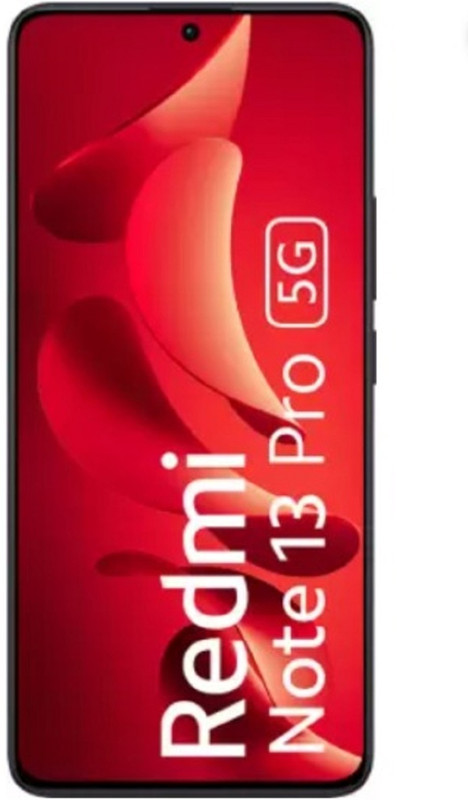
REDMI Note 13 Pro 5G (Scarlet Red, 128 GB)(8 GB RAM)
 Flipkart
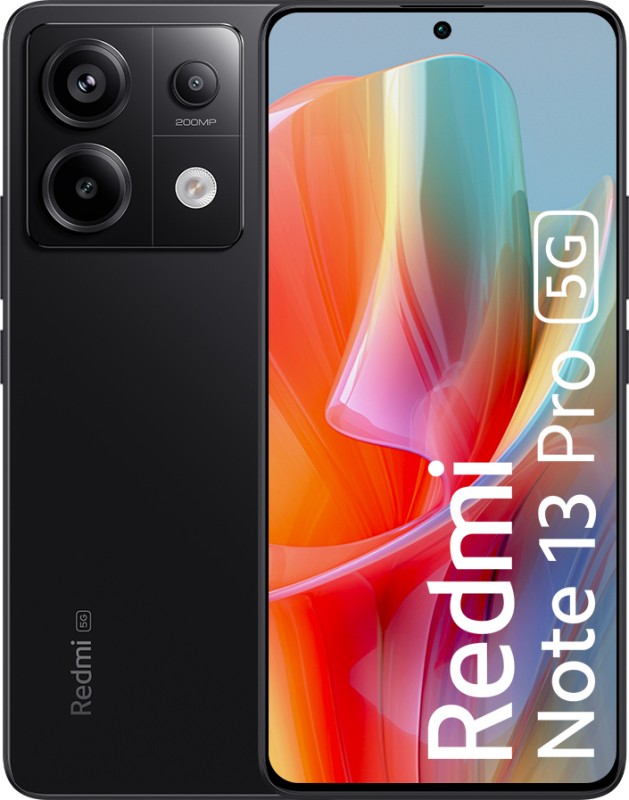
REDMI Note 13 Pro 5G (Midnight Black, 256 GB)(8 GB RAM)
Flipkart
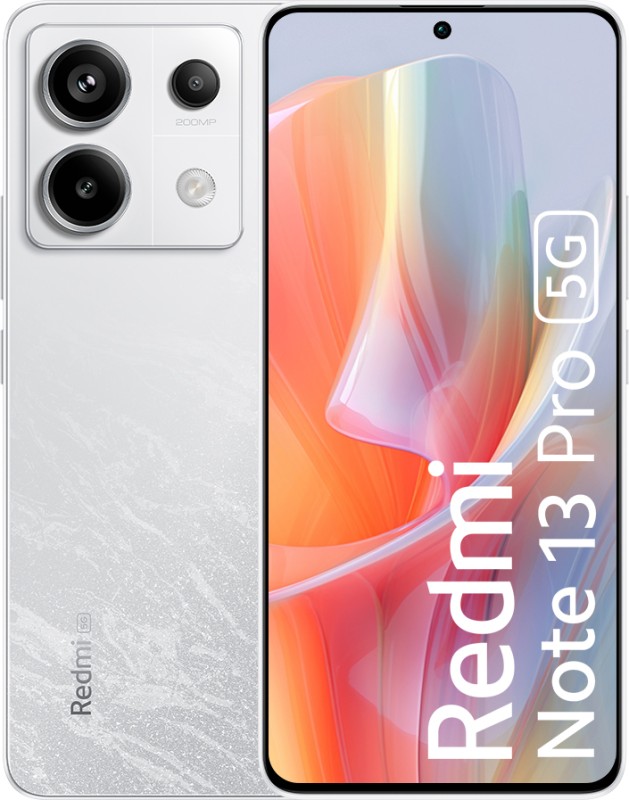
REDMI Note 13 Pro 5G (Arctic White, 256 GB)(8 GB RAM)
Flipkart
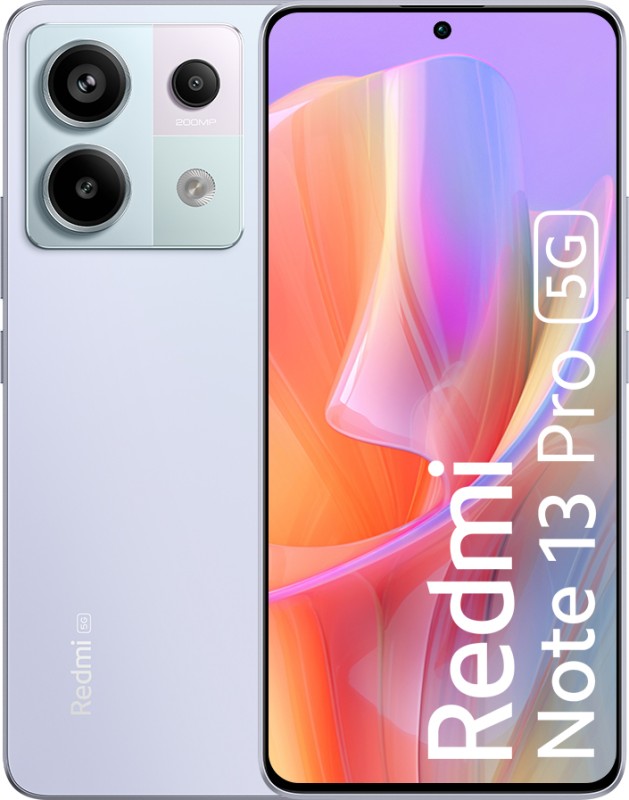
REDMI Note 13 Pro 5G (Coral Purple, 256 GB)(12 GB RAM)
Flipkart
REDMI Note 13 Pro 5G (Arctic White, 256 GB)(12 GB RAM)
Flipkart
If you watch a lot of video, take photos of scenes and friends in daylight, and value a battery that charges in under an hour, this phone is a fantastic deal at around £299. The hardware punches well above its weight. If you’re a power user who calls for reliable notifications; clean software, or top-tier gaming performance, look elsewhere. The software face is a real compromise, and you need to be honest about whether you’re willing to live with it.
Action Steps
- Uninstall unwanted bloatware, Go through the app drawer immediately after setup and remove anything you won’t use.
- Adjust battery settings, Grant unrestricted battery access to messaging and email apps to fix notification issues.
- Disable system ads, Turn off recommendations in the security and file manager apps to clean up the interface.
- Test the camera modes, Try the 2x in-sensor zoom mode for portraits; it often looks better than the main lens up close.
This redmi note 13 pro review concludes the phone is a classic case of great hardware let down by software. If Xiaomi can fix the notification bugs and tone down the bloatware, this would be an a breeze recommendation. As it stands, it’s a conditional yes for the right buyer.
Written & reviewed by the Mobile Technology editorial team
Our team has tracked mid-range smartphone developments and tested the devices covered here.